


Website by CWS
Is ABA Therapy Helpful for Children with Autism?
July 23, 2025
Introduction
If your child has just been diagnosed with autism, or you're deep into researching what comes next, chances are Applied Behavior Analysis (ABA) is one of the first therapies you've come across. It's also the one that tends to generate the most questions. Parents want to know: does it actually work? Is it gentle enough for my child? And is the time commitment worth what families have to put in?
The honest answer is that ABA helps a lot of children, but it isn't automatically the right fit for every family. What follows is a straightforward look at what ABA does, what the research actually says, what sessions look like in real life, and how to figure out whether it belongs in your child's care plan.
What ABA Therapy Actually Does
Applied Behavior Analysis is a science-backed approach built around a simple idea: behavior can be taught, shaped, and reinforced through consistent, positive feedback. Rather than tackling broad goals like "improve communication" all at once, an ABA therapist breaks skills down into small, learnable steps and reinforces each step as the child masters it.
In practice, that might look like teaching a non-verbal child to first point to an object, then progress to using a single word, then a two-word request, then a full sentence. Each step builds on the last, and progress is tracked along the way so parents and therapists can see exactly what's improving and what still needs work.
This is what separates ABA from less structured therapies, every goal has a measurable outcome, and every session generates data that informs the next one.
The Research Behind ABA
ABA isn't a new approach. It's been studied for decades, and the body of research supporting it is substantial. According to the National Autism Center, roughly 30 to 40 percent of children who receive intensive, well-designed ABA therapy show significant improvements in behavior, communication, and developmental milestones.
The American Academy of Pediatrics and the U.S. Surgeon General have both recognized ABA as an evidence-based treatment for autism. That's a high bar, most autism interventions don't carry that level of clinical endorsement.
That said, "evidence-based" doesn't mean "guaranteed for every child." Outcomes depend on the age the child starts, the number of hours per week, the skill of the BCBA designing the program, and how well the plan is tailored to the individual child rather than pulled from a template.
What ABA Looks Like in Real Life
One of the biggest misconceptions about ABA is that it happens in a sterile clinical room with flashcards and a stopwatch. Modern ABA is much more flexible than that.
Sessions can take place in several settings:
- At home, where children are most relaxed and where parents can observe and reinforce techniques throughout the day
- In a clinic, which works well for structured skill-building and exposure to peers
- At school, where therapists can support classroom participation, transitions, and social interactions during the school day
- In the community, like at the park or grocery store, to help skills generalize to real-world situations
The setting matters because skills don't always transfer automatically. A child who learns to ask for help in a quiet clinic room might still struggle to do so at a noisy playground. Practicing across environments closes that gap.
In our sessions, we've seen the biggest gains when families are involved across multiple settings, a child working on requesting items doesn't just practice during the therapy hour; the same prompts and reinforcements happen at snack time, bath time, and bedtime. That consistency is where ABA earns its results.
The Benefits Parents Tend to Notice First
When ABA is working, parents usually start to see changes within the first few months. The most common improvements families report include:
- Communication — using words, signs, or devices to express needs instead of crying, eloping, or shutting down
- Daily routines — getting dressed, brushing teeth, and transitioning between activities with less resistance
- Social skills — making eye contact when comfortable, taking turns, responding to their name
- Reduced challenging behaviors — fewer meltdowns, less self-injury, calmer transitions
- Increased independence — doing more things without needing constant prompting
It's worth being clear about something: a good ABA program is not about changing who your child is. It's about giving them more tools to navigate a world that wasn't necessarily built for how their brain works. The goal is your child's autonomy and self-determination, not their compliance.
An Honest Look at the Criticisms
ABA has critics, and those critiques deserve to be taken seriously rather than dismissed.
The most common concerns are that older versions of ABA could feel rigid, repetitive, and overly focused on making autistic children appear neurotypical. Some autistic adults who went through intensive ABA as children have spoken openly about the toll it took on them, particularly when therapy emphasized suppressing self-soothing behaviors like stimming, or when sessions ran far too many hours per week.
Modern, ethical ABA looks different. It centers the child's interests, uses play-based teaching, respects regulation behaviors that aren't harmful, and works toward goals the family actually values. If a therapist is pushing your child toward compliance at the expense of their wellbeing, or dismissing your concerns about session length or content, that's not a problem with ABA as a method; that's a problem with that specific provider.
When evaluating a provider, ask how they handle stimming, how they involve parents in setting goals, and whether the BCBA welcomes feedback when something isn't working for your child. The willingness to adjust is one of the clearest signals of a good clinical team.
How to Tell If ABA Is the Right Fit for Your Child
ABA tends to be a strong fit when:
- Your child is young and still in the early intervention window (research suggests starting before age 6 yields the strongest outcomes, though older children benefit too)
- Communication, daily living skills, or challenging behaviors are getting in the way of family life
- You're able to commit to the hours the BCBA recommends (typically 10 to 40 hours per week, depending on need)
- You want measurable, trackable progress rather than open-ended therapy
It may not be the primary therapy you need when:
- Your child's main challenges are around speech, motor skills, or sensory processing, in which case speech therapy, occupational therapy, or physical therapy might be a better starting point, sometimes alongside lighter ABA support
- The recommended hours feel disconnected from what your child can realistically tolerate without burning out
Many families combine ABA with speech therapy, occupational therapy, and school-based support. It rarely has to be ABA-or-nothing, and a good clinical team will tell you that openly.
What a Typical ABA Session Looks Like
For families starting ABA for the first time, the unknown can be intimidating. Here's roughly what to expect.
A session usually opens with the therapist building rapport, playing with toys the child loves, following their lead. Once the child is engaged and regulated, the therapist weaves in goals: maybe practicing requesting, identifying colors, tolerating a transition, or building tolerance for a non-preferred task. The work is broken into short, often playful trials, with breaks built in throughout.
Throughout, the therapist tracks data: how many prompts the child needed, whether they responded independently, how long they stayed regulated. That data gets reviewed weekly by the BCBA, and the program adjusts based on what the numbers (and the parents) are saying.
In our experience, the families who feel most confident in ABA are the ones who sit in on early sessions, ask questions, and treat the BCBA as a collaborator rather than an outside expert. The more parents are involved, the better the carryover into daily life.
Conclusion
ABA therapy is helpful for many children with autism, that's well established in the research and visible in the families we work with every week. It's also not the only option, and it's not the right fit for every child. The factors that actually determine outcomes are the quality of the provider, the personalization of the program, the age at which it starts, and how involved the family is along the way.
If you're weighing ABA as part of your child's care plan, the most useful thing you can do is meet with a provider, ask hard questions, and see whether their approach feels respectful, individualized, and aligned with the goals you have for your child. A good provider will welcome those questions, not deflect them.
Looking for ABA Therapy Across Maryland, Virginia, or North Carolina?
At Divine Steps Therapy, we provide in-home ABA therapy, school-based ABA services, and autism evaluations across Maryland, Virginia, and North Carolina. Our team build programs around each child's strengths and family priorities, not a generic template that gets reused for every client.
We're happy to answer your questions, walk you through what services look like in your area, and help you figure out the best path forward. Contact us today!
Frequently Asked Questions
At what age should a child start ABA therapy?
Most BCBAs recommend starting as early as possible after diagnosis, ideally between ages 2 and 6, when the brain is most receptive to building new skills. That said, children older than 6 still benefit meaningfully from ABA, the goals just shift to match where they are developmentally. There's no age at which ABA stops being useful; earlier simply gives more time to build foundational skills.
How many hours of ABA therapy per week does a child need?
It depends on the child's needs and age. Comprehensive programs for young children typically range from 20 to 40 hours per week, while focused programs targeting specific skills can run 10 to 20 hours. Your BCBA should recommend hours based on a thorough assessment, not a one-size-fits-all number, and adjust the schedule as your child progresses or as life circumstances change.
How long does it take to see results from ABA therapy?
Most families notice small wins within the first few weeks, a new word, a smoother transition, fewer meltdowns at a specific time of day. Bigger, more durable changes typically show up over 6 to 12 months of consistent therapy. ABA is built on incremental progress, so steady weekly improvements matter more than dramatic breakthroughs, and the data your BCBA tracks will show patterns long before they're visible at home.
SOURCES:
https://publichealth.jhu.edu/2025/vaccines-do-not-cause-autism
https://en.wikipedia.org/wiki/American_Academy_of_Pediatrics
https://www.ncbi.nlm.nih.gov/books/NBK218304/
https://www.sciencedirect.com/science/article/abs/pii/S0039606021006978
https://www.naco.org/people/hon-vivek-murthy
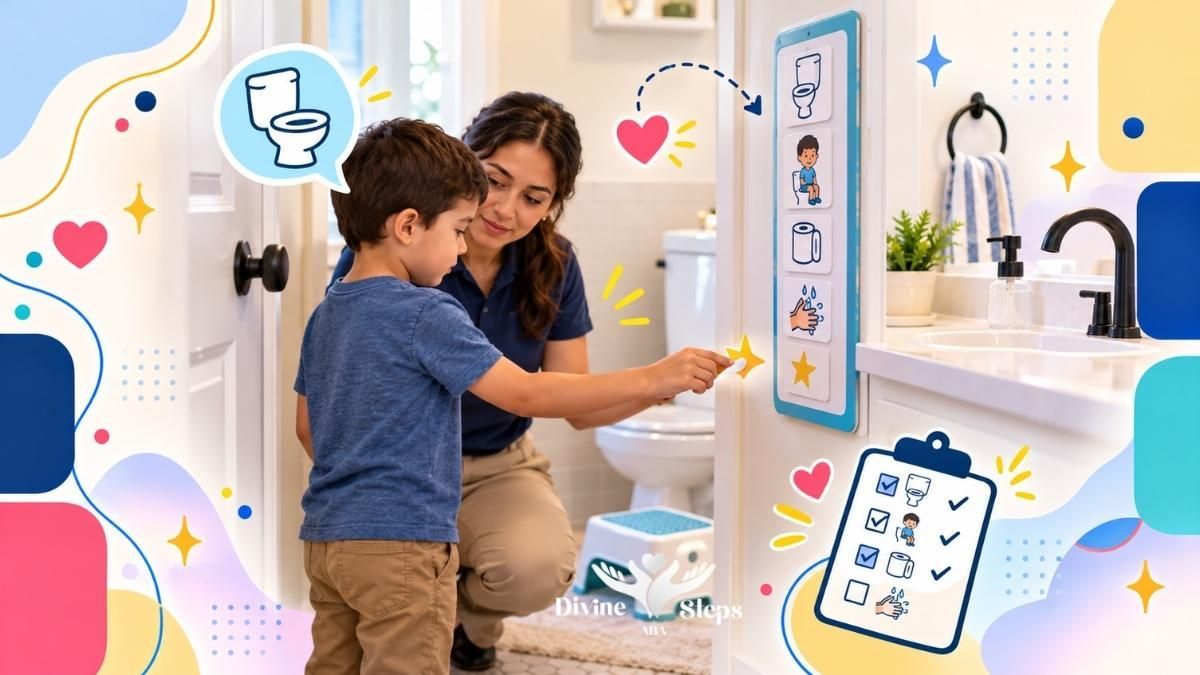
ABA potty training supports bathroom skills at your child's pace. Small goals and caregiver practice shape the routine.

What to do after an autism diagnosis starts with the report. See state programs, school rights, and ABA intake tips.

ABA therapy out-of-pocket cost depends on your care and plan. A worked example explains deductibles and coinsurance.