


Website by CWS
Explore the Advantages of Center-Based Therapy Today
February 5, 2026
Key Highlights
Here are the key takeaways about the benefits of center-based therapy:
- Center-based ABA therapy provides a structured environment with minimal distractions, helping children focus and learn.
- Therapy centers offer valuable opportunities for your child to interact with peers and develop crucial social skills.
- Your child gains access to a multidisciplinary team of qualified professionals, including board-certified behavior analysts.
- Early intervention in a center setting promotes rapid acquisition of new skills through consistent routines.
- These programs focus on helping children generalize skills, applying what they learn to home, school, and community settings.
Introduction
Choosing the right therapy for your child with autism spectrum disorder can feel like a significant decision. Applied Behavior Analysis (ABA) therapy is widely recognized as one of the most effective, evidence-based approaches for early intervention. But just as important as the therapy itself is the setting where it takes place. The right environment can make a world of difference in your child's development, confidence, and success. Let's explore the advantages of a center-based approach.
Understanding Center-Based Therapy for Autism Spectrum Disorder (ASD)
When considering options for your child with autism spectrum disorder, you may come across center-based therapy. This type of therapy occurs in a specialized facility designed specifically for learning and development. It provides a unique space separate from home or school where therapy is the main focus.
In this setting, a team of professionals, including behavior analysts, works together to create and implement a personalized treatment plan for your child. The following sections will explain what this therapy involves, how it compares to other options, and who stands to benefit the most.
What is Center-Based ABA Therapy?
Center-based ABA therapy is a form of Applied Behavior Analysis delivered in a clinical setting. This approach uses proven techniques to help children learn essential life skills and build confidence. The main advantages of this model come from its unique environment, which is designed to support growth in a focused way.
At its core, this therapy uses a combination of play, structure, and positive reinforcement to make learning fun and motivating. When a child demonstrates a desired behavior, they are rewarded, which encourages them to repeat that behavior. This process happens within a structured environment that minimizes distractions and helps children feel safe and secure.
Overseen by certified behavior analysts, each session is goal-oriented and tailored to your child's specific needs. The controlled setting allows therapists to create consistent routines and learning opportunities that might be difficult to replicate elsewhere, leading to significant progress in communication, social, and daily living skills.
Key Differences Between Center-Based and Home-Based Therapy
Deciding between a therapy center and home-based services is a personal choice that depends on your family's needs. While home-based therapy offers the comfort of a familiar environment, center-based therapy provides a different kind of structure and support system. A center offers a controlled setting designed entirely for therapeutic activities and skill development.
The primary difference lies in the environment and social opportunities. A center provides a space with fewer distractions, specialized materials, and built-in chances for peer interaction. This helps children practice skills with other kids under the guidance of behavior analysts. In contrast, home therapy leverages the real-world setting of your house but may have more limited social interaction.
Here’s a quick comparison of the two approaches:
| Aspect | Center-Based ABA | Home-Based ABA |
|---|---|---|
| Environment | Structured, minimal distractions | Familiar, more distractions |
| Social Interaction | High, with peers and therapists | Limited to family and therapists |
| Resources | Access to specialized materials and play areas | Uses available household items |
| Routine | Predictable and consistent schedules | Can be more variable |
Who Can Benefit from Center-Based Services?
Center-based therapy can be a powerful option for a wide range of children on the autism spectrum. While not a one-size-fits-all solution, it is particularly helpful for children who are preparing to transition into a school environment or other group settings. The classroom-like activities and peer interactions provide excellent practice.
This setting is also ideal for children who thrive on routine and structure. The predictability of a center helps reduce anxiety and creates a feeling of security, making it easier for them to focus on learning. The decision to choose a center should always be based on your child’s unique needs and goals, which can be determined through a comprehensive evaluation.
Ultimately, many children benefit from the dedicated space and resources a center provides. The environment is optimized for skill acquisition, with behavior technicians providing focused support to help your child reach their full potential. It is a strong choice for families seeking a comprehensive and structured approach to therapy.
Top Advantages of Center-Based ABA Therapy Programs
Center-based ABA therapy programs offer a host of powerful benefits that support your child’s growth. The combination of a structured environment, professional oversight, and consistent routines creates an ideal setting for learning new skills. This approach is designed for effective skill acquisition and lasting success.
Under the guidance of experienced behavior analysts, your child will engage in activities that build communication, social, and independence skills. Let’s explore some of the top advantages that make this model so effective for many families.
Structured and Supportive Learning Environments
One of the greatest advantages of a therapy center is the structured and supportive learning environments it offers. Every element of the space is designed with a purpose, from sensory-friendly lighting to designated play areas. This purposeful design helps children with complex needs feel safe, focus better, and build consistent routines, which are all essential for growth.
Unlike a home, a center is a dedicated therapy space where distractions are minimized. This allows your child to associate the location with "therapy time," helping them mentally prepare to engage and learn. The predictability of the setting can significantly reduce anxiety, creating a positive foundation for building your child’s skills.
This controlled environment allows behavior analysts to create specific learning opportunities that target your child's goals. Whether it’s a simulated classroom for school readiness or a quiet corner for one-on-one instruction, the center is equipped to handle a variety of needs in a way that other settings cannot.
Access to Multidisciplinary Professional Teams
When you choose a center-based program, you are not just getting a location—you are gaining a team. These centers are staffed by a variety of qualified professionals who collaborate to support your child’s development. This team-based approach ensures your child receives comprehensive and well-rounded care.
Your child's primary support will come from Board Certified Behavior Analysts (BCBAs) and Registered Behavior Technicians (RBTs), who work together to design and implement the therapy plan. Many centers also collaborate with other specialists to address all aspects of your child’s needs.
The professional support available often includes:
- Board Certified Behavior Analysts (BCBAs): These experts conduct assessments, create treatment plans, and supervise the therapy team.
- Registered Behavior Technicians (RBTs): RBTs work directly with your child to implement the plan designed by the BCBA.
- Collaboration with other specialists: Many centers work alongside occupational therapists, speech-language pathologists, and psychologists to ensure every team member is aligned.
Consistent Routines and Rapid Skill Development
Children with autism often thrive on consistency, and center-based therapy is built around predictable daily routines. Knowing what to expect each day helps children feel secure and ready to learn, which is a key factor in rapid skill development. This consistency creates a stable foundation for introducing and practicing new, positive behaviors.
This structured approach is particularly effective for early intervention. During the first few years of life, learning happens at an incredible pace. A center-based program capitalizes on this developmental window by providing intensive, individualized teaching. This can lead to more effective skill acquisition in core areas.
While home-based therapy is excellent for practicing skills in a natural setting, centers excel at teaching foundational social and communication skills. The ability to practice turn-taking, following group instructions, and peer interaction in a controlled setting helps children develop these skills more efficiently than they might in a less structured environment.
Social Benefits of Center-Based Therapy for Children with Autism
Beyond academic and behavioral goals, one of the most significant advantages of center-based therapy is the focus on social skills. The setting naturally creates opportunities for peer interactions that are crucial for social development. In a safe and supportive environment, your child can learn to navigate the social world.
Therapists facilitate group activities and play, guiding children as they learn to communicate and connect with others. This consistent social practice helps build confidence and prepares them for real-world situations at school and in the community.
Facilitated Peer Interactions and Group Activities
A therapy center provides a unique social environment where your child can practice interacting with peers in a structured, playful way. These facilitated peer interactions are guided by therapists who can help children understand social cues and build positive relationships. This is a core part of the learning process that is difficult to replicate at home.
Through fun group activities, children learn essential social skills in a natural context. The social environment in a center benefits children by providing a safe space to make mistakes and learn from them with gentle guidance. This builds a strong foundation for interacting in everyday situations.
Examples of activities that promote social growth include:
- Circle Time: Practicing group listening and following instructions.
- Play-Based Learning: Engaging in games that teach sharing and turn-taking.
- Role-Playing: Acting out social scenarios to prepare for real-world interactions.
Building Social Communication and Relationship Skills
The consistent social practice in a center-based program directly contributes to building stronger social communication and relationship skills. As children engage with their peers, they learn how to express their needs, respond to others, and participate in back-and-forth conversations. This focus on communication skills improves their confidence and connection with others.
Families can expect to see meaningful outcomes from these sessions. With guided practice in various social situations, your child will develop the tools needed to build friendships. The goal is to foster social skill development that extends beyond the therapy center and into their daily lives, improving their overall quality of life.
Therapists work on everything from non-verbal cues to initiating play, ensuring each child makes progress at their own pace. The result is often a child who feels more comfortable and capable in social settings, leading to greater independence and more fulfilling relationships.
Supporting Complex and Diverse Needs in Center-Based Settings
Every child is different, and center-based programs are designed to support complex and diverse needs. This is achieved through a highly personalized approach that starts with creating an individualized treatment plan for each child. These plans are not generic; they are carefully crafted to address specific developmental challenges.
By focusing on your child’s strengths and areas for growth, therapists can provide targeted support where it's needed most. This customized strategy ensures that the therapy is both effective and respectful of your child's unique journey.
Individualized Treatment Plans Tailored to Each Child
The foundation of effective center-based therapy is an individualized treatment plan tailored to your child’s unique needs. The process begins with comprehensive assessments that help therapists understand your child's abilities, challenges, and interests. This information is used to create a roadmap for your child's journey.
Experts consider this approach essential for child development because it moves beyond a one-size-fits-all model. Your child's treatment plan will be specifically designed to build on their strengths while targeting key goals, such as improving communication or reducing challenging behaviors. This level of individualized support makes the therapy much more effective.
This plan evolves as your child grows and makes progress. It is a living document that is continuously updated to ensure it remains relevant and aligned with their developmental needs. This commitment to personalization celebrates every step of progress along the way.
Real-Time Progress Monitoring and Adjustments
A major advantage of center-based therapy is the commitment to data-driven treatment. During every therapy session, behavior analysts and technicians engage in real-time progress monitoring. They meticulously collect data on your child's performance, which allows them to see what's working and what isn't.
This constant feedback loop is crucial for success. If your child's progress stalls, the therapy team can make immediate adjustments to the treatment plan. This ensures that no time is wasted on ineffective strategies and that your child is always receiving the most beneficial support. Families can expect regular updates on this progress.
Progress is tracked using several key metrics, including:
- Skill Acquisition Rates: Measuring how quickly your child is learning new skills.
- Behavioral Observations: Noting the frequency of both positive and challenging behaviors.
- Social Adaptability: Assessing how your child interacts with peers in different situations.
Family Engagement and Empowerment Through Center-Based Therapy
Successful therapy extends beyond the walls of the center, and your family's involvement is a vital part of the process. Center-based programs are designed to support children with complex needs by empowering families to become active participants in their child's development. This is achieved through strong family collaboration, regular communication, and dedicated parent training. By working together, we create a cohesive support system that reinforces learning at the center and at home.
This partnership ensures that the strategies used in therapy align with your family's values and routines, making them more effective and sustainable. Empowering families with the right tools and knowledge not only helps your child's progress but also builds your confidence as a caregiver. When everyone is working toward the same goals, your child is set up for long-term success.
Parent Training, Support, and Collaboration
Family collaboration is a cornerstone of high-quality center-based ABA therapy. More than just providing services for your child, these programs offer parent training and support to ensure you are an integral part of the team. This family involvement helps you understand the strategies being used and how to implement them in your daily life.
You will receive training on how to reinforce positive behaviors and manage challenges at home, which increases the consistency and effectiveness of the therapy. This collaborative approach means you will have a partner guiding you every step of the way. The professional support extends to the whole family.
Centers foster this partnership through:
- Regular Progress Updates: You’ll meet with your child’s BCBA to review progress, discuss goals, and ask questions.
- Caregiver Coaching: Therapists provide hands-on guidance to help you continue skill development at home.
Conclusion
Center-based therapy offers significant advantages for children with Autism Spectrum Disorder (ASD) and their families. By providing structured environments, access to multidisciplinary teams, and individualized treatment plans, these programs foster rapid skill development and enhance social communication. Additionally, the emphasis on family engagement empowers parents through training and collaborative support, creating a holistic approach to care. Embracing center-based therapy can lead to transformative outcomes, paving the way for children to thrive both academically and socially.
At Divine Steps ABA, we are serving families, and we provide compassionate, evidence-based center-based ABA therapy in Maryland, Virginia, and North Carolina that is designed to help children reach their fullest potential.
Discover how our programs can support your child’s growth and success. Contact us today!
Frequently Asked Questions
Is Center-Based ABA Therapy Better for All Children with Autism?
Not necessarily. The best autism treatment depends on each child’s needs. However, the structured environment and peer interaction opportunities in center-based ABA therapy offer significant advantages for many children. A consultation with board-certified behavior analysts can help determine the ideal setting for your child's specific goals.
What Outcomes Can Families Expect from Center-Based Therapy?
Families can expect to see clear skill development in areas like communication, social interaction, and daily life skills. A therapy center focuses on tracking your child's progress and uses positive reinforcement to build confidence. The goal is to help your child become more independent and successful in their everyday life.
How Does Center-Based Therapy Prepare Children for School and Community Life?
It prepares children by creating a classroom-like setting where they can practice social skills, communication skills, and daily living skills. This focus on the generalization of skills helps ensure your child can use their new skills in different contexts, leading to a smoother transition to school and community environments.
SOURCES:
https://www.reddit.com/r/ABA/comments/mvxgyr/pros_and_cons_of_home_based_vs_center_based_aba/
https://www.mayoclinic.org/diseases-conditions/autism-spectrum-disorder/symptoms-causes/syc-20352928
https://www.psychiatry.org/patients-families/autism/what-is-autism-spectrum-disorder
https://www.cdc.gov/autism/signs-symptoms/index.html
https://www.nimh.nih.gov/health/topics/autism-spectrum-disorders-asd
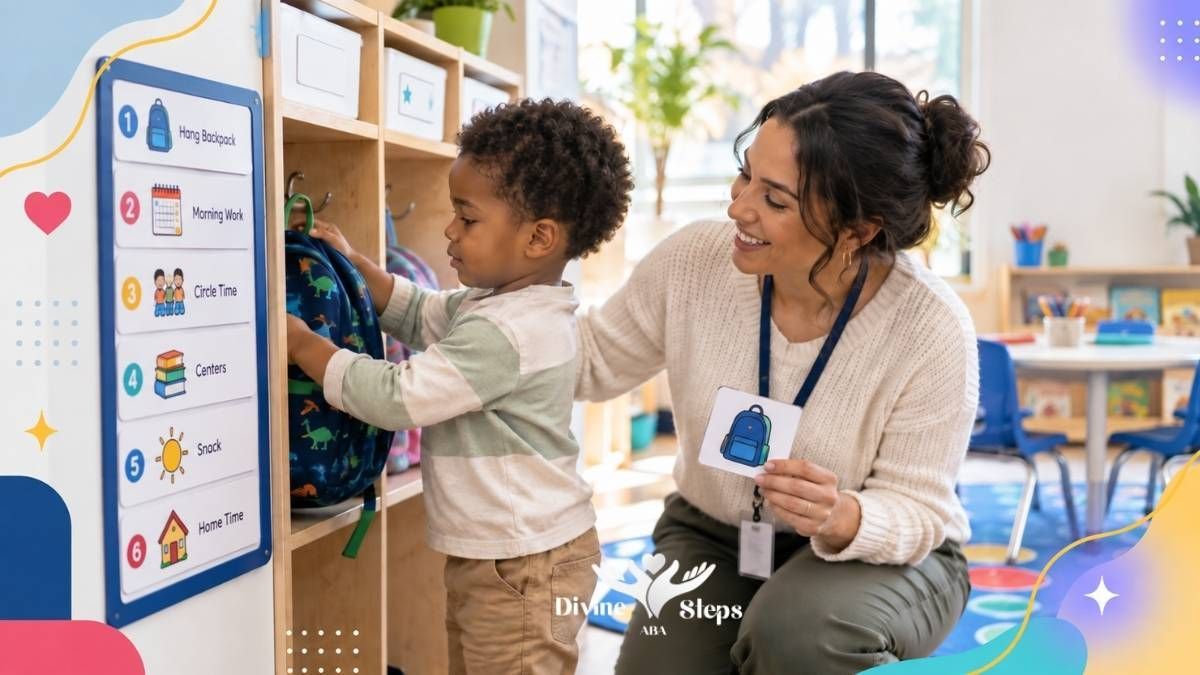
See how ABA therapy for school readiness builds classroom skills and independence. Learn what progress can look like.

Families can confirm Aetna ABA therapy coverage in Maryland before care starts. Seven checks show what to verify.

What to do after an autism diagnosis includes reviewing the report, calling insurance, and starting ABA and school referrals. Contact Divine Steps.