


Website by CWS
Do Babies With Autism Smile? What You Should Know
January 9, 2026
Key Highlights
- Yes, babies with
autismdo smile, but their smiling patterns may be different from those of typically developing infants.
- Differences in smiling can include a delayed onset, less frequent smiles, or smiles that aren't directed toward others.
- Atypical social smiling is just one of many potential early signs of autism; it is not a definitive indicator on its own.
- Other signs to watch for include limited eye contact, a lack of gestures, and delayed communication.
- Early detection of autism is key, as it allows families to access support and interventions that improve social interactions.
- Parents can use specific strategies to nurture social engagement and encourage smiles in a supportive environment.
Introduction
As a parent, your baby’s first smile is a moment you’ll never forget. But what if those smiles seem different or less frequent? It’s natural to wonder what this means for your child’s development. Many parents ask if babies with autism spectrum disorder smile, and the answer is yes, they do. However, understanding the nuances of their smiling patterns can provide valuable insights. This guide will explore the connection between smiling and early signs of autism, helping you understand your baby’s unique social engagement.
Understanding Smiling and Infant Development
A baby's smile is more than just an expression of happiness; it’s a fundamental part of child development. These early smiles are powerful tools for communication and bonding, laying the groundwork for future social interactions. Differences in smiling patterns can sometimes be an early clue about developmental pathways.
For a child on the autism spectrum, these smiling patterns might look a bit different. They may smile less often or in response to different things compared to neurotypical babies. Understanding these distinctions is an important step for parents navigating a potential spectrum disorder.
Why Smiling Matters in Early Childhood
Smiling plays a vital role in the landscape of early childhood development. It’s one of the first ways your baby communicates with you, expressing positive emotions and forging a powerful connection. When your baby offers a social smile, it invites a positive response from you, strengthening the parent-child bond.
This simple act is a cornerstone of social engagement. It teaches your baby about back-and-forth communication long before they can speak. These interactions are the building blocks for developing more complex social skills and understanding emotional cues from others.
While babies with autism do smile, research suggests they may not smile as much as neurotypical babies. This difference in frequency is often related to challenges in social communication, which is a core characteristic of the condition. Understanding this can help you better interpret your baby’s unique ways of expressing joy.
Overview of Autism Spectrum Disorder in Babies
Autism, or Autism Spectrum Disorder (ASD), is a developmental condition that affects how a person communicates, interacts with others, and behaves. As a spectrum disorder, it presents differently in every individual, with a wide range of strengths and challenges. The first signs of autism often appear in early childhood.
For young children and babies, these early signs can be subtle. They might include differences in social skills, communication methods, or the presence of repetitive behaviors. For instance, a baby might not respond to their name or show limited interest in social games like peek-a-boo.
A lack of smiling can be one of the early signs of autism, but it's rarely the only one. It's a piece of a larger developmental puzzle. If you notice reduced smiling, it’s important to consider it alongside other behaviors and consult a professional for a comprehensive evaluation.
The Role of Social Smiles in Child Development
Social smiling is a major milestone in early childhood. Unlike a reflex smile that happens in the first few weeks, a social smile is intentional and directed at another person. It signifies that your baby is beginning to understand social cues and is actively participating in social engagement.
This reciprocal smiling is a powerful form of communication. When you smile at your baby and they smile back, you are both reinforcing a positive social connection. This simple exchange is foundational for social development, teaching your baby about cause and effect in relationships.
However, it's important to remember that a lack of smiling is not always an indication of autism. Some babies are naturally more serious, while others might have other developmental factors influencing their expressions. A diagnosis of autism is based on a wide range of behaviors, not just one sign.
Typical Smiling Patterns in Neurotypical Infants
For typically developing infants, smiling is one of the most exciting early developmental milestones. These smiles are not just random; they follow predictable smiling patterns that signal healthy social and emotional growth. They are a baby's first step toward building meaningful social connections.
Understanding this typical progression can provide a helpful baseline when observing your own baby. From the first fleeting reflex smiles to intentional, joyful social smiles, each step marks a new phase in their ability to interact with the world around them.
Milestones for Smiling During the First Year
During the first year of life, your baby’s smiling behavior will evolve significantly. The very first smiles, which can appear in the first few weeks, are often "reflex smiles." These are involuntary and not a direct response to you.
The real magic happens around 6 to 8 weeks of age when your baby begins to offer their first social smiles. This is a huge developmental milestone! These smiles are intentional and are usually a response to seeing your face or hearing your voice. By 3 to 4 months of age, social smiling becomes more frequent and is a primary way your baby engages with you.
Differences in the smiling behavior of babies who are later diagnosed with autism can sometimes appear around this time. While neurotypical babies are increasing their social smiling, a baby on the spectrum might show a delay in reaching this milestone or smile less consistently in social situations.
Frequency and Types of Smiles in Neurotypical Babies
Neurotypical babies showcase a variety of smiling patterns as they grow. Their smiles become more frequent and serve different purposes during social interactions. You'll likely see both spontaneous smiles, which seem to come from an internal feeling of contentment, and social smiles, which are a direct response to you.
As they develop, these social smiles become a key part of their communication toolkit. A neurotypical baby often smiles frequently when a caregiver makes a funny face, sings a song, or plays a game. This responsive smile shows they are engaged and enjoying the interaction.
Studies, some of which have been published in resources like the Journal of Abnormal Child Psychology, often find that babies with autism may smile less frequently. The key difference often lies in the context; their smiles may be less socially motivated and more related to their own sensory experiences.
Social Engagement through Smiling
Smiling is a powerful driver of social engagement. When your baby smiles at you, your natural reaction is to smile back, talk to them, and shower them with affection. This response acts as positive reinforcement, encouraging them to smile more and continue the interaction.
This simple feedback loop is essential for communication development. It teaches your baby the rhythm of conversation and the joy of connecting with others. Each smile and response strengthens their understanding of social interactions and builds a foundation for future social development.
The frequency of social smiling is often considered by professionals during an evaluation for autism. While a lower frequency alone doesn't confirm a diagnosis of autism, a noticeable lack of responsive, social smiling is a significant factor that, along with other signs, can point toward the need for further assessment.
Smiling Behaviors in Babies With Autism
When observing a baby with autism spectrum disorder, you might notice atypical smiling patterns. While they do smile, their smiles can differ in timing, frequency, and purpose compared to their neurotypical peers. These differences are often linked to challenges with social communication skills.
Recognizing these variations is an important part of identifying the early signs of autism. It’s not about the absence of joy but rather about a different way of expressing it and connecting with the world. Understanding these behaviors can help you better support your child’s development.
How Often Do Babies With Autism Smile?
One of the most common questions from parents is about the frequency of an "autism smile." Research suggests that babies with autism may smile less often than their neurotypical peers. Some studies have observed a delayed onset of smiling and a reduced frequency overall.
It's important to remember that autism is a spectrum, and there are significant individual differences. Some babies with autism may have smiling patterns that seem typical, while others may smile very rarely. The smiling behavior of babies can vary widely, and what is true for a small sample size in a study may not reflect every child's experience.
This reduced frequency is often most noticeable in social contexts. A baby with autism might not smile in response to a caregiver’s face but might smile at a spinning toy or a particular texture. This highlights a difference in what triggers their positive emotions.
Differences Between Social Smiles and Spontaneous Smiles
One of the key differences in the smiling patterns of babies with autism lies in the distinction between social smiles and spontaneous smiles. A social smile is reciprocal, it’s a direct response to another person and is a crucial part of social interactions.
In contrast, a spontaneous smile seems to arise from an internal feeling or sensory experience, not from a social trigger. While all babies have both types of smiles, babies with autism may display fewer social smiles. Their smiles might be more self-directed or related to sensory stimulation, like the feeling of a certain fabric or the sight of a flickering light.
These atypical smiling patterns are important to note. A smile that isn't directed at a caregiver or doesn't seem connected to a shared moment can be one of the subtle signs of a different developmental path. Recognizing these nuances helps you understand how your baby experiences and expresses joy.
Observed Variations in Smiling Compared to Neurotypical Peers
When professionals compare smiling patterns, they often look for specific variations that can be early indicators of autism. These differences in social engagement and responses to social cues are sometimes tracked using tools like an autism observation scale.
Differences can emerge as early as 6 to 12 months of age. A baby with autism might not just smile less frequently, but the quality of the smile might be different. It may be fleeting or not accompanied by eye contact, which is a key part of social connection in neurotypical infants. These variations are important clues for parents and healthcare providers.
Here is a simple breakdown of the observed differences:
| Aspect | Typical Development | Autism Spectrum Disorder |
|---|---|---|
| Timing | Social smiling emerges around 6-10 weeks. | Smiling may be delayed or inconsistent. |
| Frequency | Smiles are frequent and often spontaneous in social settings. | Smiles may be less frequent or reduced, especially in response to social cues. |
| Quality | Smiles are socially directed, reciprocal, and often accompanied by eye contact. | Smiles may be more self-directed, fleeting, or related to sensory stimulation. |
Early Signs of Autism Beyond Smiling
While smiling patterns can be an important clue, they are just one piece of the puzzle. To get a fuller picture, it's helpful to be aware of other early signs of autism. These signs often relate to communication development, social interaction, and certain repetitive behaviors.
Observing how your baby uses eye contact, gestures, and sounds to communicate can provide valuable insights. If you have concerns, looking at these behaviors alongside smiling can help you decide if it’s time to speak with a professional.
Reduced Eye Contact and Social Interaction
One of the most frequently discussed early signs of the autism spectrum is reduced or limited eye contact. While neurotypical infants are often fascinated by faces and seek out eye contact with caregivers, a baby with autism may seem to avoid looking at others or hold a gaze for only a brief moment.
This difference can impact social interactions from a very early age. A baby who doesn't make much eye contact may seem less interested in people, which can make it harder to engage them in back-and-forth social games. They may not follow your gaze or look at what you’re pointing to.
When combined with a lack of social smiling, reduced eye contact can be a significant indicator. It suggests a broader challenge with processing social cues and engaging with others, which is a core feature of autism.
Communication Differences in Infancy
Beyond smiling and eye contact, other early signs of autism often appear in a baby's communication development. For example, a baby with autism may show a delay in using gestures. By 12 months, many babies point to things they want, wave "bye-bye," or shake their head "no." A lack of these gestures can be a red flag.
You may also notice differences in their vocalizations. While some babies with autism have delayed language development, others may babble but in a repetitive or unusual way. They might not try to imitate your sounds or respond when you call their name. These are all important social communication skills.
Difficulties with certain motor skills can also be linked to communication. A baby needs coordination to point or gesture, and delays in these areas can sometimes be connected to broader developmental conditions like autism.
Other Developmental Red Flags for Parents
As a parent, you are the expert on your child. Trusting your instincts about their developmental milestones is crucial. If something feels off, it’s worth paying closer attention to other potential red flags that, together, might point toward a diagnosis of autism.
A family history of autism can increase a child’s risk, so it’s a factor to keep in mind. Also, look for repetitive behaviors. This could be anything from hand-flapping and rocking to an intense focus on a specific part of a toy, like spinning its wheels over and over.
Here are a few other early signs of autism to watch for:
- Not responding to their name by 12 months.
- A loss of speech, babbling, or social skills at any age.
- Unusual reactions to sounds, smells, tastes, or textures.
- Limited interest in playing with other children.
Decoding Smiles, Identifying Markers in Babies With Autism
Learning to decode your baby's unique facial expressions is key to understanding their emotional world, especially if you suspect they may be on the autism spectrum. It's about looking beyond the smile itself and paying attention to the context and other social cues.
Early detection of developmental differences can make a world of difference. While you can't diagnose your child at home, recognizing these markers can empower you to seek a comprehensive evaluation from a professional who can provide clarity and guidance.
Recognizing Subtle Facial Cues and Emotional Responses
To tell if your baby's smiling pattern might be a sign of autism, look for the subtle cues that accompany it. Is the smile paired with eye contact? Does it seem to be a reaction to a social interaction, like you making a funny face, or does it appear unrelated to what’s happening around them?
A baby's facial expressions are a window into their emotional responses. A baby with autism may have a more limited range of expressions, or their expressions might not match the situation. For example, they might smile or laugh at something that isn't typically funny.
These differences in emotional expression are part of their unique communication skills. By carefully observing these patterns, you can start to understand how your baby experiences and communicates joy, even if it’s different from what you expected. It's about learning their language.
When to Consult a Pediatrician about Smiling Patterns
If you have concerns about your baby’s smiling patterns or other developmental milestones, it’s always best to consult a healthcare provider. Your pediatrician is a great first stop. They can conduct a developmental screening to see if your concerns warrant a closer look.
Early identification is crucial, so don't hesitate to bring up your observations. A lack of social smiling, especially when combined with other red flags, is a valid reason to seek professional advice. Your pediatrician may refer you to a developmental specialist for a comprehensive evaluation.
Consider talking to a professional if you notice the following:
- Your baby isn't socially smiling by 3-4 months of age.
- Your baby’s smiles are infrequent and rarely directed at you or other people.
- You also have concerns about eye contact, gestures, or responsiveness.
Challenges in Detecting Smiles for Families and Caregivers
Detecting meaningful differences in smiling can be challenging, even for the most attentive parents. A baby's expressions can be fleeting, and it’s not always easy to tell a social smile from a random one. This is especially true for first-time parents who may be unsure what is typical.
For families with a history of autism, such as those with infant siblings of children with ASD (often called "baby sibs"), there may be heightened awareness. These parents might be more attuned to early signs. Looking back at home videos can sometimes provide valuable insights, showing patterns that weren't obvious in the moment.
Ultimately, a trained examiner has the expertise to interpret these subtle behaviors in a clinical setting. They can distinguish between typical variations and patterns that suggest an underlying developmental difference, providing families with the clarity they need.
Developmental Timing, When Do Smiling Differences Appear?
The timing of developmental milestones is a key focus for parents and pediatricians. When it comes to social smiling, differences can become noticeable during the first year of life. While a neurotypical baby’s social smile often emerges and becomes consistent within a few months, a delay at this time point can be an early flag.
Understanding these age-related expectations helps you know what to look for and when. It’s not about checking boxes on a rigid timeline but about being aware of the general progression so you can spot potential delays.
Age-Related Milestones in the United States
In the United States, pediatricians track a series of age-related milestones to monitor a child's growth. For social smiling, the key time point is around 2 to 3 months of age. By this stage, most babies are expected to be smiling socially in response to their caregivers.
By 6 months of age, this smile should be frequent and part of a joyful, interactive exchange. A present study or clinical observation may flag a concern if a baby is not meeting these developmental milestones. The absence or significant delay of a social smile by 4-6 months is often a reason for a closer look.
It's at these critical time points that differences in babies with autism may become apparent. A delay in smiling, or a smile that doesn't seem connected to social interaction, stands out more clearly when compared to these established norms.
Factors Influencing Onset of Social Smiling in Autism
The onset of social smiling in a child with a spectrum disorder can be influenced by several factors. Because autism is so varied, there are significant individual differences. One child with autism may smile socially very early, while another may show a significant delay.
A family history of autism is one known factor that can be associated with a higher likelihood of developmental differences, including those related to social milestones. The specific presentation of the spectrum disorder also plays a role; some children may have more pronounced social challenges than others.
Here are a few factors that can influence the onset of social smiling:
- The severity of social communication challenges.
- The presence of co-occurring conditions.
- The child's unique sensory profile and what brings them joy.
Laughing and Other Joyful Expressions in Autistic Babies
Do babies with autism laugh? Absolutely! Just like smiling, laughing is a way of expressing positive emotions. For some babies with a spectrum disorder, laughing might even be more common than smiling, especially in response to physical sensations like being tickled.
However, similar to their atypical smiling patterns, their laughter might not always be linked to social connections. A baby with autism might laugh in response to a favorite sensory experience, like watching light reflect off an object, rather than in response to a social game like peek-a-boo.
It’s important to celebrate all forms of joyful expression. Whether it’s a smile, a laugh, a happy vocalization, or excited body movements, these are all signs that your baby is experiencing happiness. Learning to recognize and appreciate their unique ways of showing joy is a beautiful part of the parenting journey.
Parental Impact and Nurturing Social Smiles
As a parent, you have a powerful influence on your child's development. While your parenting style doesn't cause or cure autism, your interactions can make a huge difference in nurturing social smiles. By creating a supportive environment, you can encourage social engagement.
Using positive reinforcement and being responsive to your baby’s unique cues can help them build social skills. Your loving and patient approach is the most important tool you have for fostering connection and joy.
Role of Parenting Style in Encouraging Smiles
Your parenting style can certainly impact how much a baby with autism smiles, not by changing their neurology but by creating opportunities for joy and connection. A responsive and engaging parenting style provides a rich environment for social learning. When you actively try to engage your baby and respond warmly to their attempts at interaction, you encourage them to do it more.
Using positive reinforcement is a key strategy. When your baby does offer a social smile, responding with your own big smile, happy words, and gentle touch reinforces the behavior. This teaches them that their smile has a wonderful effect on the people they love.
During early childhood, this consistent and nurturing social engagement helps build neural pathways for social interaction. While a baby with autism may be wired differently, your efforts can help them form stronger social connections and find more reasons to share their smiles with you.
Home Strategies to Support Social Engagement
You can encourage more frequent smiles and support social engagement right at home. Creating a supportive environment that is both predictable and engaging can help your baby feel secure and more open to interaction. These simple strategies can be a form of early intervention, providing valuable insights into what motivates your child.
The goal is to find what your baby enjoys and use that as a bridge to social connection. Get down on their level, make yourself available, and be silly! Your playful presence is a powerful invitation to engage.
Here are a few strategies to try:
- Follow their lead: Pay attention to what captures their interest and join in. If they love a certain toy, play with it alongside them.
- Use sensory play: Engage their senses with activities they enjoy, like tickling, gentle bouncing, or singing songs.
- Be expressive: Use animated facial expressions and a sing-song voice to make interactions more engaging and fun.
- Play face-to-face games: Simple games like peek-a-boo or making funny faces put the focus on social interaction.
Addressing Sensory Sensitivities and Social Challenges
For many children with a spectrum disorder, sensory sensitivities can create social challenges. A room that is too loud, a light that is too bright, or a touch that feels overwhelming can cause stress, making it difficult for them to engage socially. Addressing these sensitivities is a key part of encouraging smiles.
Creating a calm and predictable environment can help reduce sensory overload. Pay attention to what seems to overwhelm your baby and what soothes them. This will help you create a space where they feel safe and comfortable enough to interact.
By providing the appropriate support for their sensory needs, you free them up to focus on social development. When a child isn't in a state of sensory distress, they have more capacity for joy, connection, and, yes, smiling. This understanding is fundamental to helping them thrive.
Professional Support and Early Intervention for Families
If you have concerns about your child’s development, seeking professional guidance is a proactive and loving step. Early intervention services can provide you and your child with the right support to build foundational skills. Professionals can assess all the early signs, not just smiling.
Therapies like Applied Behavior Analysis (ABA) are designed to help children with autism develop social and communication skills. Getting started with a trusted provider can make a significant difference in your child's long-term outcomes and your family's well-being.
Working with ABA Therapists in Maryland, Virginia, North Carolina
For families in Maryland, Virginia, and North Carolina, working with qualified ABA therapists can be a transformative part of your early intervention journey. ABA therapy is an evidence-based approach that uses positive reinforcement to teach essential skills in a structured yet playful way.
A skilled ABA therapist provides professional support that is tailored to your child’s unique needs. They can offer valuable insights into your child’s behavior and teach you practical strategies to use at home. This collaborative approach empowers you as a parent and ensures consistency for your child.
Many families see significant improvements in communication, social skills, and behavior with ABA therapy. It is a powerful tool for helping your child learn to navigate the world, build connections, and reach their full potential.
Evaluating and Understanding Social Communication Skills
A key part of receiving an autism diagnosis is a comprehensive evaluation of your child’s social communication skills. This process goes far beyond just observing smiles. A developmental specialist will look at a wide range of communication skills, including eye contact, gestures, vocalizations, and play skills.
This evaluation helps create a detailed profile of your child's strengths and challenges. It provides a roadmap for designing the most appropriate support plan. Understanding exactly where your child needs help allows therapists and parents to focus their efforts effectively.
The goal is to understand the whole child, not just one behavior. How the smiles of babies with autism differ from neurotypical babies is one small clue in a much larger, more complex picture of their unique way of communicating and connecting with the world.
Importance of Early Intervention Programs
The importance of early intervention programs cannot be overstated. Research consistently shows that the sooner a child receives support after the early detection of autism, the better their long-term outcomes. A young child's brain is incredibly adaptable, making the first few years of life a critical window for learning.
Early intervention helps children develop essential skills at a crucial developmental stage. By addressing early signs and providing targeted support in a supportive environment, these programs can help children improve communication, social skills, and daily living abilities.
Here’s why early intervention is so important:
- It builds a strong foundation for future learning.
- It helps reduce challenging behaviors by teaching new skills.
- It empowers parents with strategies and resources.
- It can significantly improve a child’s ability to connect with others and participate in their community.
Conclusion
In summary, understanding the smiling behaviors of babies with autism can provide invaluable insights into their development. While typical smiling patterns can serve as a benchmark, it’s essential to recognize the unique expressions and cues in each child.
Parents and caregivers play a pivotal role in nurturing social engagement, and identifying the subtle differences in smiles can aid in early intervention efforts. If you suspect developmental concerns, consulting with professionals who specialize in autism can be beneficial. Remember, every smile is significant, and fostering an environment that encourages joyful expressions can make a world of difference. For more personalized guidance and support, reach out to us for a free consultation today.
At Divine Steps ABA, we believe every smile tells a story. Our compassionate ABA therapy programs in Maryland, Virginia and North Carolina are designed to support early social development and communication in children with autism.
Discover how early support can lead to lifelong progress one smile at a time. Contact us today!
Frequently Asked Questions
Can some babies with autism have typical smiling behaviors?
Yes, absolutely. The autism spectrum is incredibly diverse, and there are significant individual differences. Some babies with autism show smiling patterns that fall within the typical range, especially early on. That’s why it’s important to look at all early signs of autism together, rather than focusing on social smiling alone.
Is lack of smiling always an indication of autism?
No, a lack of social smiling is not always an indication of a spectrum disorder. Some babies are simply more serious by nature, or other factors could be at play. While it is one of the early signs to watch for, an autism diagnosis is based on a collection of social and behavioral patterns.
How can parents encourage more frequent smiles in autistic babies?
Parents can encourage smiles by creating a supportive environment and using positive reinforcement. Engage in playful, face-to-face activities your baby enjoys, and respond with warmth and enthusiasm when they do smile. This responsive parenting style, often supported by early intervention strategies, fosters positive social engagement.
SOURCE:
https://www.autismparentingmagazine.com/do-autistic-babies-smile/?srsltid=AfmBOor716M4G1IAtfkDCeufgzylXJHIEnLD9AwFRAPUlwK490LU0z0r
https://neurosciences.ucsd.edu/centers-programs/autism/early/signs.html
https://www.reddit.com/r/Autism_Parenting/comments/1kmnruf/does_your_child_smile_and_laugh_a_lot/
https://pmc.ncbi.nlm.nih.gov/articles/PMC4903899/
https://www.medicalnewstoday.com/articles/autism-in-babies
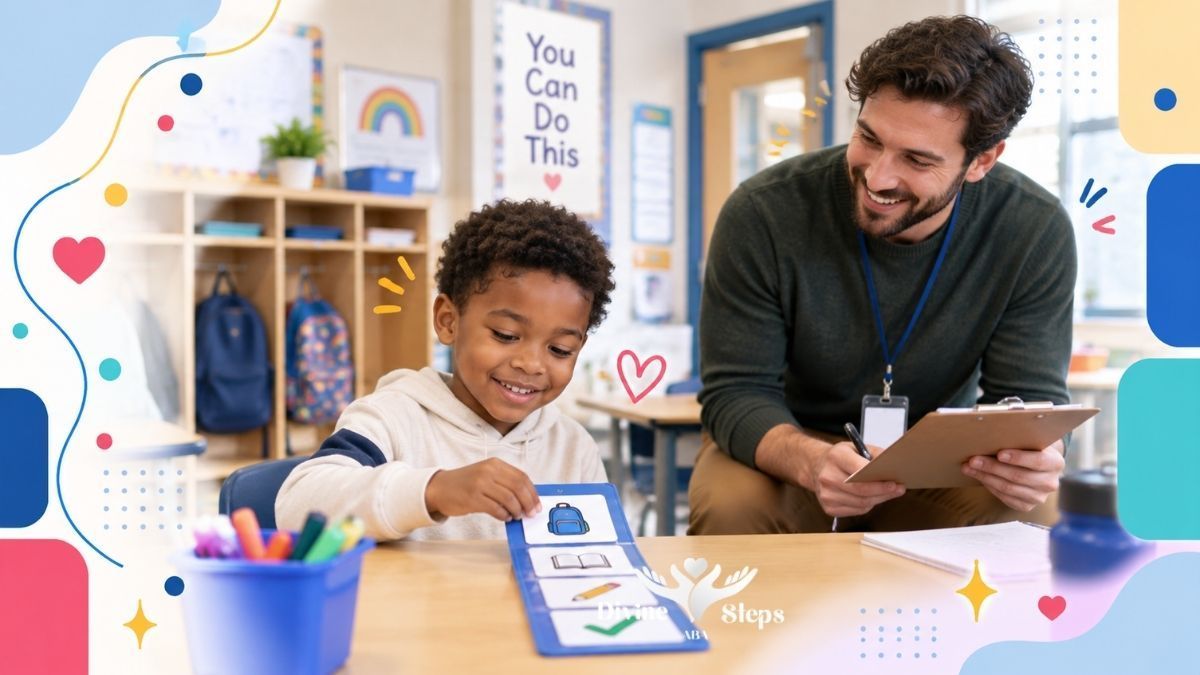
See how school-based ABA therapy in Maryland supports learning, transitions, and social skills. Explore a typical day.
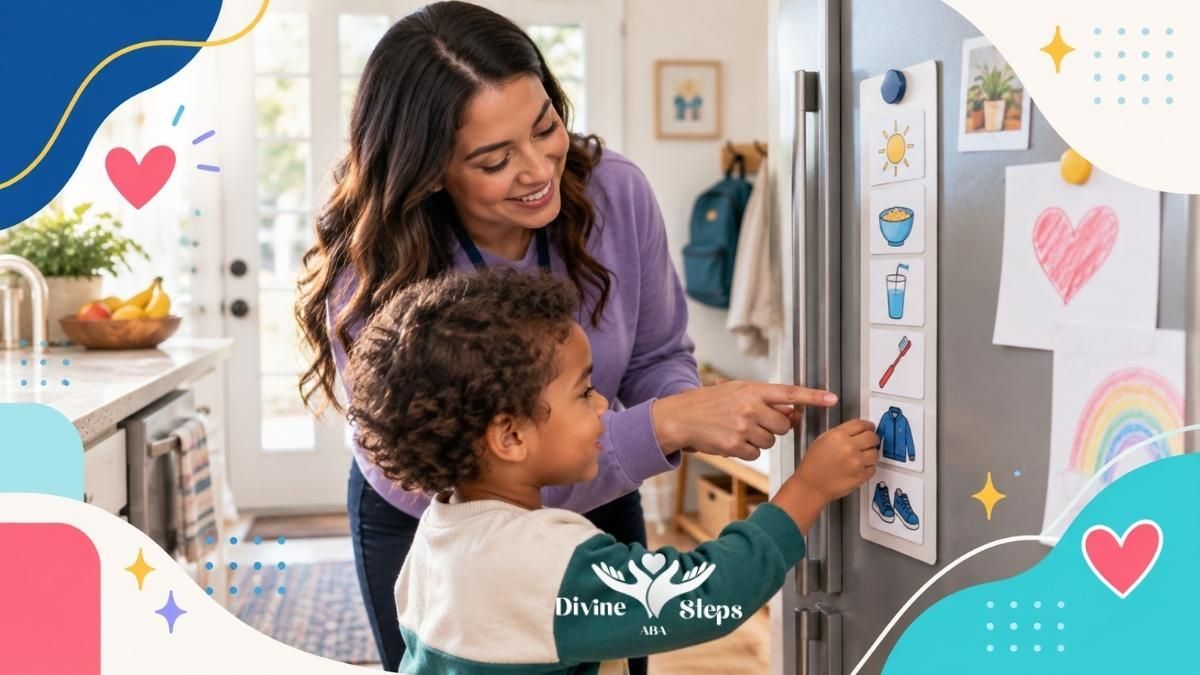
Parents learn what to expect from in-home ABA therapy. Real session routines, parent roles, and updates are covered.
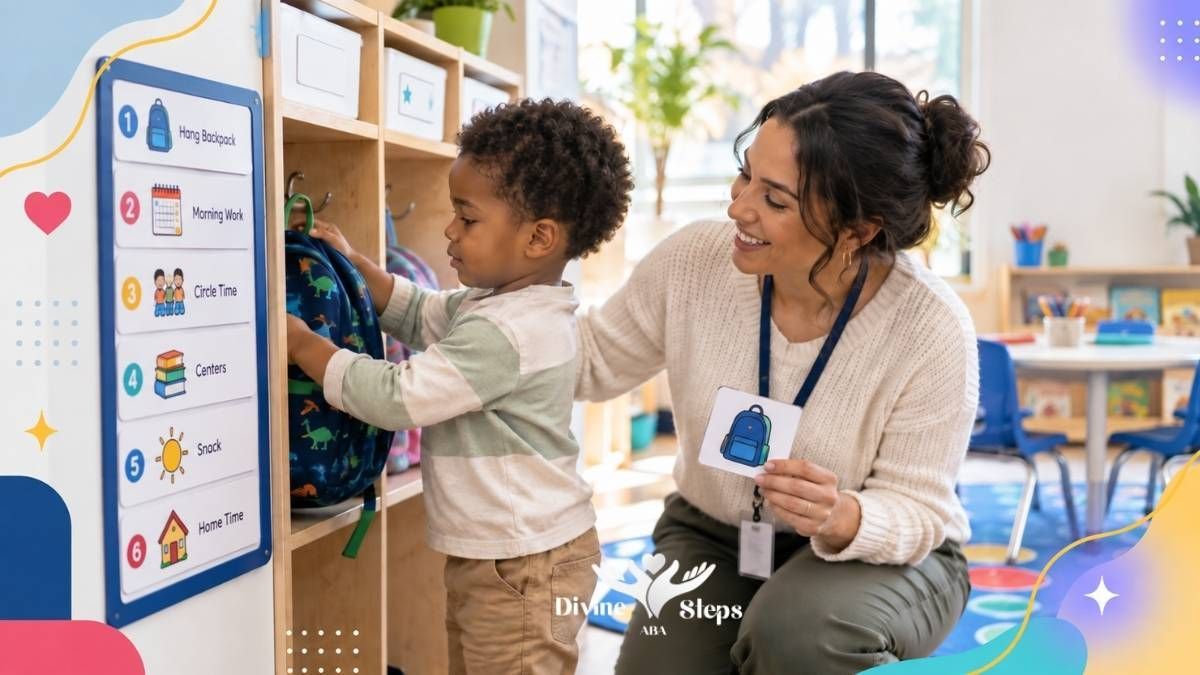
See how ABA therapy for school readiness builds classroom skills and independence. Learn what progress can look like.