


Website by CWS
What Is Autism? A Parent's Guide to the Spectrum, Types & Levels
January 22, 2026
Key Highlights
- Autism spectrum disorder (ASD) is a neurodevelopmental condition that affects social communication and behavior.
- Recognizing the early signs of autism is crucial for accessing timely support.
- An official autism diagnosis involves a comprehensive behavioral assessment, not a single medical test.
- Early intervention can significantly improve outcomes and help your child thrive.
- According to the Centers for Disease Control, autism affects about 1 in 31 children in the United States.
- ASD is described by three support levels and additional specifiers that help tailor each child's plan.
- With the right support, individuals with autism can reach their full potential.
Introduction
If you're a parent starting your journey to understand autism, you've come to the right place. Hearing the term autism spectrum disorder (ASD) can bring up many questions. As one of several neurodevelopmental disorders, autism shapes how a person communicates and interacts with the world. For many autistic people, this involves challenges with social skills and can be linked to their overall mental health. This guide is here to give you clear, straightforward information, from the basics of what autism is, through the different types and levels you'll see in clinical records, to the practical steps that help your child thrive.
Understanding Autism Spectrum Disorder (ASD)
Autism spectrum disorder is a complex neurodevelopmental condition. The word spectrum is key because it covers a wide range of symptoms and abilities. No two people with autism are exactly alike.
Common characteristics include challenges with social interaction and communication, along with restricted or repetitive behaviors. Understanding these core aspects is the first step for any parent. Below, we explain what ASD means in simple terms, how the terminology has evolved, and how common it is today.
Defining Autism in Simple Terms for Parents
Think of autism as a different way of thinking, interacting, and experiencing the world. It is a neurodevelopmental disorder, meaning it affects how the brain develops.
This can lead to challenges in areas like social skills, speech, and nonverbal communication. You might also notice repetitive behaviors or strong interests in specific topics.
It's important to remember that every child with autism has a unique set of strengths and challenges. Some may be nonverbal and communicate in other ways, while others can speak fluently. The goal is to understand your child's individual needs.
Autism vs. Autism Spectrum Disorder: Key Differences
You may hear the terms autism and autism spectrum disorder used interchangeably, and for good reason. Today, they generally refer to the same condition.
Previously, the official diagnostic guide, the Diagnostic and Statistical Manual of Mental Disorders (DSM), listed separate conditions like Asperger's disorder. The latest version (DSM-5) grouped these under the single umbrella diagnosis of autism spectrum disorder.
This change recognizes that these conditions share core characteristics and that autistic people experience them on a spectrum. Using "autism spectrum disorder" helps emphasize the wide variation in skills and challenges among individuals.
How Common Is Autism in the United States?
Research from the Centers for Disease Control (CDC) shows that autism spectrum disorder is more common than many people think. It's found in people of all races, ethnicities, and socioeconomic backgrounds across the United States.
The number of children diagnosed has been rising, partly due to better awareness and screening.
Current estimates provide a clearer picture of its prevalence:
| Population Group | Prevalence |
|---|---|
| Children | An estimated 1 in 31 |
| Adults | An estimated 1 in 45 |
Recognizing Signs and Symptoms of Autism
Knowing the signs of autism is the first step toward getting your child the support they need. The core symptoms usually fall into two main categories: persistent challenges in social communication and interaction, and restricted or repetitive behaviors.
These communication challenges and behaviors can look very different from one child to another. Learning to spot the early indicators and understanding how they present at different ages can make all the difference.
Early Warning Signs in Infants and Toddlers
While a formal diagnosis may not happen until later, you can often spot early signs of autism within the first few years of life, sometimes as early as 18 months of age. Early intervention is incredibly effective, so paying attention to developmental milestones is key.
If you notice your child isn't meeting certain social or communication milestones, it's wise to speak with your child's healthcare provider or a developmental pediatrician.
Some common red flags include:
- Little to no eye contact
- Not responding to their name by 12 months of age
- Not pointing at objects to show interest
- Delays in speech and language skills
Trusting your instincts as a parent is important. If you have concerns, seeking a professional opinion is a proactive and positive step.
Main Behavioral and Communication Symptoms in Children
As children grow, the signs of autism often become more apparent. Symptoms are typically grouped into two primary areas: social communication difficulties and repetitive behaviors.
For social communication, you might notice your child has trouble with back-and-forth conversation, understanding nonverbal communication like body language, or developing friendships. For repetitive behaviors, you may see your child engaging in repeated motions, having intense interests in specific topics, or being very sensitive to sensory input.
Common examples include:
- Difficulty understanding other people's feelings or perspectives
- Repeating words or phrases (echolalia)
- Strict adherence to specific routines
- Unusual reactions to sounds, smells, tastes, textures, or lights
Autism Traits Across Different Ages
Autism traits are present throughout a person's life, but they can change or look different at various stages. The diagnostic manual no longer uses terms like Asperger syndrome or childhood disintegrative disorder, but understanding how traits evolve is still helpful for parents.
In early childhood, the focus is often on missed developmental milestones. As children enter school, challenges with peer relationships and adapting to classroom routines may become more obvious. For teens and adults, these traits persist, though many learn strategies to navigate social situations.
Autism traits can manifest as:
- Difficulty making or keeping friends in school
- Intense focus on a few specific interests
- Challenges with organizational skills
- Learning to "mask" or hide symptoms to fit in
Causes and Risk Factors of Autism
One of the biggest questions parents have is, "What causes autism?" There is no simple answer. Research from the CDC and other institutions suggests there is no single cause. Instead, autism likely develops from a combination of genetic and environmental influences.
Understanding the known risk factors can help you make sense of the information available. These factors increase risk; they do not cause autism directly.
Biological and Genetic Influences
Research strongly points to biological and genetic influences as significant factors in autism. Genes play a major role, and families with one child with autism have a higher likelihood of autism in subsequent children.
Certain genetic conditions are also associated with autism. For example, Fragile X syndrome and tuberous sclerosis carry an increased risk. This is why genetic testing may sometimes be part of the diagnostic process, it can help identify an underlying condition.
It's not as simple as a single "autism gene." Scientists believe it is likely a combination of many genes that contribute to the development of autism, interacting with other factors.
Environmental Factors and Research Insights
While genetics are a key piece of the puzzle, researchers are also exploring potential environmental factors. These are factors that a person might be exposed to before, during, or after birth that could increase the risk of autism.
Research into these factors is ongoing. Scientists are looking at things like advanced parental age at the time of conception, pregnancy and birth complications, and pregnancies spaced less than one year apart. The CDC emphasizes that these factors do not cause autism on their own but may contribute to overall risk.
It's crucial to rely on credible scientific research rather than myths or speculation. There is no evidence, for instance, that vaccines cause autism. Understanding the real research helps you focus on what truly matters: supporting your child's health and development.
Diagnosing Autism: What Parents Need to Know
Receiving an autism diagnosis is a key step in accessing services and support for your child. There is no medical test, like a blood test, to diagnose autism. The process involves a comprehensive behavioral evaluation, usually conducted by specialized healthcare providers such as a developmental pediatrician, neurologist, or psychologist.
Screening, Assessment, and Diagnostic Processes
The journey to an autism diagnosis often begins with developmental screening during a well-child visit. Your pediatrician may ask questions about your child's behaviors and milestones. If the screening raises concerns, you will be referred for a more comprehensive assessment.
A formal evaluation is where the diagnosis is made. A specialist will use current DSM-5 criteria to assess your child through direct observation, interviews about developmental history, and other evaluations to rule out different conditions. The assessment looks at your child's social interaction, communication skills, and behavioral patterns.
Common Screening and Diagnostic Tools
Professionals use a combination of parent questionnaires and structured assessments. The tools you're most likely to hear about include:
- M-CHAT (Modified Checklist for Autism in Toddlers) — A parent-reported screening tool for children aged 16–30 months. Often used at well-child visits.
- ADOS-2 (Autism Diagnostic Observation Schedule, Second Edition) — A structured, play-based assessment of social interaction and communication, administered by a trained clinician.
- ADI-R (Autism Diagnostic Interview-Revised) — A detailed caregiver interview covering your child's developmental history and current behaviors.
Screening tools flag potential concerns; diagnostic instruments confirm the presence and characteristics of ASD. A thorough assessment is vital for creating an effective support plan tailored to your child's unique needs.
Age and Stages When Autism Can Be Identified
A reliable diagnosis of autism can often be made by age two. However, many children are not diagnosed until later, with the average age of diagnosis in the U.S. being around age five. Delays happen for many reasons.
In the early years of life, especially between 18 and 24 months of age, the signs can be clear for some but less so for others. A subtle presentation of symptoms, more common in girls, can lead to a later diagnosis. Girls may be better at "masking" their social challenges, and research suggests females are often diagnosed later or underrecognized.
For some individuals, a diagnosis may not come until the teen or adult years, especially if their support needs are lower. Recognizing the signs at any stage is the first step toward understanding and support.
Types and Levels of Autism Spectrum Disorder
Because autism is a spectrum, the abilities and needs of people with autism vary widely. Today's diagnostic manual (DSM-5) describes variation using a single ASD diagnosis combined with three severity levels and a set of specifiers. You may also still encounter older diagnostic terms in family records or research, we cover those here, too.
DSM-5 Diagnostic Criteria
Since 2013, the DSM-5 has consolidated prior subtypes under one ASD label. A diagnosis requires persistent deficits in social communication and social interaction across multiple contexts,
plus at least two forms of restricted or repetitive behaviors.
| Domain | Key Features |
|---|---|
| Social communication and interaction | Difficulty with back-and-forth conversation, reduced eye contact, challenges forming peer relationships |
| Restricted, repetitive patterns | Repetitive movements, insistence on sameness, highly focused interests, sensory sensitivities |
Clinicians assess both current and historical functioning, which allows for diagnosis even when symptoms only become clear later in life.
Understanding Severity Levels and Support Needs
The DSM-5 outlines three severity levels based on how much support a person needs for their social communication challenges and restricted, repetitive behaviors. These levels are not a reflection of a person's intelligence or worth, they simply describe support needs and help families plan services.
- Level 1: "Requiring support." Individuals at this level may have noticeable social communication challenges but can often speak in full sentences and engage in communication.
- Level 2: "Requiring substantial support." Individuals here have more marked challenges in verbal and nonverbal communication, even with support in place.
- Level 3: "Requiring very substantial support." Individuals at this level have severe deficits in communication and social skills and often require significant daily support.
Diagnostic Specifiers
Specifiers add depth to the ASD diagnosis by noting associated characteristics. They allow clinicians to capture a more nuanced profile, which helps tailor educational and therapeutic plans.
- Intellectual impairment specifier. Indicates whether an individual has an intellectual disability alongside ASD. This can range from no impairment to severe intellectual challenges.
- Language impairment specifier. Notes whether language skills are within typical limits or show deficits. Support may include speech therapy, sign systems, picture exchange, or electronic communication devices.
- Associated features specifier. Captures additional features such as epilepsy or other medical conditions, catatonia symptoms affecting movement and posture, and mental health concerns like anxiety or depression.
Specifiers help interdisciplinary teams address the full spectrum of needs in a single, coordinated plan.
Historical Subtypes You May Still Encounter
Before the DSM-5, five separate diagnoses fell under the umbrella of pervasive developmental disorders. You may still see these labels in older records, research papers, or community conversations.
- Autistic Disorder. Sometimes called "classic autism," this subtype involved marked social-communication challenges and a high rate of repetitive behaviors. Language delays and intellectual impairments were common.
- Asperger Syndrome. Named after Hans Asperger, this form featured social difficulties and restricted interests without significant language or intellectual delays. Added in DSM-IV in 1994, it was merged into ASD in DSM-5.
- Pervasive Developmental Disorder–Not Otherwise Specified (PDD-NOS). Described individuals who did not fully meet criteria for autism or Asperger's but showed key impairments in communication and behavior. Children with PDD-NOS tended to have greater language deficits than those with Asperger's but fewer restricted interests than classic autism.
- Rett Syndrome. A rare genetic disorder almost exclusively affecting females, involving typical early growth followed by loss of hand use, communication abilities, and motor control. It was removed from ASD classification in DSM-5 due to its specific genetic cause.
- Childhood Disintegrative Disorder (Heller's Syndrome). Showed typical development for at least two years, followed by significant regression in language, social skills, and motor abilities. Now subsumed under ASD.
Co-occurring Conditions in Autism
Many people with autism also have other medical or mental health conditions. These are known as co-occurring conditions and can affect a person's quality of life and support needs.
It's common for individuals with autism to also be diagnosed with attention-deficit/hyperactivity disorder (ADHD), anxiety, or depression. Some may also have a learning disability or intellectual disability, though many have average or above-average intelligence. Addressing these conditions is an important part of a comprehensive support plan.
Common co-occurring conditions include:
- Attention-deficit/hyperactivity disorder (ADHD)
- Anxiety and depression
- Gastrointestinal (GI) disorders
- Seizures and sleep disorders
- Sensory processing differences
Recognizing Your Child's Unique Profile
No two individuals on the autism spectrum are alike. The factors that shape each person's profile include:
- Age and timing of symptom onset
- Cognitive and language abilities
- Gender differences, females may be diagnosed later or underrecognized
- Co-occurring conditions such as ADHD, anxiety, or medical issues
Research has shown that responsiveness to treatment and long-term outcomes vary by individual profile. This diversity underscores the need for personalized educational and therapeutic approaches that align with each person's strengths and challenges, rather than one-size-fits-all programs.
Living with Autism: A Lifelong Journey
Autism is a lifelong condition. The needs, strengths, and challenges of an autistic person change over time as they move through different life stages. The support that works for a toddler will be different from what an autistic adult needs.
The goal is to provide the right support at the right time, so individuals can navigate daily life and build a fulfilling life. With understanding and accommodations, many people on the spectrum lead happy and independent lives.
Independence, Education, and Life Skills
Many autistic adults live entirely independently, while others may need varying levels of support. Fostering independence begins early by teaching essential life skills.
Education is a critical component. For school-age children, an individualized education plan (IEP) can provide the accommodations and support needed to succeed academically and develop social skills. The focus should be on building on your child's strengths.
As they grow, life skills become increasingly important.
These can include:
- Managing finances and budgeting
- Household chores and cooking
- Navigating public transportation
- Pursuing higher education or vocational training
Supporting Social Relationships and Family Life
Strong social relationships and a supportive family life are vital for everyone, including individuals with autism. Building these connections can sometimes be challenging depending on a person's support needs.
As a parent, you play a huge role in creating a supportive environment. This includes learning how your child communicates best, whether through speech, sign language, or an assistive device, and connecting with other families who understand the journey.
Ways to support social and family life include:
- Teaching how to understand social cues
- Finding clubs or groups based on your child's interests
- Educating extended family members about autism
- Celebrating your child's unique strengths and personality
Conclusion
Understanding autism is crucial for parents and caregivers navigating this journey. The autism spectrum encompasses a wide range of characteristics, challenges, and strengths that vary from individual to individual, described today through DSM-5 severity levels and specifiers, and still sometimes referenced through older subtypes like Asperger syndrome and PDD-NOS. By recognizing the signs, understanding the causes, knowing how diagnosis works, and tailoring support to each child's unique profile, you empower your loved ones to lead fulfilling lives. Every step toward awareness and acceptance fosters a more inclusive environment.
At Divine Steps ABA, we're here to walk that journey with you. Our compassionate ABA therapy programs across Maryland, Virginia, and North Carolina are personalized to meet each child's unique needs. Whether you're a parent, educator, or professional, we offer expert support to help individuals with autism thrive.
Take the first step toward meaningful progress. Contact us today!
Frequently Asked Questions
Can people with autism live independent lives?
Yes. Many autistic adults live entirely independently, while others may need some level of support. Independence is built over time through life skills, education, and individualized planning.
Is autism a lifelong condition?
Yes. Autism is lifelong, but the needs, strengths, and challenges of an autistic person will change over time. The right supports at each stage help individuals thrive into adulthood.
At what age do signs of autism usually appear?
Signs can appear as early as 18 months, and a reliable diagnosis can often be made by age two. However, the average age of diagnosis in the U.S. is around age five, and some individuals, particularly girls and those with lower support needs, are diagnosed in their teens or adulthood.
What are the different levels of autism spectrum disorder under the DSM-5?
The DSM-5 defines three severity levels: Level 1 (requiring support), Level 2 (requiring substantial support), and Level 3 (requiring very substantial support). Levels describe support needs, not intelligence or worth.
What screening tools are used to identify autism?
Common tools include the M-CHAT (a parent-reported screen for toddlers aged 16–30 months), the ADOS-2 (a structured, play-based assessment), and the ADI-R (an in-depth caregiver interview). Screening flags potential concerns; full diagnostic evaluations confirm them.
Can ABA therapy be customized to meet the needs of children at different ASD levels?
Yes. ABA therapy is built around each child's individual profile, their support level, language and cognitive abilities, co-occurring conditions, and family goals, so programs look different from one child to the next.
SOURCES:
https://www.psychiatry.org/psychiatrists/practice/dsm
https://www.cdc.gov/index.html
https://en.wikipedia.org/wiki/Centers_for_Disease_Control_and_Prevention
https://watch.spectrum.net/
https://www.gsma.com/connectivity-for-good/spectrum/what-is-spectrum/
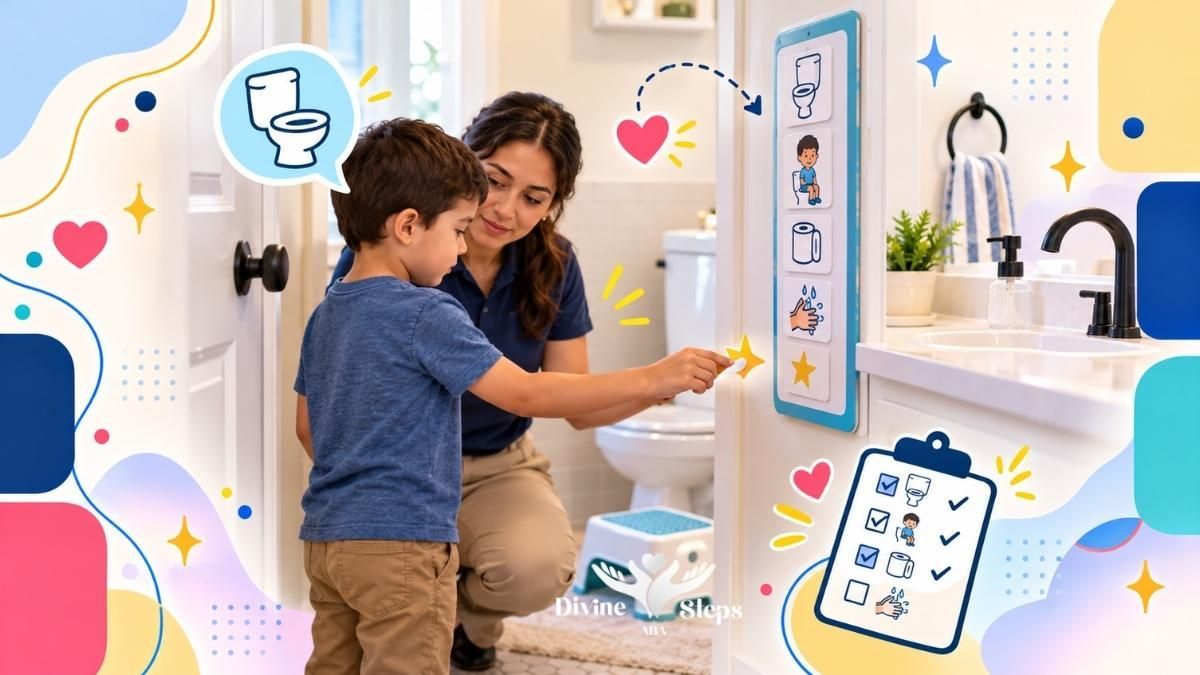
ABA potty training supports bathroom skills at your child's pace. Small goals and caregiver practice shape the routine.

What to do after an autism diagnosis starts with the report. See state programs, school rights, and ABA intake tips.

ABA therapy out-of-pocket cost depends on your care and plan. A worked example explains deductibles and coinsurance.