


Website by CWS
Effective Ways for Improving Lives of Kids with Autism
February 20, 2026
Key Highlights
- Understanding the unique needs of a child on the autism spectrum is the first step toward improving their quality of life.
- Creating structured daily routines and sensory-friendly spaces at home provides comfort and reduces anxiety.
- Developing communication skills and promoting independent living are essential for their future success.
- Evidence-based therapies like Applied Behavior Analysis (ABA) can significantly improve social and behavioral outcomes.
- Collaboration between families, schools, and community resources creates a supportive network for the child.
- Early intervention is crucial for maximizing a child's full potential and long-term development.
Introduction
Supporting a child on the autism spectrum means understanding their unique needs and making adjustments to help them thrive. The most effective ways to improve their daily lives involve creating a supportive environment, developing essential life skills, and accessing tailored therapies. By taking these steps, you can significantly enhance your child’s quality of life and empower them to reach their full potential. This guide will provide you with actionable tips and strategies to support your child's journey with confidence and compassion.
Understanding the Unique Needs of Kids with Autism
Every child with autism spectrum disorder is different, with their own set of strengths and challenges. A deep understanding of autism and your child's specific needs is fundamental to providing the right support. This means looking beyond the diagnosis to see the individual.
Recognizing these unique needs allows you to tailor interventions and create an environment where they can feel secure and understood. This personalized approach is essential for their growth and development, laying the groundwork for more specific strategies.
Common Challenges and Strengths of Children with Autism Spectrum Disorder
Children with autism spectrum disorder face unique challenges, particularly in social situations. Difficulties with social skills, such as interpreting nonverbal cues or engaging in reciprocal conversations, are common. You may also notice repetitive behaviors, which can be a way for them to cope with sensory overload or anxiety.
However, it's just as important to recognize their strengths. Many children with autism have incredible attention to detail, a deep passion for specific interests, and a unique way of seeing the world. These strengths can be nurtured to build confidence and skills.
Here are some common challenges and strengths:
- Challenges: Difficulty with social interaction, communication, and understanding social cues.
- Strengths: Strong memory, visual learning abilities, and expertise in specific subjects.
- Behaviors: Repetitive movements or adherence to strict routines.
- Needs: A predictable environment to minimize anxiety and support social learning.
Recognizing Early Signs and the Importance of Timely Support
Recognizing the early signs of autism is crucial because it opens the door to timely support. Early intervention can have a profound impact on long-term outcomes, helping children develop essential skills from a young age. Parents should be aware of developmental milestones, especially within the first few years.
For example, by 12 months of age, many toddlers babble and use gestures like pointing. An absence of these behaviors, along with limited eye contact or unusual reactions to sensory stimuli, might be a reason to consult a pediatrician. These signs are part of the diagnostic criteria for an autism diagnosis.
Getting support early equips your family with the right tools and resources. It maximizes your child’s potential for growth by addressing developmental challenges head-on, leading to significant improvements in communication, social skills, and behavior.
Creating a Supportive Home Environment
A calm and predictable home is a cornerstone of a supportive environment for a child with autism. Simple adjustments to your living space and daily routines can reduce anxiety and create a sense of safety, which significantly improves their quality of life. This involves managing sensory input and establishing consistent schedules.
By focusing on structure and sensory comfort, you can foster a setting that promotes independence and security. We'll explore how to structure daily life and design sensory-friendly spaces to achieve this.
Structuring Daily Routines for Comfort and Consistency
Children with autism often thrive on predictability. Consistent schedules for waking up, meals, and bedtime help create a stable framework for their day, reducing anxiety and making transitions smoother. This structure helps them understand what to expect, which can prevent sensory overload.
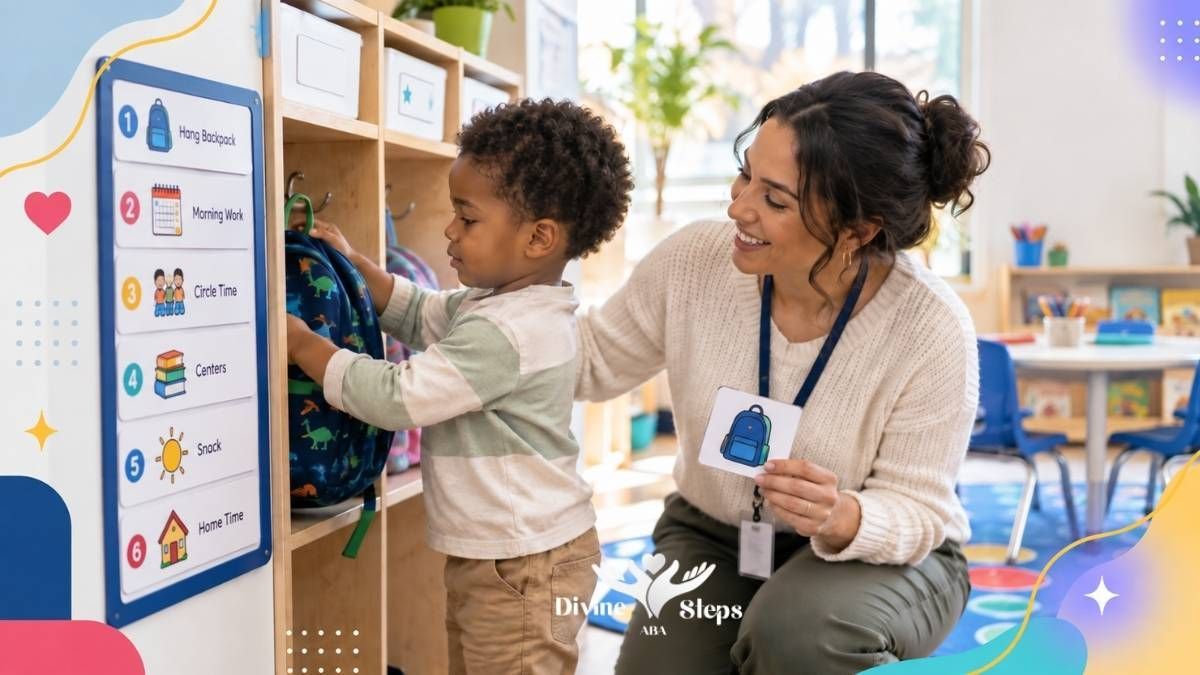
One of the simplest ways to make daily routines easier is by using visual aids. Visual schedules that use pictures or icons can clearly outline the day's activities, helping your child follow along. This is especially helpful for children who are visual learners or have communication challenges.
Here are a few tips to make daily routines easier:
- Use visual schedules to show the sequence of daily activities.
- Offer choices within the routine to encourage independence (e.g., "Do you want the red cup or the blue cup?").
- Use visual timers to help with transitions between tasks.
- Introduce changes to the routine gradually to allow your child time to adjust.
Designing Sensory-Friendly Spaces at Home (With Real-Life Examples)
Creating sensory-friendly spaces is a practical way to support your child’s daily functioning. This involves identifying and minimizing potential sensory triggers that can lead to sensory overload. Simple changes can make a huge difference in creating a calm and comfortable home.
For instance, some children are sensitive to bright lights, while others are overwhelmed by loud noises. In our experience, families in Maryland, Virginia, and North Carolina have found success by creating a "sensory corner" or designated quiet area. This space can serve as a safe retreat when your child feels overwhelmed.
Here are some real-life examples for designing a sensory-friendly space:
- For light sensitivity: Use blackout curtains or dimmer switches to control lighting. We've seen families in Virginia use soft, warm-toned light bulbs to create a calmer atmosphere.
- For sound sensitivity: Provide noise-canceling headphones. A family in North Carolina laid down soft rugs to dampen echoes in their home.
- For tactile needs: Offer a calming corner with soft blankets, weighted objects, and textured toys.
- For organization: Use clear-labeled bins and visual aids to keep toys and materials organized and predictable.
Developing Essential Life Skills in Children with Autism
Helping your child develop essential life skills is vital for their long-term independence and quality of life. This includes everything from self-care routines like dressing and brushing teeth to crucial communication skills needed for social interaction. Building these abilities empowers your child to navigate the world with greater confidence.
Focusing on these skills prepares them for future challenges and successes. The following sections will provide practical strategies to build independence and encourage effective communication within your family.
Practical Strategies for Building Independence and Self-Care
Building independence in self-care starts with breaking down daily activities into smaller, more manageable steps. Instead of asking your child to "get dressed," you can guide them through each part of the process: putting on a shirt, then pants, then socks. This approach, often used in behavior analysis, makes tasks less overwhelming.
Positive reinforcement is a powerful tool in this process. Celebrating small successes with praise or a small reward builds confidence and motivation. Consistency is key, so practice these routines daily to help them become second nature.
Here are some practical strategies to help your child develop important life skills:
- Break down complex tasks into smaller steps using a visual chart or checklist.
- Model the desired behavior and guide your child through it.
- Use positive reinforcement, like praise or a sticker, for each accomplishment.
- Gradually reduce your support as your child becomes more capable of completing the task independently.
Encouraging Communication and Social Interaction within the Family
Fostering communication skills and social interaction within the family creates a foundation for your child to succeed socially with peers. Communication is more than just words; it includes nonverbal cues, gestures, and alternative communication methods. Family support plays a crucial role in creating a safe space to practice these skills.
In our sessions, we often encourage families to incorporate play-based activities that naturally promote interaction. Simple games, reading together, or even singing songs can enhance verbal communication and connection. For children with limited verbal skills, visual supports like picture cards can be incredibly effective.
Consider these strategies to encourage communication:
- Use a picture exchange communication system (PECS) to help your child express their needs and wants.
- Model clear and simple language during daily interactions.
- Create structured play opportunities with siblings or family members to practice turn-taking.
- Acknowledge and respond to all communication attempts, whether verbal or nonverbal, to build confidence.
Effective Therapies and Interventions for Autism
Several evidence-based interventions are available to help children with autism thrive. Therapies like Applied Behavior Analysis (ABA), occupational therapy, and speech therapy work together to address specific needs and enhance daily functioning. These therapies provide structured support to improve communication, motor skills, and behavior.
Choosing the right combination of therapies ensures a holistic approach to your child’s development. We'll now look at the benefits of these key interventions and how they contribute to a better quality of life.
Evidence-Based Benefits of Applied Behavior Analysis (ABA) Therapy
Applied Behavior Analysis (ABA) therapy is one of the most widely recognized and evidence-based interventions for autism. At its core, ABA uses principles of behavior analysis to teach meaningful skills and reduce challenging behaviors. A key component is positive reinforcement, where desired behaviors are rewarded to encourage their repetition.
ABA therapy is highly individualized, with programs tailored to each child's specific goals. It can be used to improve a wide range of skills, including communication, social skills training, and daily living tasks. Through consistent practice and data-driven adjustments, ABA helps children make measurable progress.
The evidence for ABA therapy shows significant improvements in several key areas:
| Skill Area | How ABA Helps |
|---|---|
| Communication | Teaches verbal and nonverbal communication skills, including using AAC devices. |
| Social Skills | Improves social interaction, turn-taking, and understanding social cues. |
| Daily Living | Builds independence in self-care routines like dressing and hygiene. |
| Behavior | Reduces challenging behaviors by teaching positive replacement skills. |
The Role of Occupational and Speech Therapy in Daily Life (Including Local Case Studies from Maryland, Virginia, and North Carolina)
Occupational therapy (OT) and speech therapy are crucial for improving the daily functioning of children with autism. Occupational therapists help with fine motor skills, sensory processing, and self-care routines. For example, we worked with a child in Maryland who struggled with handwriting; his OT introduced specialized grips and exercises that greatly improved his ability to write.
Speech therapy focuses on developing language skills and communication. This can range from improving articulation to using alternative communication systems. We've seen remarkable progress in our case studies, like a child in Virginia who began using a tablet with speech-generating software to express her needs after just a few months of therapy.
In North Carolina, another one of our clients in OT learned to manage sensory sensitivities during mealtimes, expanding his food preferences and making family dinners more enjoyable. Together, these therapies provide practical tools that empower children to participate more fully in their daily lives.
Community and School Partnerships for Lasting Change
Improving the lives of kids with autism extends beyond the home. Strong school partnerships and connections to community resources create a comprehensive support system that fosters lasting change. Collaboration with teachers, therapists, and local support services ensures that your child receives consistent and appropriate support in all areas of life.
This network enhances social skills development and access to social opportunities, which are vital for a high quality of life. Let's explore how schools and community organizations can play a role in this journey.
How Teachers and Schools Can Support Kids with Autism (Classroom Tips and Collaboration)
Teachers and schools are essential partners in supporting children with autism. Effective classroom support often involves simple, practical adjustments that create a more inclusive learning environment. Clear communication and collaboration between parents and educators are key to ensuring the child receives appropriate support.
Using tools like visual schedules can help a child understand the classroom routine, while social stories can prepare them for specific social situations or changes. A predictable and structured environment helps minimize anxiety and allows the child to focus on learning.
Here are some practical tips teachers can use to provide classroom support:
- Use Visual Schedules: Display a daily schedule with pictures to help students anticipate what's next.
- Create a Calm-Down Corner: Designate a quiet space in the classroom where a student can go to self-regulate.
- Incorporate Social Stories: Use stories to teach social skills and explain expectations for different situations.
- Maintain Open Communication: Regularly collaborate with parents and therapists to ensure consistent strategies.
Accessing Community Resources and Social Opportunities for Families
Connecting with community resources can provide invaluable support for families and create social opportunities for children with autism. Many communities offer support services, from social skills groups to recreational programs designed for children with developmental disabilities. These programs offer a safe and structured setting for practicing social skills.
These resources help children navigate social situations and build friendships with peers who have similar interests. They also provide a sense of belonging and community for the entire family, reducing feelings of isolation. Engaging with these opportunities can be a key step toward fostering independent living skills.
To find these resources, you can:
- Join local parent support groups for recommendations and shared experiences.
- Check with community centers for adaptive sports or art programs.
- Look for social skills groups facilitated by trained therapists.
- Explore respite care services that offer support for caregivers.
Conclusion
Improving the lives of children with autism requires a multifaceted approach that encompasses understanding their unique needs and creating supportive environments. By recognizing the challenges they face and implementing practical strategies at home and in school, we can foster their development and independence. Evidence-based therapies, such as ABA, occupational, and speech therapy, have shown significant benefits in enhancing life skills and communication. Collaborating with educators and accessing community resources ensure that children with autism receive the support they need to thrive. Together, as families, educators, and therapists, we can create a positive impact on their lives and help them reach their full potential.
At Divine Steps ABA, we specialize in personalized ABA therapy Maryland, Virginia, and North Carolina that empower children and families.
Discover tailored strategies that can make a meaningful difference in your child’s development. Contact us today!
Frequently Asked Questions
How does ABA therapy improve the lives of children with autism?
ABA therapy uses structured, evidence‑based techniques to build communication, social, and life skills, helping children gain independence and confidence.
What age is best to start ABA therapy?
Early intervention, often beginning between ages 2 and 5 has shown the most significant impact, though ABA can benefit individuals of all ages.
How can parents and educators support children with autism outside of therapy?
Consistency is key. Reinforcing skills at home and in school, creating structured routines, and collaborating with therapists help children succeed across environments.
SOURCES:
https://www.autism.org.uk/advice-and-guidance/professional-practice/occupation-therapy
https://pmc.ncbi.nlm.nih.gov/articles/PMC11302171/
https://otaonline.stkate.edu/blog/occupational-therapy-for-autism/
https://nhws.us/2025/01/24/why-is-occupational-therapy-important-for-autism/
https://www.scribd.com/document/620489784/OT-for-Autism

Parents learn what to expect from in-home ABA therapy. Real session routines, parent roles, and updates are covered.
See how ABA therapy for school readiness builds classroom skills and independence. Learn what progress can look like.

Families can confirm Aetna ABA therapy coverage in Maryland before care starts. Seven checks show what to verify.