


Website by CWS
Can Children Receive Private ABA in Maryland Schools?
November 4, 2026
Key Points:
- Private ABA in schools follows a clinical treatment plan separate from school-provided educational services.
- District policies determine which outside-provider arrangements a school permits.
- Maryland Medicaid requires a documented clinical reason for school treatment and a plan to reduce that support.
A child may receive private Applied Behavior Analysis (ABA) therapy at school in Maryland when school rules, treatment needs, and coverage requirements allow it. Insurance approval alone does not give an outside therapist permission to work on campus.
At Divine Steps Therapy, we offer school-based ABA support and collaborate with educators. Before arranging treatment, families need to know which decisions belong to the school, insurer, and ABA team.
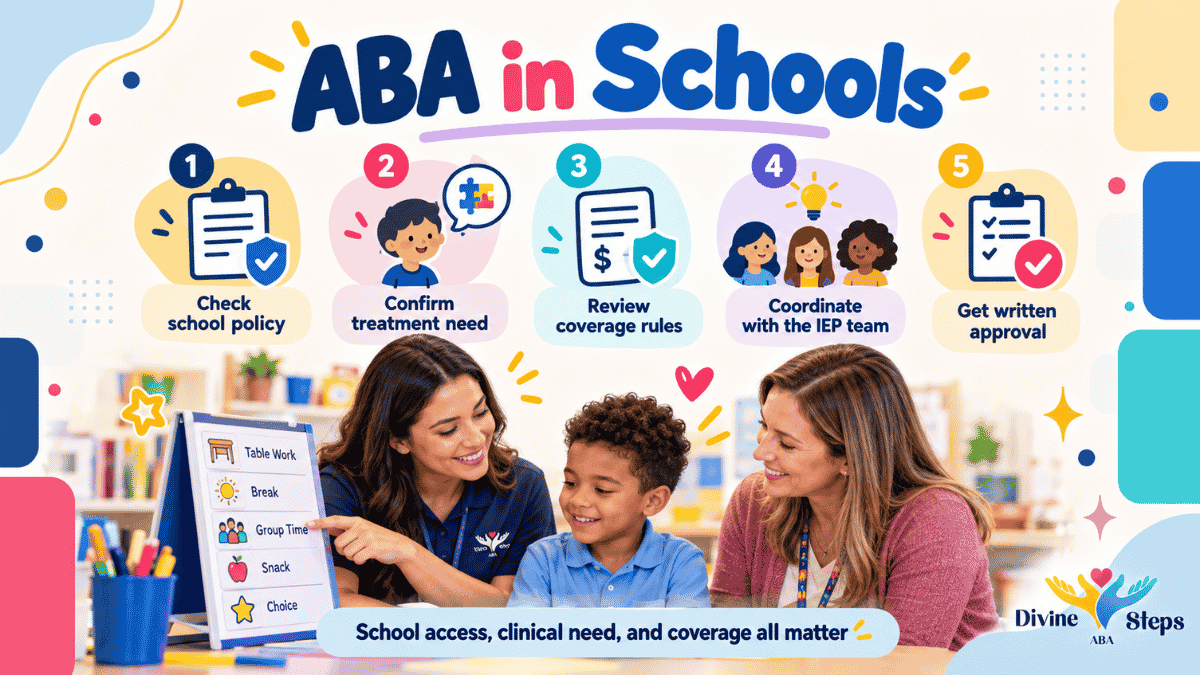
Who Approves Private ABA in Schools?
Private ABA in school involves several decisions. A Board Certified Behavior Analyst (BCBA), the professional who plans and oversees treatment and reviews whether the school setting meets your child’s clinical needs. The insurer reviews payment requirements, while the school handles campus access.
| Your Question | Who Handles the Decision? |
|---|---|
| Is school an appropriate treatment setting? | ABA clinical team |
| Does the requested service meet coverage requirements? | Insurer |
| Can an outside practitioner work on campus? | School or district |
| Which educational supports belong in the IEP? | IEP team |
| How should both teams exchange information? | Parent, school, and provider |
For example, an insurer might approve ABA treatment while the school restricts recurring private appointments. The next conversation would concern school access, even though coverage has already received approval.
Our insurance support includes benefits checks and authorization paperwork. Each plan’s decision still depends on its requirements and the requested services.
How Can School Rules Affect an Outside ABA Therapist?
School approval for private ABA depends on the arrangement being requested. A classroom observation, a meeting, and recurring treatment may follow different procedures.
Your first conversation with the school can address these questions:
- Which person handles requests for outside practitioners?
- Which policy applies to the proposed service?
- Does the school permit recurring treatment, observation, or consultation?
- Which forms and provider documents does the school require?
A provider’s service area does not establish permission at every campus. The school needs to explain what it permits before anyone schedules sessions.
What Do MCPS Rules Allow?
Montgomery County Public Schools (MCPS) provides an example of why district policies need an early review. Its rules for non-MCPS providers generally place parent-arranged private appointments outside school hours and off campus.
Under that process, principals may approve a few sessions connected with a student or family crisis. They cannot approve regularly recurring appointments for an entire marking period, semester, or school year. MCPS addresses partner providers through a separate arrangement.
These rules apply to MCPS. Another district or private school may use different procedures. Families should identify the policy that applies to their child’s school without assuming that a general visitor pass permits treatment.
What Does Maryland Medicaid Require for School-Based ABA?
The Maryland Medicaid ABA Provider Manual treats school-based ABA as short-term care that needs a clinical reason. Treatment during school hours is not the benefit’s standard model.
The treatment plan must explain:
- School observations and why treatment needs to happen there.
- Proposed activities, timing, and school staff involvement.
- How treatment avoids duplicating services.
- How school services will decrease and skills will carry into other settings.
- Hours across settings, an IEP copy when applicable, and a behavior intervention plan when targeting challenging behaviors.
A Registered Behavior Technician (RBT) or behavior technician cannot act as a one-to-one educational aide or provide academic instruction under this benefit. A school’s requirement that families supply support staff does not establish medical necessity for ABA approval.
Commercial insurance uses its own coverage rules. Insurance coverage for school-based ABA therefore needs a review of the child’s specific plan and proposed treatment location.
How Does Private ABA Affect an Existing IEP?
An Individualized Education Program (IEP) describes special education and related services for an eligible student. Private ABA follows a separate clinical plan. An IEP does not automatically authorize an outside ABA therapist to deliver treatment at school.
The useful question is who will address each need. For example, a child may need a way to communicate discomfort during a noisy activity. The school and clinical teams can identify their responsibilities without treating the two plans as interchangeable.
Under federal IEP requirements, the IEP team must consider positive behavioral interventions and supports when behavior interferes with the child’s learning or other students’ learning. That educational review remains relevant when private treatment cannot occur on campus.
Our BCBAs and therapists work with educators as part of our school-based services. Family permission and the school’s requirements help establish how the teams can exchange information.
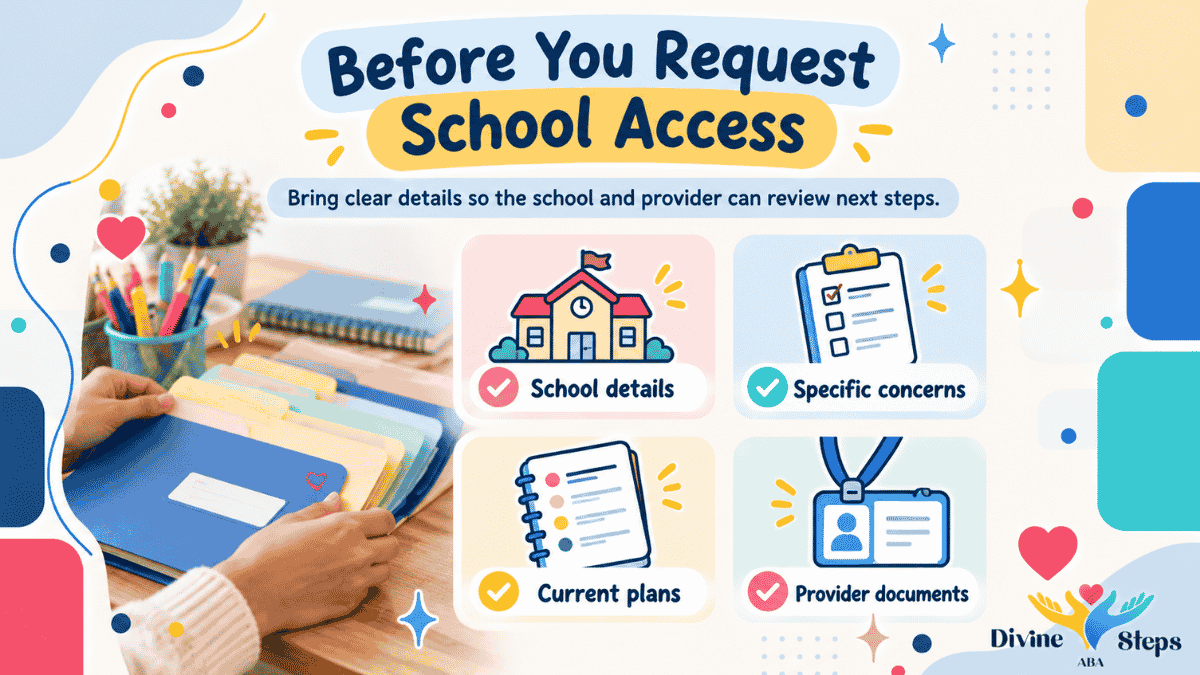
What Should Families Prepare Before Requesting School Access?
A short description of your child’s needs gives the school and provider a useful starting point. Specific observations help more than a broad request for “extra support.”
For example, “My child leaves the group during assemblies and cannot tell an adult what feels uncomfortable” identifies a situation the teams can review.
Useful information includes:
- School details: School name, district, grade, and contact person.
- Specific concerns: Activities where your child needs help and what adults observe.
- Educational records: An existing IEP or Section 504 plan, when applicable.
- Clinical documents: Records requested by the provider or insurer.
- Provider information: Credentials and other documents the school requests.
Written confirmation should identify the permitted activity, location, schedule, and any limits before sessions begin.
Questions are welcome during intake. In a published family testimonial, Chani T., a Maryland parent, described appreciating the time our intake coordinator spent explaining ABA after a doctor recommended it. That account reflects one family’s experience with understanding the service.
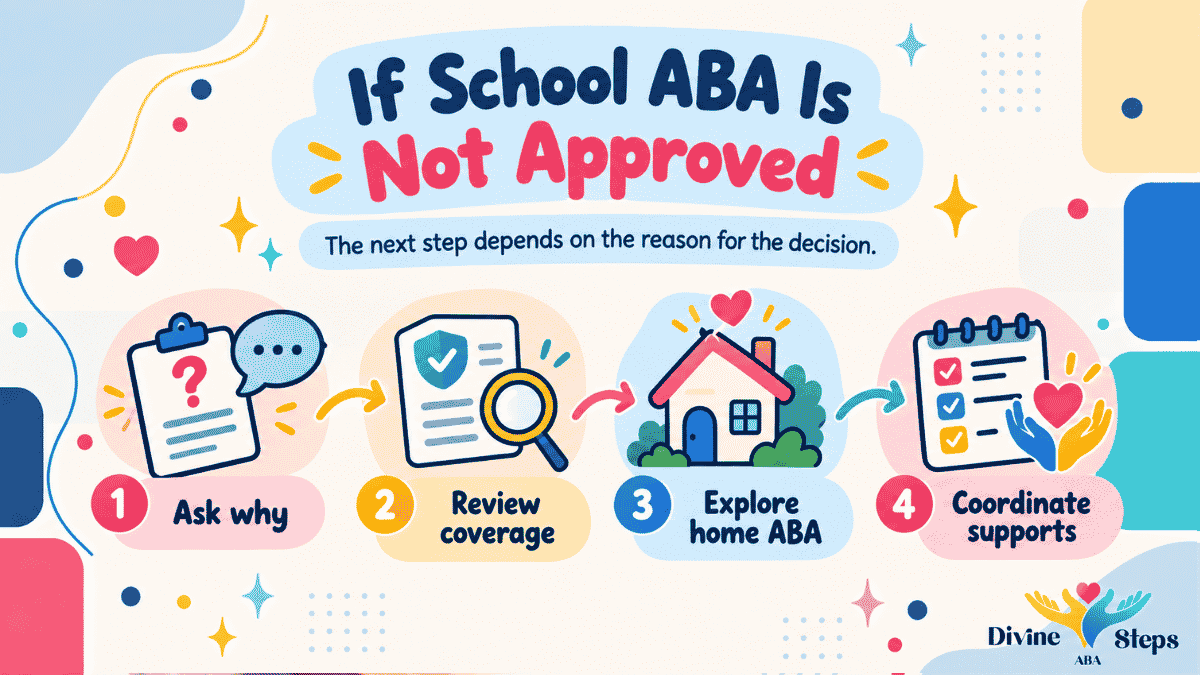
What Can Families Do If Private ABA Cannot Happen at School?
The reason for the decision determines the next step. A school access restriction needs a conversation with the school or district. An insurance decision needs a review with the insurer and clinical team.
Your provider can consider whether another treatment setting meets your child’s needs. We offer in-home ABA therapy, which families can explore when the treatment plan and coverage support it.
School concerns still deserve attention. The educational team can review classroom support while the clinical team considers treatment outside campus.
FAQs About ABA in Schools
Can my child’s private therapist attend an IEP meeting?
MCPS allows a parent or guardian to invite a private practitioner to a meeting about a student the practitioner supports. Its rules require a signed information-release form for continued communication between the school and practitioner. Meeting participation does not grant permission for classroom treatment.
What happens if my child changes schools?
The new school’s access requirements need a fresh check before sessions resume there. Families should also have the provider review whether the move affects the treatment plan or insurance authorization. Permission at the previous campus should not serve as confirmation for the new one.
What ages do your Maryland services cover?
Our ABA services in Maryland support children ages 1 to 11. Your child’s age and ZIP code help our team review service options during your inquiry.
Plan Your Next School Support Conversation
Private ABA at school requires an agreed arrangement for clinical care, campus access, and payment. A specific description of your child’s needs helps each team explain its role and address any unresolved decision.
At Divine Steps Therapy, we can explain our school-based services and insurance support. Your inquiry can include your child’s age, ZIP code, school, and insurance plan so our team can review the next steps with you.
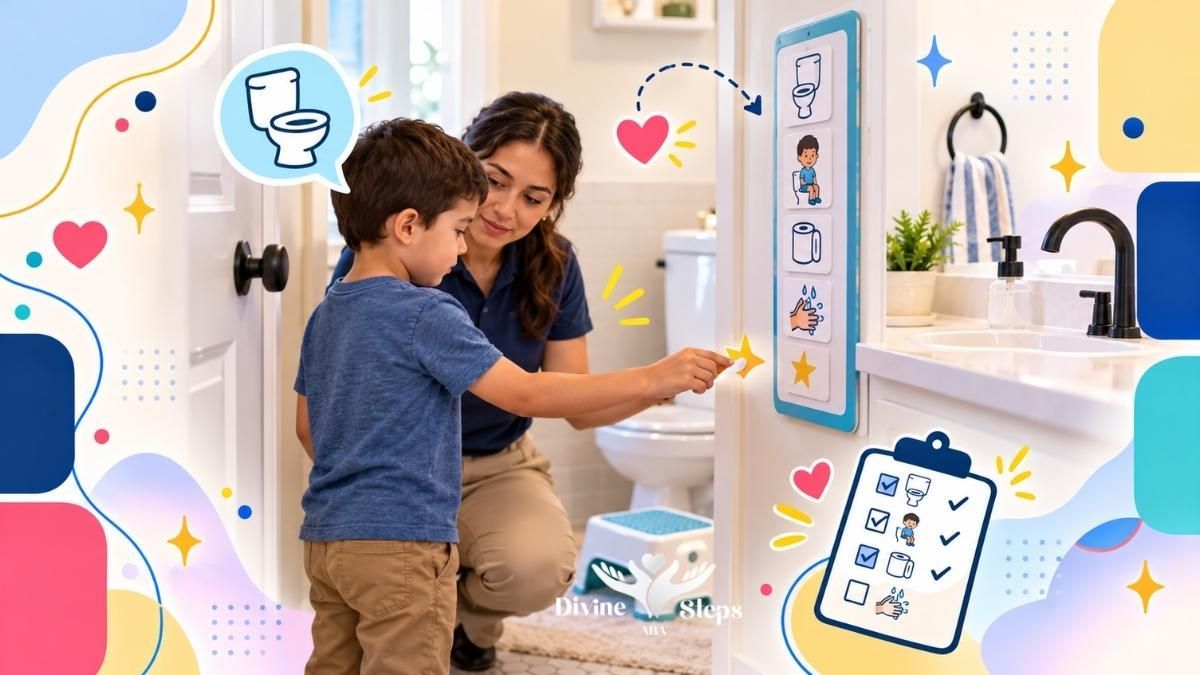
ABA potty training supports bathroom skills at your child's pace. Small goals and caregiver practice shape the routine.

What to do after an autism diagnosis starts with the report. See state programs, school rights, and ABA intake tips.

ABA therapy out-of-pocket cost depends on your care and plan. A worked example explains deductibles and coinsurance.