


Website by CWS
Why Pairing in ABA Therapy Starts With Play and Connection
November 18, 2026
Key Points:
- Pairing in ABA therapy aims to make time with a therapist enjoyable through activities a child chooses.
- A favorite toy alone does not show that a child welcomes another person’s involvement.
- Parents can notice responses to shared activities and discuss how the team balances relationship building with learning.
Pairing in ABA therapy helps a child connect time with a therapist to experiences they enjoy. A session with cars, drawing, or music can have a purpose even when it looks relaxed.
The purpose goes beyond choosing a fun activity. The therapist also pays attention to how the child responds to sharing that experience. Those responses help the team understand how to begin and maintain a positive working relationship.
What Is Pairing in ABA Therapy?
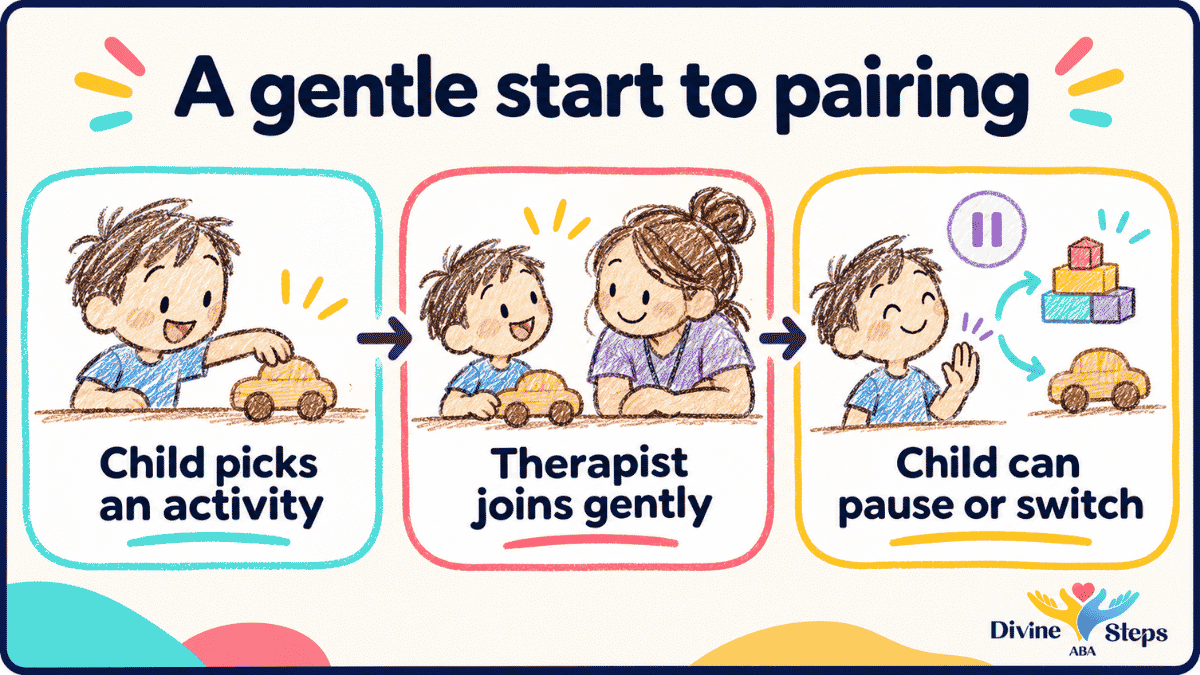
Pairing is a process in which a therapist becomes associated with enjoyable activities and interactions. The aim is to build rapport, which means a positive working relationship. Published research on pairing procedures describes this approach as a way to build rapport and create a positive therapy setting.
Three terms help explain the process:
- Preferred activity: Something the child enjoys at that time. Preferences can change.
- Presession pairing: Enjoyable interaction before a teaching period begins.
- Rapport building: Developing a relationship through repeated interactions.
During pairing, a therapist may offer an activity without asking the child to complete a task first.
For example, imagine a child rolling cars down a ramp. The therapist offers another car and joins the game without first asking the child to name its color. The child can enjoy the shared play without earning each turn through an answer.
Play Gives the Therapist a Way to Learn About Your Child
Play gives a therapist opportunities to notice interests, communication, and responses to another person’s involvement.
Families looking for ABA therapy pairing week ideas can start with activities their child already chooses. Options to discuss with the team include:
- Drawing: Working on separate pictures beside one another.
- Building: Offering blocks when the child welcomes help.
- Music: Sharing a song at a comfortable volume.
- Books: Looking at pages the child selects.
- Pretend play: Joining a familiar game when the child invites participation.
For example, two children might both like music. One welcomes singing and dancing together. The other prefers listening quietly. The same song can call for different interactions.
Through our individualized in-home ABA therapy, we build plans around each child’s interests and needs. Our Registered Behavior Technicians, or RBTs, provide home sessions. Familiar activities offer starting points, while each child’s responses help us understand the interaction.
Enjoyable sessions don’t guarantee faster learning. A
small study involving four children found that training therapists in presession pairing had a very small effect on how quickly the children learned daily living skills. Relationship building and skill progress both deserve attention.
What Can Parents Notice During Pairing?
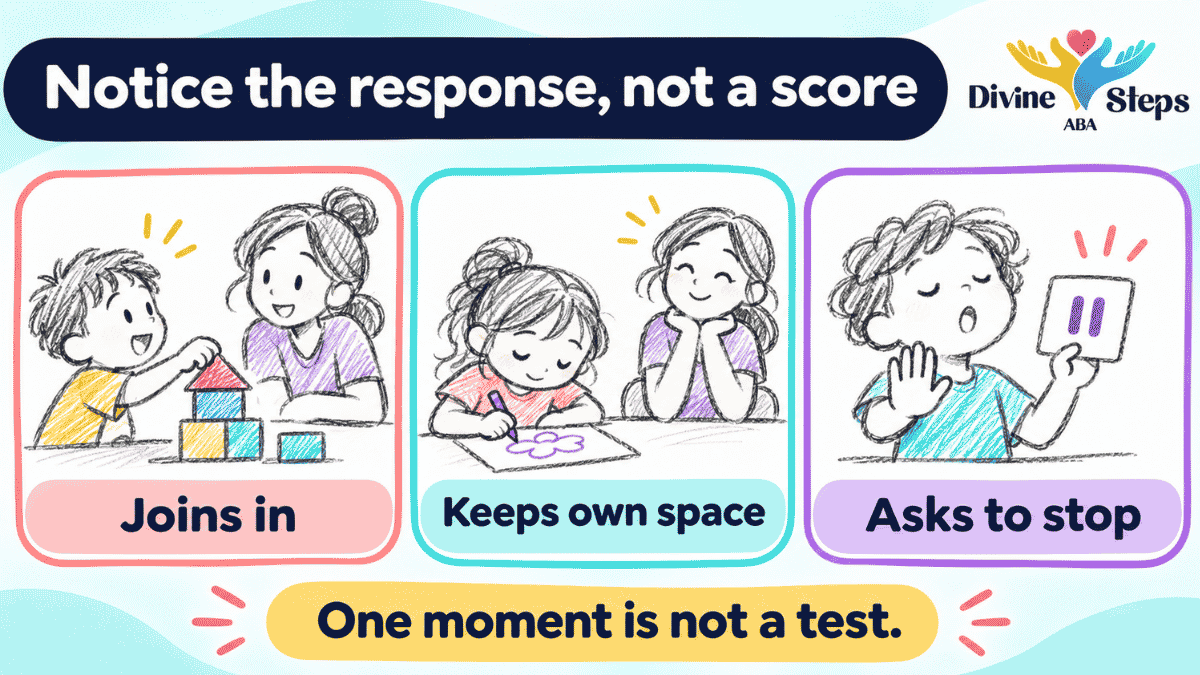
Parents can notice how a child joins, continues, changes, or leaves an interaction. A single smile, completed task, or quiet moment cannot prove trust.
The term
"assent" means willingness to take part. A child can express that willingness through speech, gestures, or other communication. Recommendations on
recognizing assent in ABA emphasize respecting both participation and a child’s wish to stop.
| What a Parent Notices | What to Discuss With the Team |
|---|---|
| A child brings a book to the therapist. | Whether the child wants shared reading and how the therapist responds. |
| A child keeps drawing but turns away from conversation. | Whether the child enjoys the activity while wanting less interaction. |
| A child moves away or communicates “no.” | How the team responds to a request to stop or change the activity. |
These observations open a conversation. They are not a test that a child must pass before learning begins. Silence alone does not establish willingness to participate.
How Long Does Pairing Last in ABA Therapy?
Pairing has no fixed timeline for every child. Relationship building can continue while teaching takes place, so it does not need a universal end date.
A planned “pairing week” should not become a deadline for trust. A new therapist, changing interests, or less engagement can call for renewed attention to the relationship.
Questions for the supervising Board Certified Behavior Analyst, or BCBA, include:
- “What are you noticing during these activities?”
- “How does that information guide teaching?”
- “What would lead you to change the approach?”
An explanation should connect play with the child’s plan. Parents do not need to wait a set number of sessions before asking about its purpose.
Visit preparation belongs in our
first-day ABA guide. Families seeking broader starting-treatment information can also read what to expect during the
first month of ABA therapy.
Parent Insights Help the Therapist Understand Your Child
Parents can share details that a therapist may not learn from watching one activity. Knowing that a child likes drawing helps. Knowing that the child wants a separate sheet of paper adds more detail about how to join.
A Parent Checklist for Pairing in ABA Therapy
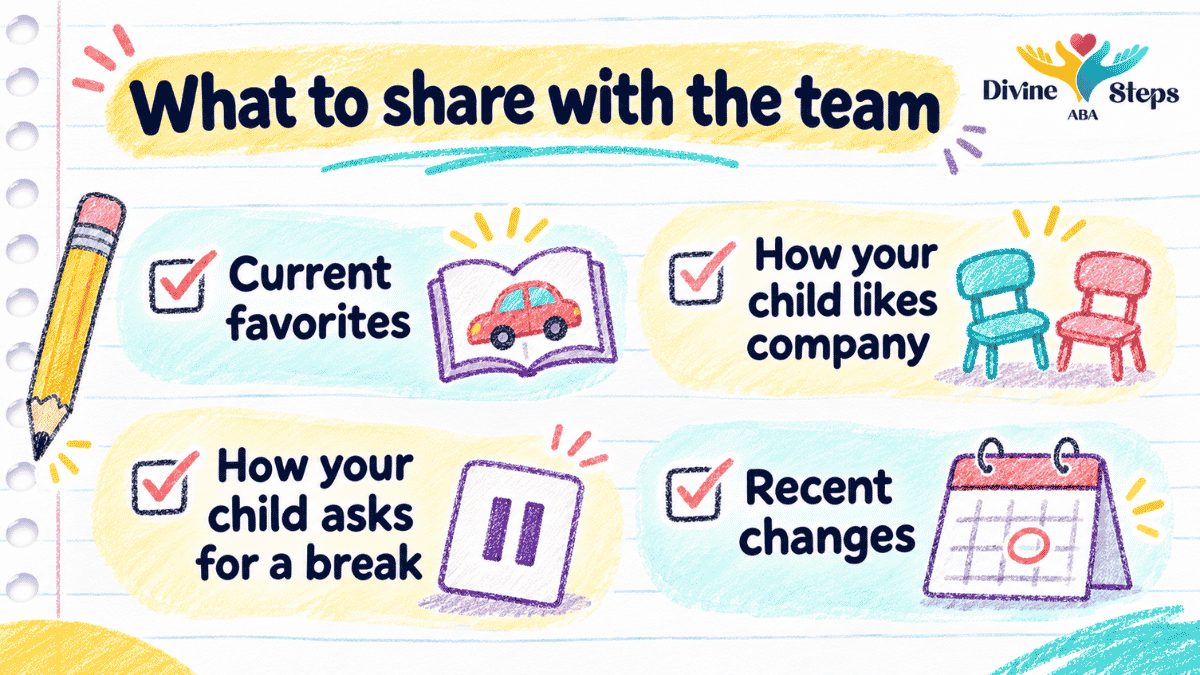
An ABA therapy pairing checklist for a family conversation can cover:
- Current favorites: Activities the child chooses lately.
- Interaction preferences: Quiet company, shared play, conversation, or more space.
- Ways to request a pause: Words, gestures, pictures, or familiar signals.
- Recent changes: Activities the child no longer enjoys or situations that affect participation.
One parent note might read, “She likes drawing beside someone, but she usually wants to keep her own paper.” That description gives the therapist a starting point without assuming how the child will respond that day.
At Divine Steps Therapy, we include families in home care and provide updates and strategies for practice between sessions. Everyday observations give parents something specific to discuss during those conversations. Clinical terms are not necessary.
What Should Parents Ask If Their Child Avoids the Therapist?
Avoidance deserves a conversation with the supervising BCBA about what happened and how the team will respond. Moving away does not, by itself, explain why a child wants distance.
A brief description helps the team examine the situation. For example, “He moved behind the sofa when the singing started” gives more information than calling the child uncooperative.
Three questions can guide the discussion:
- “What happened just before my child moved away?”
- “How does the team respond when my child wants to stop?”
- “What adjustment will the team try, and when will we discuss it?”
Repeated distress should not be dismissed as a required stage of pairing. A child’s communication about stopping deserves attention, including when the child does not use spoken words.
FAQs About Pairing in ABA Therapy
Should parents buy special supplies for pairing?
Parents can ask which existing activities or materials the team plans to include before buying anything. Questions about supplies, costs, and who provides materials belong with the provider. Pairing does not automatically require a new set of toys.
Is pairing the same as a preference assessment?
A preference assessment helps identify activities or items a child prefers through observation or choices. Pairing connects time with the therapist to enjoyable experiences. The assessment can inform activity choices, but the two serve different purposes.
Is stimulus-stimulus pairing in ABA the same as building rapport?
Stimulus-stimulus pairing involves presenting two events together to develop an association. Some ABA research pairs speech sounds with preferred items to study changes in vocal sounds. That specific procedure differs from the therapist-child relationship building described here.
Explore In-Home ABA Built Around Your Child
Pairing gives a therapist time to learn what a child enjoys and how they prefer to interact. Caregiver observations add context as relationship building and teaching continue.
At Divine Steps Therapy, our BCBAs assess children at home, and our RBTs provide home sessions. Maryland and Virginia families can contact us to share their child’s interests and learn about our approach.

A preference assessment in ABA helps identify a child’s interests. Parent observations add context to the findings.
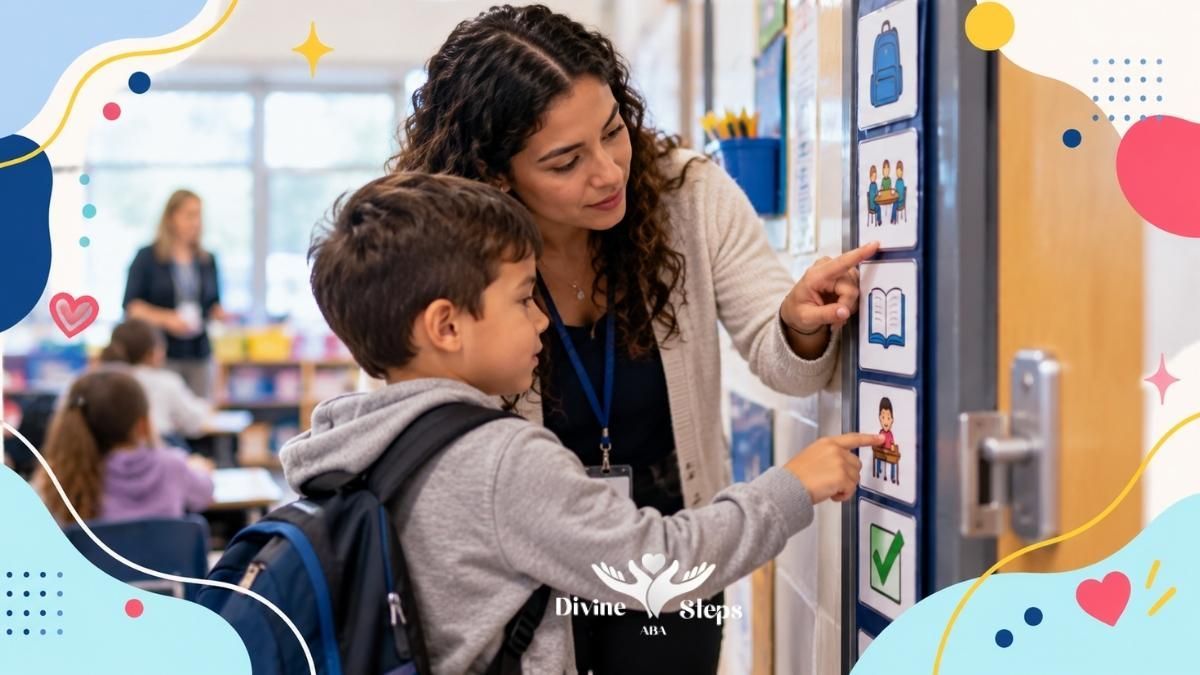
Private ABA in schools needs permission and coverage checks. See what Maryland families should confirm before sessions.
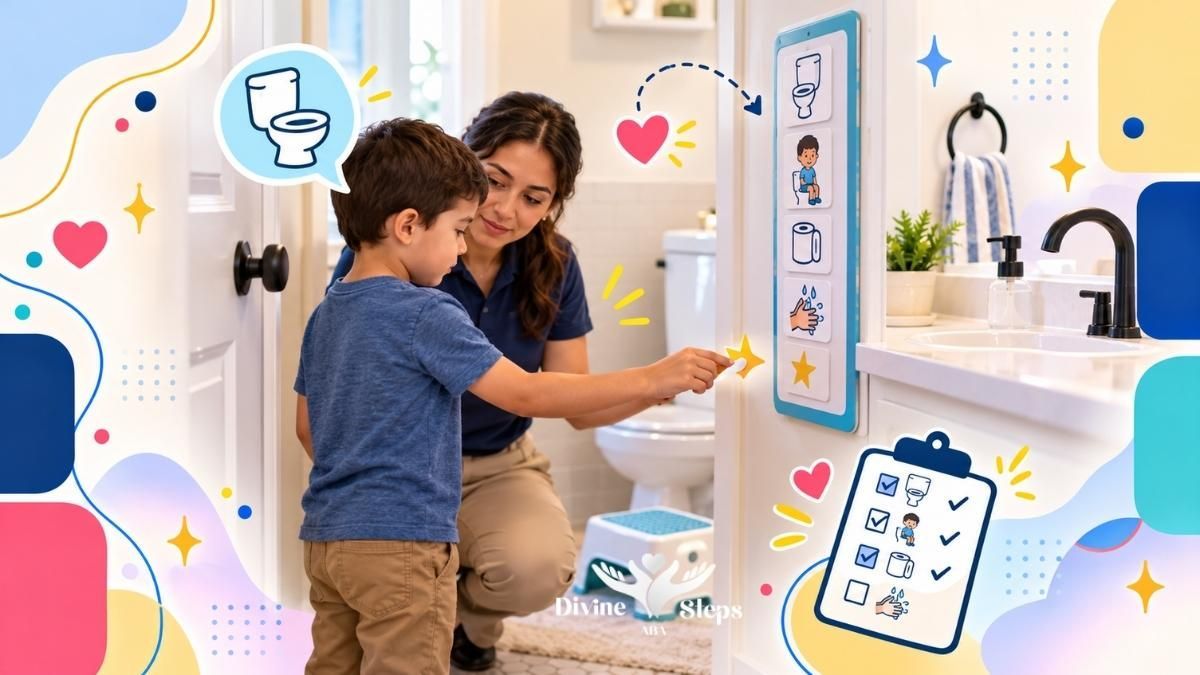
ABA potty training supports bathroom skills at your child's pace. Small goals and caregiver practice shape the routine.