


Website by CWS
ABA Therapy Claim Denied? Follow This Parent Appeal Plan
July 21, 2026
Key Points:
- An ABA therapy claim denial may require a billing correction or a formal appeal, depending on the insurer’s reason.
- Treatment records can support disputes about requested hours or ongoing care.
- Independent review and Medicaid hearing options have separate eligibility rules and deadlines.
An ABA therapy claim denial means your insurer refused to pay all or part of a claim for your child’s services. A denial of prior authorization means the insurer refused advance approval for requested treatment.
The next step depends on the reason. A billing mistake may need a corrected claim. A disagreement about treatment needs may require an appeal. Your insurer’s written notice should explain the decision and how to challenge it.
What Does an ABA Therapy Claim Denial Mean?
Insurance can deny payment, refuse treatment approval, or approve fewer sessions than requested. The notice helps you identify which problem needs attention.
| Type of Denial | What It Means | What to Check First |
|---|---|---|
| Claim denial | Insurance refuses payment for ABA services already provided. | Explanation of Benefits (EOB), billing details, and denial reason |
| Prior authorization denial | Insurance does not approve a request for ABA therapy. | Authorization notice and required documents |
| Reduced hours | Insurance approves fewer ABA hours or sessions than requested. | Approved hours and reason for the reduction |
| Reauthorization denial | Insurance does not approve a request to renew treatment coverage. | Authorization end date and updated treatment records |
For example, unpaid sessions from last month involve a claim denial. A refusal to approve next month’s sessions involves authorization. The Maryland Insurance Administration’s denial overview also explains that approval for fewer visits can be challenged.
Why Was My Child’s ABA Therapy Denied?
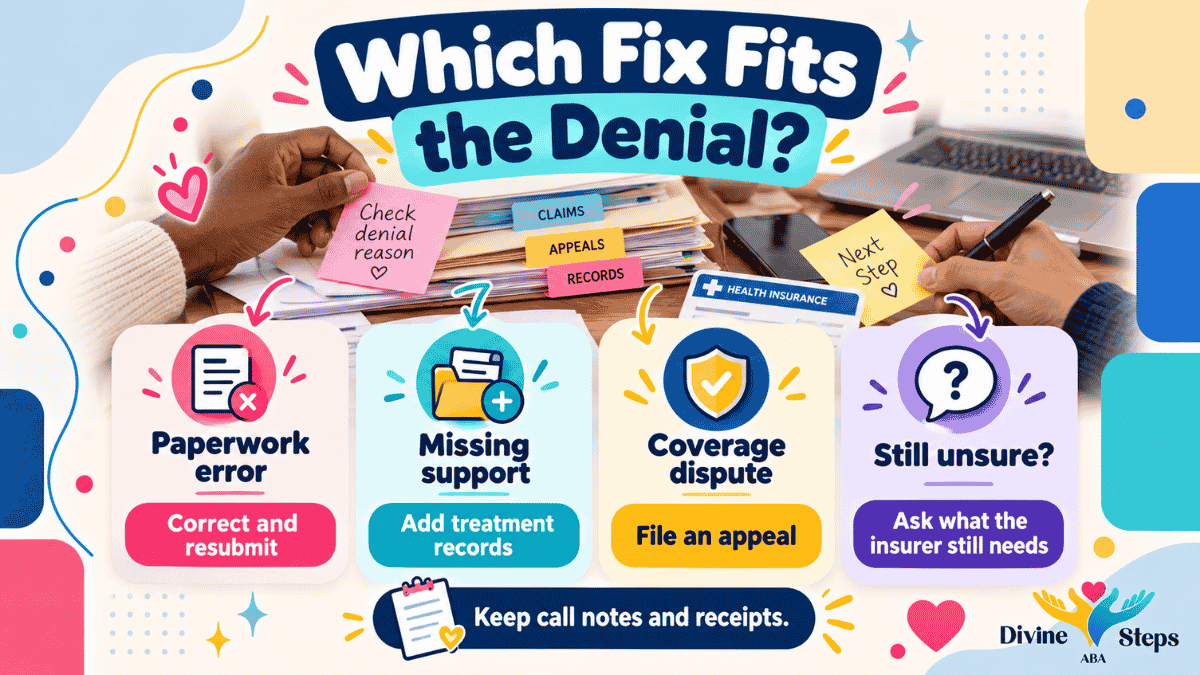
The denial notice should identify the reason. These issues call for different responses.
Missing or Expired Authorization
Some plans require approval before ABA sessions begin. Missing approval, expired dates, or services outside the approved amount can affect payment.
Your provider can compare the sessions with the authorization. At Divine Steps Therapy, our ABA insurance support includes benefits verification and insurance paperwork. Approval depends on your plan’s requirements.
Missing Records or Questions About Treatment Needs
“Medical necessity” means the insurer reviews whether treatment meets its coverage rules and addresses your child’s needs. An autism diagnosis alone does not guarantee approval for every requested service.
A Board Certified Behavior Analyst (BCBA) can explain the treatment recommendation through goals, progress reports, and other relevant records.
Billing or Provider Network Problems
Incorrect billing details or service dates may cause a denial. Provider network rules can also affect coverage.
The billing team may be able to correct and resubmit a claim. Your insurer can explain whether a correction is enough or whether you need an appeal.
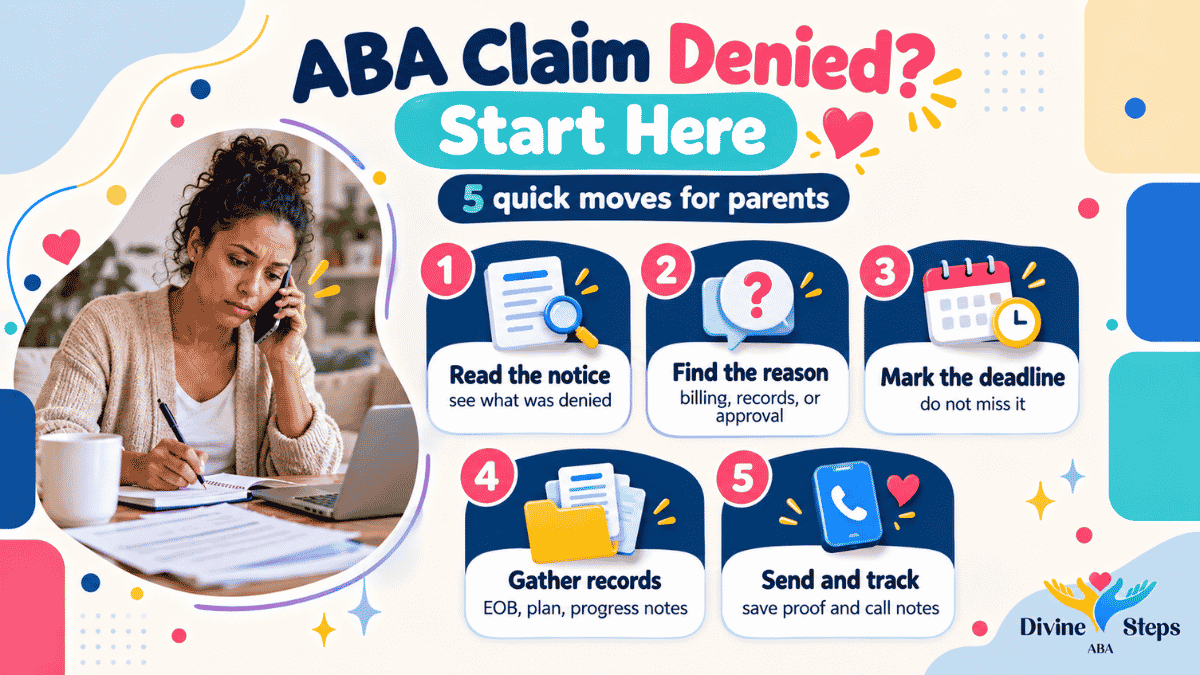
What Should Parents Do First After an ABA Insurance Denial?
The first call should help you identify the problem and protect your filing deadline.
- Denial details: Find the reason, affected dates, and claim or authorization number.
- Appeal deadline: Record the filing date and submission instructions.
- Insurer’s explanation: Ask, “Does this need corrected billing, more records, or a formal appeal?”
- Provider’s review: Find out which information the billing or treatment team can supply.
- Written record: Save notices, call reference numbers, and submission receipts.
A paperwork correction does not necessarily extend an appeal deadline. Your insurer should explain how to preserve your appeal rights while the provider reviews the issue.
Communication also helps families understand the next step. In feedback about our team, Tye J. described how we listened and followed up on concerns. That feedback describes a family’s experience, without establishing an insurance outcome.
How to Appeal an ABA Insurance Denial
An internal appeal asks your insurer to review its decision again. The appeal should address the reason in the notice.
Many employer health plans must allow at least 180 days to file an internal appeal under federal health benefit claims rules. Medicaid and other coverage arrangements may follow different rules. Your notice should identify the applicable deadline.
Step 1: Get the Filing Instructions
Your insurer can confirm where to submit the appeal and whether a form is required. A provider or another representative may need your written permission to act for you.
Step 2: Gather Relevant Documents
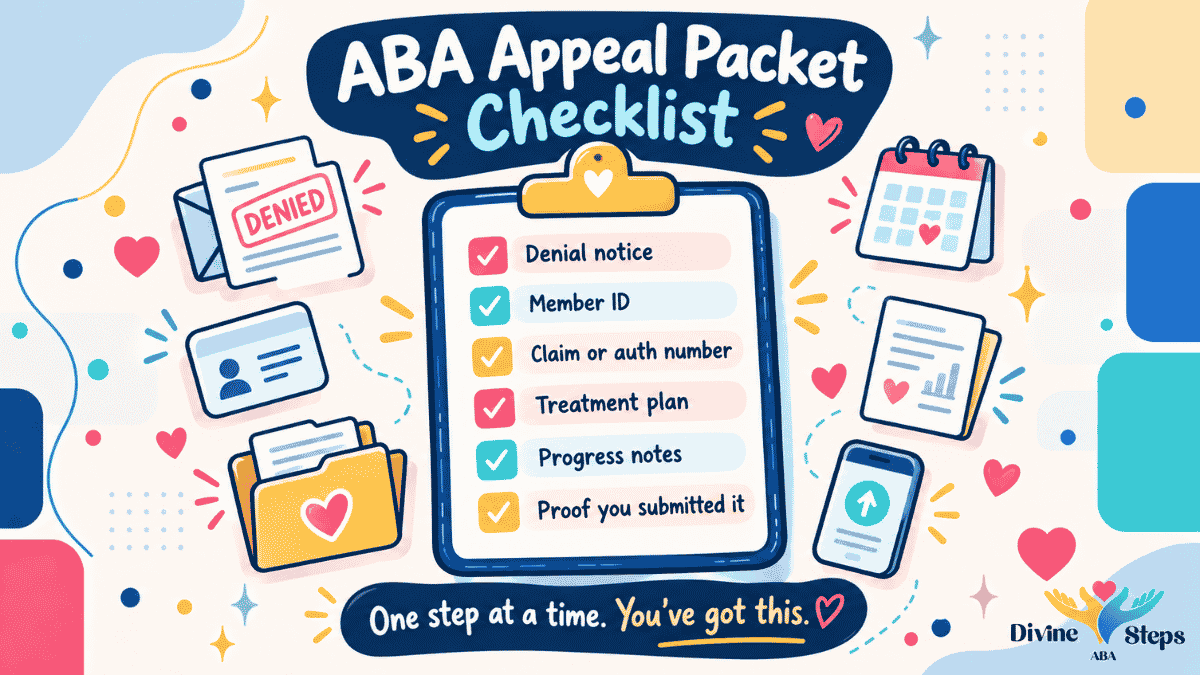
The records should match the denial reason. Depending on the issue, the appeal may need:
- The denial notice and EOB, when applicable
- Member details and claim or authorization number
- Relevant diagnostic records
- The current ABA treatment plan
- Progress reports supporting the requested services
- Billing corrections or other requested information
A wrong service date may need billing evidence. A treatment-approval dispute may need clinical records explaining the requested care.
Step 3: Write an Insurance Appeal Letter for ABA Therapy
The letter should identify the decision, explain the disagreement, and request another review. A short example is:
I am appealing the denial dated [date] for [services or authorization request]. My child’s name is [name], member ID is [ID], and reference number is [number].
The notice gives [reason] for the denial. I disagree because [specific explanation supported by the attached records]. The attached documents include [list].
I request reconsideration of this decision and a written response explaining the outcome and any further appeal rights.
The explanation needs to be specific. For missing progress records, the letter could identify the attached report and explain how it addresses the insurer’s request.
Step 4: Submit and Track the Appeal
Your submission should follow the required method and include proof of receipt. The insurer can explain its response timeline and whether the case qualifies for faster review.
A further denial should include instructions for any remaining appeal or review options.
Can You Request an External Review After an ABA Insurance Denial?
Some denials qualify for independent external review. Eligibility depends on the plan, denial reason, and completed appeal steps. Medical necessity disputes may qualify; a billing error does not automatically qualify.
Where Can Maryland Families Get Help?
The Maryland appeals and grievances process explains how eligible disputes can reach the Maryland Insurance Administration after internal appeals. Certain exceptions allow earlier assistance.
The Attorney General’s Health Education and Advocacy Unit offers free help with private insurance disputes and medical billing concerns. These agencies do not oversee every health plan.
Where Can Virginia Families Get Help?
The Bureau of Insurance’s external review requirements generally apply to fully insured plans issued in Virginia and self-insured plans that opt into the program.
Eligible requests must generally arrive within 120 days after notice of the right to external review. Other employer plans may use a different process.
What if Your Child Has Medicaid?
Medicaid uses separate appeals and state fair hearings. Maryland HealthChoice members must first appeal through their managed care plan, as explained in the Maryland Medicaid appeal instructions.
Virginia managed care members generally start with their plan before seeking further review through DMAS member appeals. Requests to keep existing services during an appeal can have shorter deadlines, so immediate review of the notice is essential.
What Happens if ABA Therapy Reauthorization Is Denied?
The ABA therapy reauthorization process seeks approval for another treatment period. A denial or reduction can affect upcoming sessions.
For example, an insurer might approve 10 weekly hours when the BCBA requested 15. The family and provider should review the reason and determine which services remain approved.
Our in-home ABA therapy includes individualized treatment planning. We also monitor progress and provide authorization assistance. Updated records can explain ongoing needs, but the insurer decides coverage.
Coverage during an appeal varies. Your insurer and provider should confirm payment arrangements before disputed sessions continue.
FAQs About ABA Therapy Claim Denials
Does a denied ABA claim mean parents must pay the entire bill?
A denial does not automatically establish what you owe. Responsibility depends on the plan, provider agreement, and billing rules. An EOB explains how insurance processed a claim; it is not a bill. Any provider bill should be checked against it before payment.
Can parents request the records an insurer used to deny ABA therapy?
Members of employer plans covered by federal claims rules can request relevant claim documents free of charge. Those records can show what information the plan considered. Other coverage programs may use separate procedures, so the plan administrator should explain how to request them.
What can parents do if they miss an ABA insurance appeal deadline?
A missed deadline may limit appeal options. The insurer can explain whether an exception or another review is available. A billing correction or new treatment request may address a separate issue, but neither guarantees acceptance of a late appeal.
Get Help Reviewing Your Child’s ABA Insurance Requirements
A denial leaves an immediate question about your child’s care or bill. The reason, deadline, and supporting records determine the next step.
At Divine Steps Therapy, we help families in Maryland and Virginia with insurance verification, authorizations, and paperwork. Your coverage inquiry can include your child’s age, ZIP code, insurer, and a brief description of the denial so we can explain how our team may help.

What to do after an autism diagnosis starts with the report. See state programs, school rights, and ABA intake tips.

ABA therapy out-of-pocket cost depends on your care and plan. A worked example explains deductibles and coinsurance.

Autism evaluation cost in Virginia varies by provider and insurance. Compare published fees and lower-cost options.