


Website by CWS
How Much Does an Autism Evaluation Cost in Virginia?
October 11, 2026
Key Points:
- Autism evaluation cost in Virginia reflects the services included, so families should compare testing, reports, and results meetings in each quote.
- Covered testing may still involve deductibles, copays, or coinsurance.
- Reduced-fee diagnostic clinics and free public developmental or school evaluations serve different needs.
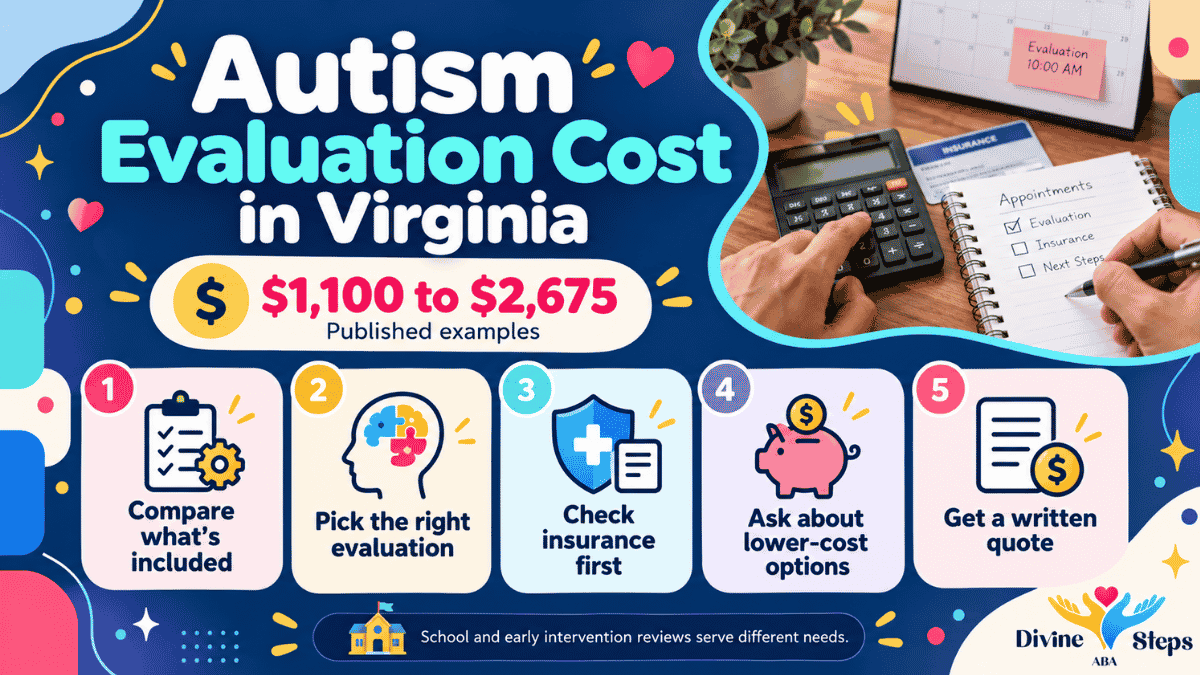
Autism evaluation cost in Virginia depends on the provider, the tests your child needs, and your insurance. Published examples of full assessments range from $1,100 to $2,675. These are individual clinic fees, not a statewide price range.
Before booking, families should check what the fee includes and how much insurance will pay. Lower-cost clinics and public programs may help, but a screening, school evaluation, and medical autism diagnosis answer different questions.
What Do Virginia Providers Charge for Autism Evaluations?
The cost of an autism diagnosis varies because clinics offer different services. These published fees give families a starting point for comparing quotes.
| Virginia Provider | Evaluation Type | Published Fee |
|---|---|---|
| Virginia Tech Child Study Center | Comprehensive autism assessment | $1,100 |
| Oceanside Evaluations | Autism assessment, ages 2–4 | $1,975 |
| Oceanside Evaluations | Autism assessment, ages 5–59 | $2,675 |
| Leva Psychiatry | Self-pay autism evaluation | $1,519.25 |
*Fees checked October 11, 2026. Prices, included services, and appointment availability can change.
Virginia Tech also lists a $300 abbreviated autism assessment for children younger than five. Families should check whether that service provides the diagnostic information and report they need.
A clinic’s advertised fee also differs from what an insured family may owe. The final amount depends on covered services and the plan’s payment rules.
Which Type of Autism Evaluation Does Your Child Need?
The word “assessment” can describe several services. A lower price may reflect a shorter or different evaluation.
| Evaluation Type | What It Does | Can It Diagnose Autism? |
|---|---|---|
| Developmental screening | Checks for possible developmental concerns | No |
| Clinical diagnostic evaluation | Determines whether a child meets autism diagnostic criteria | Yes, when completed by a qualified clinician |
| ABA assessment | Identifies skills and support needs for therapy planning | No |
| School evaluation | Determines special education eligibility and needs | Does not replace a medical diagnosis |
What Happens During a Diagnostic Evaluation?
A qualified clinician reviews your child’s development, observes their behavior, and gathers information from caregivers. Testing may also examine communication, learning, or daily living skills. The CDC explains the screening and diagnosis process.
At Divine Steps Therapy, we offer autism evaluation referral support for children up to age five. We connect families with qualified doctors, help arrange an initial meeting, and follow up regarding appointments. The doctor conducts the diagnostic evaluation.
How Does an ABA Assessment Differ?
An ABA assessment helps a Board Certified Behavior Analyst, or BCBA, plan therapy. For example, the assessment may identify goals for requesting help or getting dressed.
Our ABA therapy in Virginia serves children ages 1–11. For in-home ABA therapy, our BCBAs visit the home to assess the child’s needs. Our school-based ABA support involves working with teachers and school staff. These services support treatment planning and daily skills; they do not replace a diagnostic evaluation.
Does Insurance Cover Autism Evaluations in Virginia?
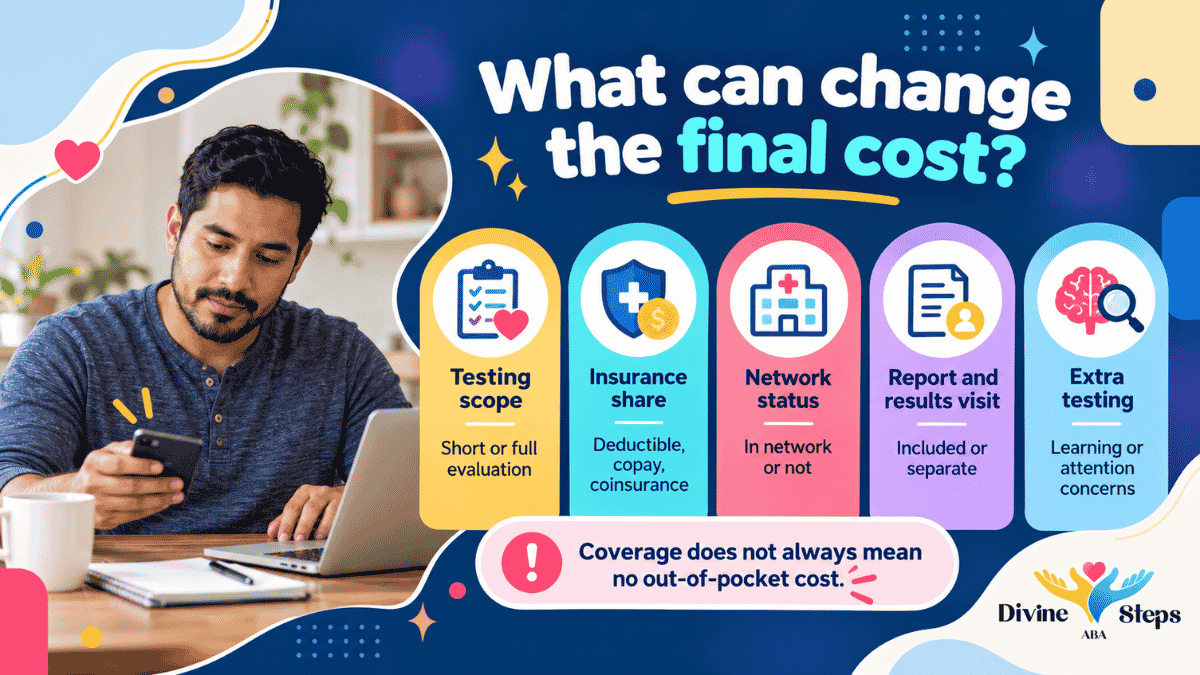
Insurance coverage for autism evaluation depends on the plan, provider, and services billed. Coverage does not always mean the family pays nothing.
What Does Private Insurance Cover?
Virginia’s autism coverage law requires qualifying policies to cover medically necessary diagnostic assessments, evaluations, and tests. The requirement does not apply to every type of policy.
Your plan may still require payment through:
- Deductible: The amount paid before insurance starts sharing certain costs.
- Copay: A set fee for a covered service.
- Coinsurance: Your share of the covered charge, expressed as a percentage.
- Out-of-network costs: Charges that may be higher when the provider does not participate in your plan.
Before booking, families can confirm:
- Whether the plan covers diagnostic autism testing.
- Whether the evaluating clinician is in-network.
- Whether a referral or advance approval is required.
- Which tests and report charges the plan covers.
- The estimated amount the family will owe.
The clinic’s billing codes can help the insurer check the proposed services. A code identifies the service the clinic plans to bill.
How Do Virginia Medicaid and FAMIS Differ?
Virginia Medicaid’s EPSDT benefit for children includes medically necessary screening and diagnostic services for eligible children under 21. EPSDT also applies to FAMIS Plus, Virginia’s children’s Medicaid program. Families with separate FAMIS coverage should check that program’s benefits with their health plan.
The plan can identify participating clinicians and explain approval requirements. Approval for diagnostic testing does not automatically approve ABA therapy, which may involve a separate benefits review.
Where Can Families Find Lower-Cost Evaluation Options
Families seeking an autism evaluation without insurance can start with reduced-fee diagnostic clinics. Public programs can also assess developmental or educational needs, although those assessments may not provide a medical diagnosis.
University Clinics With Reduced Fees
Virginia Tech’s Child Study Center offers a sliding scale for comprehensive diagnostic assessments. The clinic may reduce fees based on income and need. Its supervised training program has limited assessment capacity, so families should confirm fees and availability directly.
Other clinics may offer payment plans or reduced fees. The clinic should explain its eligibility rules and the services included before a family commits.
Early Intervention for Children Under Three
The Infant & Toddler Connection of Virginia serves children from birth until their third birthday who meet developmental eligibility requirements. Evaluation, assessment, service coordination, and development of the family service plan come at no cost. Some ongoing services may involve family payments.
This process determines early intervention needs and eligibility. It does not automatically provide a medical autism diagnosis.
Public School Evaluations
Virginia school divisions evaluate children who may need special education through the Child Find process. Families can contact their local school division to request an evaluation. The public special education evaluation process comes at no cost to parents.
A school evaluation focuses on learning and educational support. Its findings may differ from the documentation a health insurer requests for medical services. Virginia’s evaluation rules explain the school process.
How Can Families Compare Autism Evaluation Quotes?
A written quote helps answer “How much is an autism assessment?” for your child’s specific needs. Broader testing for learning, attention, or other concerns may involve more work and a different fee.
A useful quote identifies:
- Evaluation scope: Screening, focused autism testing, or broader diagnostic testing.
- Appointments: Interviews, observations, and testing sessions included.
- Written report: Whether the fee includes diagnostic findings and recommendations.
- Results meeting: Whether the clinician charges separately to explain findings.
- Additional charges: What could increase the quoted price.
A higher price alone does not establish better quality. The clinician should explain why the proposed tests address your child’s concerns.
Uninsured families and those choosing self-pay can generally receive a written good faith estimate. Federal rules usually require one when requested or when care is scheduled at least three business days ahead.
FAQs About Autism Evaluation Cost in Virginia
Can a blood test diagnose autism?
A blood test cannot diagnose autism. Clinicians assess developmental history and behavior to determine whether a child meets diagnostic criteria.
Can insurance reimburse a self-pay evaluation?
Some plans offer out-of-network reimbursement. A clinic may provide a superbill, an itemized document with billing information, for the family to submit. Reimbursement depends on the plan and is not guaranteed.
Is an evaluation deposit refundable?
Refund rules vary by clinic. The payment agreement should explain whether the deposit counts toward the total fee and what happens after a cancellation or missed appointment. Families should review those terms before paying.
Start Your Child’s Evaluation Referral
Evaluation costs are easier to plan when the clinic explains its fees and insurance confirms your benefits. The type of assessment also determines which answers and documents your family receives.
At Divine Steps Therapy, we help connect children up to age five with qualified doctors for autism evaluations. Our evaluation request form collects your child’s age, location, insurance information, and contact details so our team can follow up about your request.

Private ABA in schools needs permission and coverage checks. See what Maryland families should confirm before sessions.

ABA potty training supports bathroom skills at your child's pace. Small goals and caregiver practice shape the routine.

What to do after an autism diagnosis starts with the report. See state programs, school rights, and ABA intake tips.