


Website by CWS
School-Based ABA Therapy in Maryland: Inside a Typical Day
October 4, 2026
Key Points:
- School based ABA therapy Maryland-wide places individualized behavioral support within a child’s regular school day.
- Therapy may address classroom participation, transitions, communication, social skills, and independence while support is gradually reduced.
- Progress tracking connects treatment goals with classroom expectations and daily school routines.
Dropping a child off at school comes with high expectations and plenty of questions about how their day will unfold. School-based ABA therapy in Maryland places individualized support directly into the routines a child encounters every day.
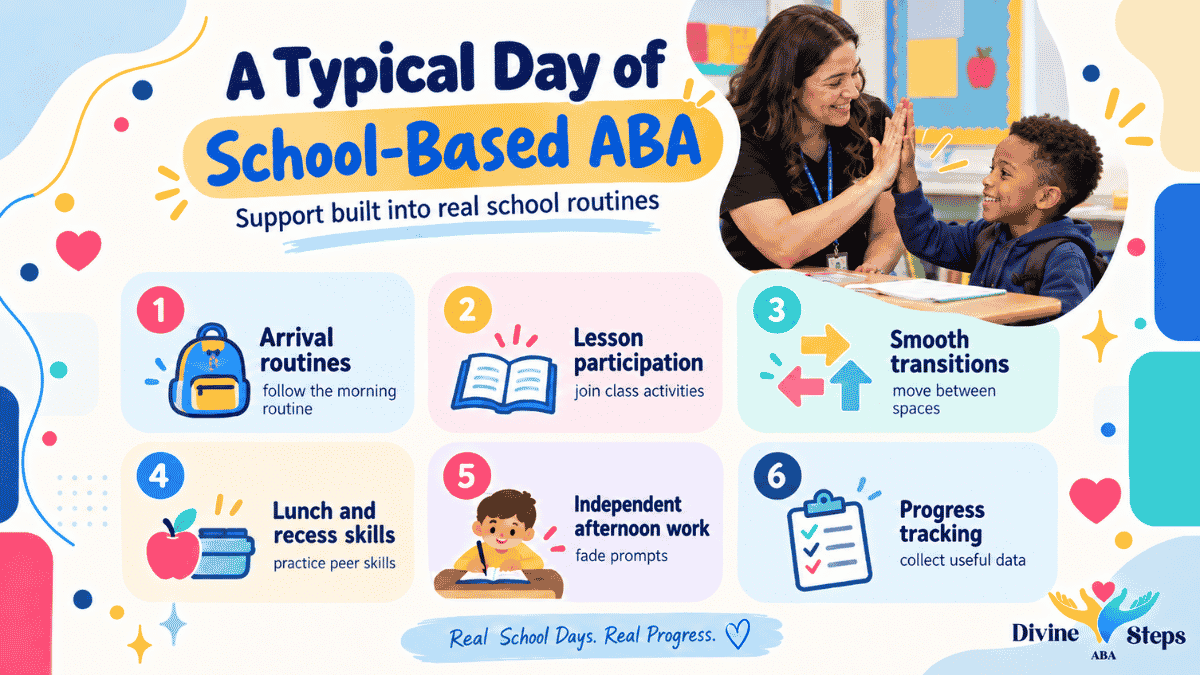
A typical day can include guidance during arrival, structured lessons, classroom transitions, peer interactions, lunch, independent work, and dismissal.
At Divine Steps Therapy, we build our school-based ABA support around your child's specific treatment plan, classroom schedule, and school environment. Here is what that everyday support looks like in action.
What School-Based ABA Therapy in Maryland Looks Like at Arrival
The school day starts long before the first bell rings. During arrival, our team observes how a child enters the building, separates from a caregiver, and unpacks their belongings. We look at how they enter the classroom and respond if the morning routine unexpectedly changes.
Our goal is to help your child participate in the school's existing schedule.
Data from the CDC shows that about 1 in 38 8-year-olds in the Maryland tracking area was identified with autism. Because local classrooms serve children with diverse learning needs, our team focuses on individual goals.
During arrival, our team may support skills like:
- Walking from drop-off to the classroom without leaving the group
- Following a visual arrival schedule when part of the plan
- Requesting help with a coat locker or backpack zipper
- Waiting calmly for the next instruction alongside classmates
- Beginning morning table work with minimal adult cording
Morning Lessons Put ABA Skills Into the Classroom Routine
During instruction, our team stays focused on behavioral and learning goals. The classroom teacher leads the lesson, while we support skills that help your child participate fully.
This may include:
- Attending to teacher directions
- Raising a hand for help
- Communicating frustration
- Building independence
Federal special education regulations under IDEA require IEP teams to consider positive behavioral supports when behavior impacts learning. Similarly, the Maryland State Department of Education emphasizes giving students with disabilities access to grade-level instruction alongside their peers.
ABA therapy in Maryland schools fits directly into existing activities instead of turning the school day into an isolated clinical session.
A typical lesson sequence with our team often involves these steps:
- The classroom teacher delivers an instruction to the whole group.
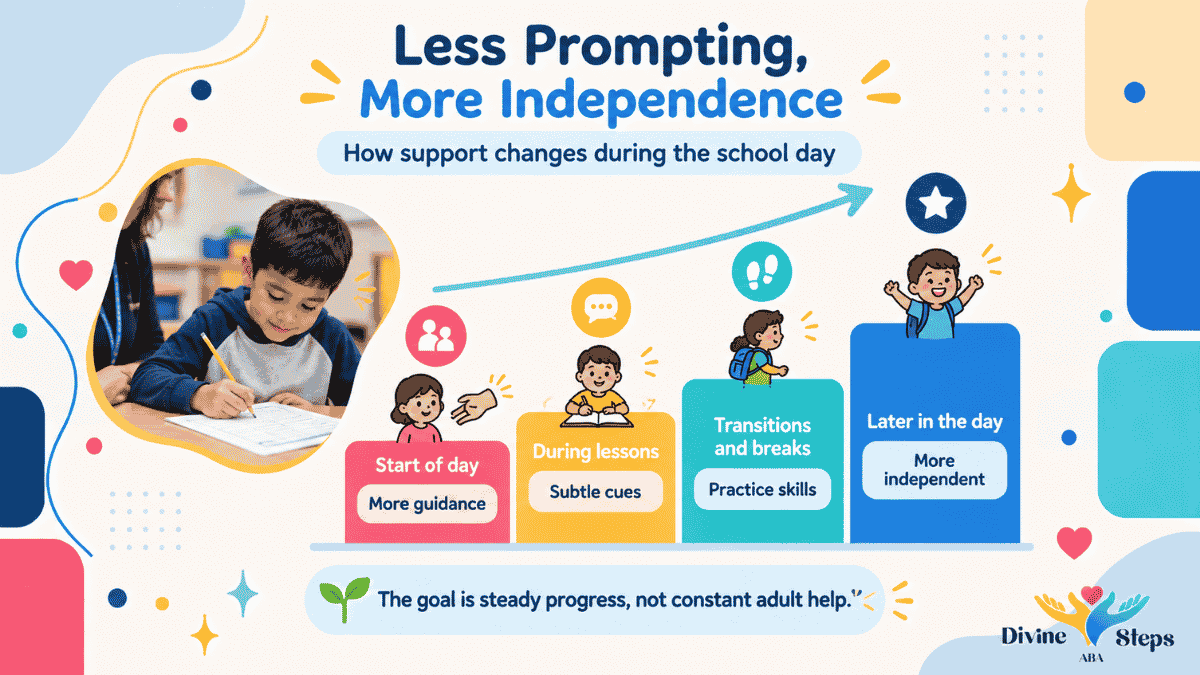
- Our team provides a planned subtle cue if your child needs assistance starting.
- Your child completes as much of the task on their own as possible.
- We record data on their response and fade our cues over time.
Transitions Show Where School-Day Skills Have to Work in Real Time
Moving from one school activity to another presents continuous learning opportunities throughout the morning. Transitions happen when a child leaves a favorite activity, lines up for art class, switches teachers, or returns from an outdoor break.
We closely observe what happens before challenging school transitions, how your child communicates their needs, and whether they need less prompting over time.
Maryland special education guidelines highlight strong integration between general and specialized learning spaces. Effective transition support helps a child move confidently between these spaces so they do not miss valuable instructional time.
Common strategies used during classroom transitions include:
- Using a visual schedule or countdown card before an activity ends
- Requesting a brief break using words or pictures instead of leaving
- Carrying personal items directly to the next room
- Following the class lining-up routine with reduced adult cording
- Returning to desk work after a physical education period
Lunch and Recess Bring Social Skills Into Less Structured Parts of the Day
Unstructured school hours like lunch and recess test social and communication skills in fast-moving environments. When included in a treatment plan, our team stays present during these breaks.
These periods highlight unique needs, such as:
- Finding a place at a lunch table
- Sharing playground equipment
- Responding when a game suddenly changes rules
Research shows that school programs are great at giving kids more opportunities to join in with their classmates. But true social success isn't about counting how many times a child interacts with others. It's about teaching them how to make those connections genuinely meaningful.
At Divine Steps, we focus on functional skills like joining a game or asking for a turn. We worked with a child who spent his early school weeks hiding under a desk whenever room noise surged. By building quiet routines first and introducing peer interactions slowly, he grew more comfortable in busy spaces. Months later, he was sitting with classmates at lunch and raising his hand during lessons.
Through targeted autism school support in Maryland, unstructured time helps children practice real-world social skills:
- Asking peers to join a play activity
- Waiting for a turn on playground equipment
- Managing physical boundaries in busy cafeterias
If you feel unsure how school ABA services in Maryland would fit into your child's daily school schedule, our team can help.
Reach out today to discuss your child's current routine.
This is paragraph text. Click it or hit the Manage Text button to change the font, color, size, format, and more. To set up site-wide paragraph and title styles, go to Site Theme.
Afternoon Work Shows Whether Support Is Leading Toward Independence
Afternoon hours often bring independent assignments, group work, and end-of-day cleanup routines. As the school day winds down, our team evaluates how well your child maintains attention and completes tasks. We deliver the exact level of personalized ABA support outlined in their plan, stepping back as soon as data shows they are ready.
Parents sometimes worry that having a dedicated professional nearby might prevent their child from learning to work on their own. We design every intervention with prompt fading in mind so adult support decreases as your child gains confidence. True progress means your child learns to rely on their teacher and own abilities rather than our staff.
Key afternoon milestones include:
- Starting an independent worksheet right after teacher directions
- Raising a hand to ask the teacher a question directly
- Completing multi-step cleanup tasks with minimal reminders
- Using functional communication across different school staff members
- Managing energy changes during late afternoon activities
This is paragraph text. Click it or hit the Manage Text button to change the font, color, size, format, and more. To set up site-wide paragraph and title styles, go to Site Theme.
Progress Tracking Connects the School Day to the Treatment Plan
Behind every classroom interaction sits a clear system for tracking growth. Our team collects observational data during natural school moments to monitor progress without distracting from instruction. We record details like independent communication requests, prompt levels, and emotional regulation during schedule changes.
How We Track School-Based ABA Therapy in Maryland
Our team collaborates directly with classroom teachers and school administration to align clinical goals with classroom expectations. In areas like Baltimore City Public Schools and Baltimore County Public Schools, we actively coordinate with school teams.
Data from the CDC reveals that 67.3% of children identified with autism have documented special education services in school settings. This high percentage highlights why ongoing communication between clinical staff and school educators matters.
Combining IEP and ABA support in Maryland creates a unified framework where everyone works toward shared outcomes. One child we supported spent early breaks standing alone on the blacktop, but over time, he began joining tag games and receiving weekend party invitations from classmates.

FAQs About School-Based ABA Therapy in Maryland
Can school-based ABA be combined with in-home ABA?
Yes. We often combine school-based and
in-home ABA therapy when both settings align with your child's treatment goals. One Maryland family we worked with valued receiving daily progress notes and carrying those same communication tools into evening routines at home.
Does insurance cover school-based ABA during school hours in Maryland?
Coverage depends on your specific insurance provider and authorization details. We accept Maryland Medicaid and major commercial plans. Our administrative team conducts full benefits checks and handles pre-authorization procedures before school sessions begin.
What if my child's school has rules about outside ABA staff?
School visitor and clinical access policies vary across Maryland districts. Our team coordinates directly with school administrators and classroom teachers prior to starting care to confirm background checks, security protocols, and classroom observation guidelines.
Start a School Day With ABA Support That Fits Your Child
School-based ABA support brings communication, transition, social, and independence goals into the moments when your child needs them most. Receiving guidance during real school routines helps skills stick and grow over time.
At
Divine Steps Therapy, we provide school-based ABA therapy for children ages 1 to 11 across Maryland, including Baltimore, Columbia, Silver Spring, Towson, and Rockville. Call us at
888-541-1868, email
info@divinestepstherapy.com, or fill out our online contact form today. Families can share their child’s school schedule, current goals, and school requirements so our team can explain how school-based ABA may fit into their day.

Parents learn what to expect from in-home ABA therapy. Real session routines, parent roles, and updates are covered.

See how ABA therapy for school readiness builds classroom skills and independence. Learn what progress can look like.

Families can confirm Aetna ABA therapy coverage in Maryland before care starts. Seven checks show what to verify.