


Website by CWS
Can ABA Therapy Build School Readiness in Rockville, MD?
September 20, 2026
Key Points:
- ABA therapy school readiness builds practical skills children need for preschool and kindergarten, including communication, transitions, routines, participation, and independence.
- Goals are practiced at home and at school so skills transfer to daily classroom life.
- Progress is measured through observable behaviors, prompt levels, and increasing independence.
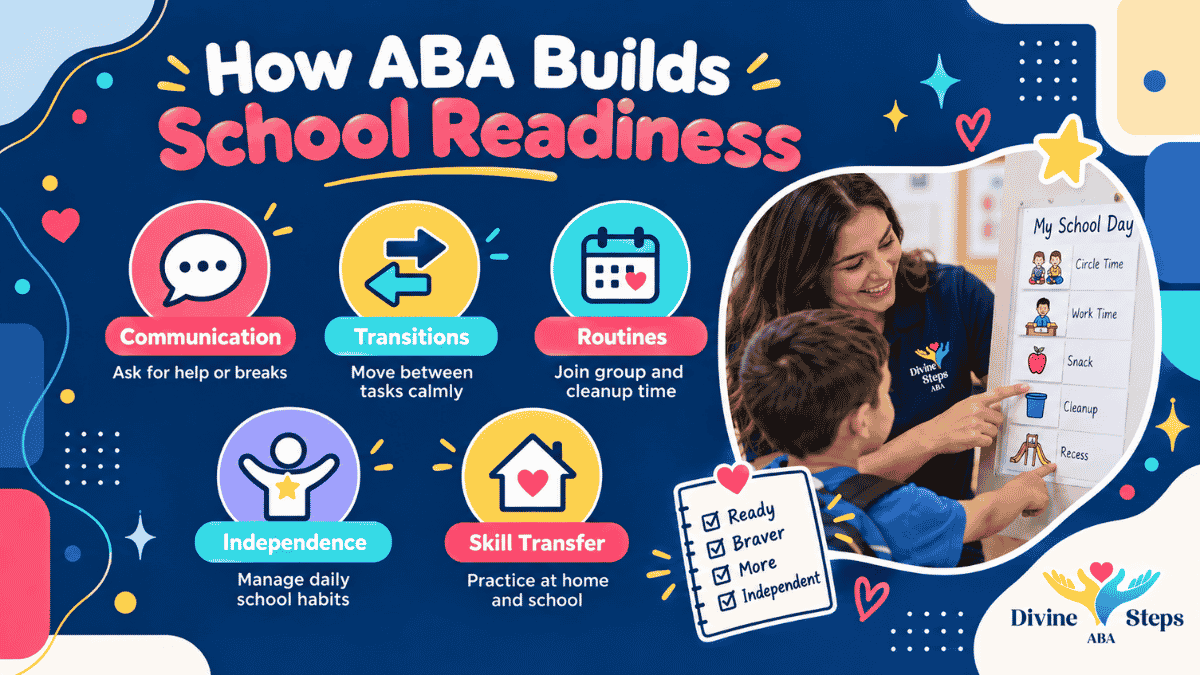
Yes, ABA therapy for school readiness targets practical skills children use every day in preschool and kindergarten classrooms. School readiness focuses on functional behaviors like sharing needs, following short directions, moving between tasks, participating in group routines, and building independence.
Rather than focusing solely on early academic benchmarks like counting or reading, behavioral support builds habits that help a child engage comfortably in a group setting. Here’s a look at how
targeted ABA goals build meaningful skills that transfer directly into classroom settings.
What School Readiness Means for a Child in Rockville
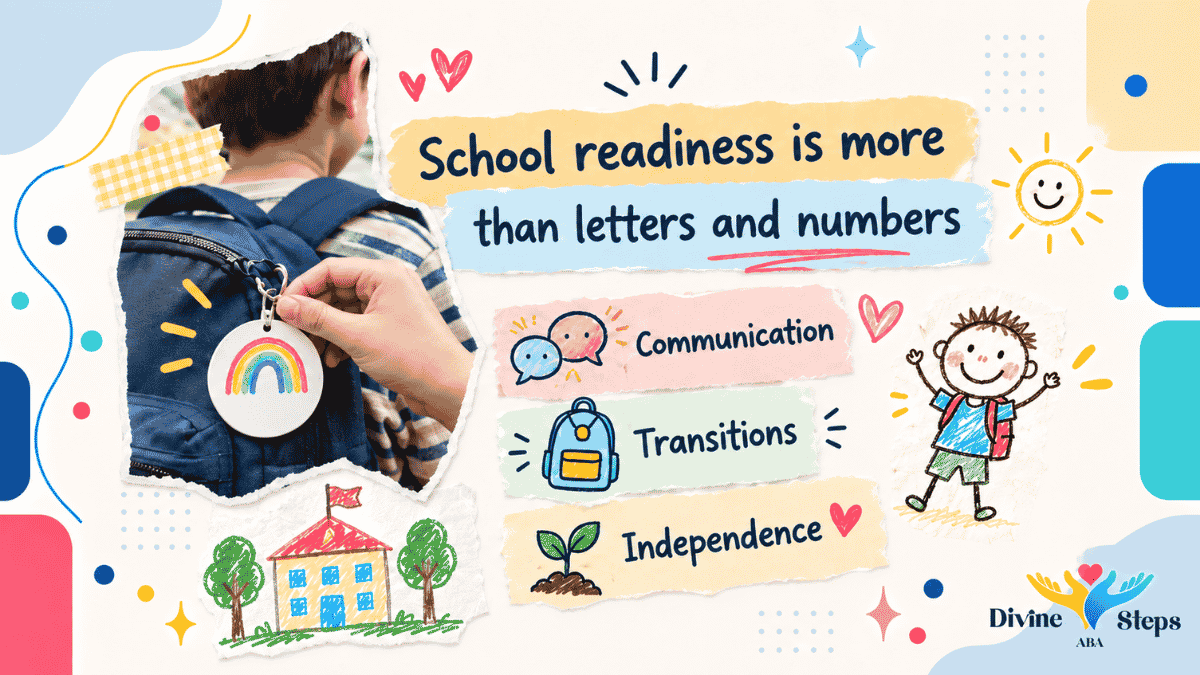
In Maryland, kindergarten readiness involves much more than reciting letters or counting objects. The Maryland Kindergarten Readiness Assessment evaluates social and emotional growth alongside foundational academic skills.
Maryland reported that 44% of kindergartners demonstrated readiness in 2023-24, while another 32% were approaching readiness. These figures show that school readiness for children with autism develops across several connected skill areas instead of a single academic checklist.
Families living in Rockville can reference Montgomery County Public Schools early learning guidance to see how these expectations play out locally. Classroom success often relies on daily observable habits:
- Telling or showing a teacher what they need
- Listening during a short group story or activity
- Handling an unexpected change in the daily schedule
- Joining a structured game with peers
- Completing classroom cleanup without needing repeated reminders
How ABA Therapy School Readiness Builds Communication and Participation
Classroom communication involves much more than speaking in complete sentences. Effective ABA school readiness skills focus on functional expressions, such as:
- Requesting a needed item
- Asking for a quick break
- Answering simple questions
- Getting a teacher's attention appropriately
In regular school settings, these skills allow a child to ask for assistance during art time, respond during morning circle, or connect with peers during lunch and recess.
A Silver Spring family we worked with noticed that their daughter began expressing her needs more clearly once we established a consistent communication system. As her parents learned how to prompt and reinforce those moments at home, she began carrying those same skills into group settings with far less frustration.
Families in Rockville do not need to wait until the first school day to identify which routines are difficult.
Our team can assess the communication, transitions, independence, and participation skills affecting your child's daily life and build those needs into ABA goals.
Contact us and connect with our team today.
Transitions and Classroom Routines Can Become ABA Goals
Moving between activities gives children the stability they need throughout a busy school day. Building ABA kindergarten readiness often starts by breaking complex school routines into manageable steps:
- Preparing for the morning commute or daycare drop-off
- Entering the classroom and stowing a backpack
- Moving from free playtime to a structured table task
- Cleaning up toys when a timer sounds
- Switching from classroom work to recess or lunch
Many parents share concerns about whether their child can handle schedule changes or group instructions without distress. When we target these transitions, we measure how much guidance a child needs at each step.
By coordinating these efforts across home and classroom environments in Rockville,
Board Certified Behavior Analysts (BCBAs) and school staff can track consistent progress using identical visual cues and reinforcement methods.
Independence Helps Children Take Part in More of the School Day
Developing self-care habits allows children with autism to participate more fully in classroom learning. Practical daily targets often focus on key routines:
- Hanging up coats and stowing personal items
- Sitting comfortably during a short story time
- Eating meals with minimal adult help
- Washing hands after bathroom visits or messier projects
- Following simple one-step or two-step directions
When families look into ABA therapy in Rockville, MD, having school-readiness goals connected to real daily routines creates a solid foundation. Our in-home ABA services let children practice these skills inside familiar surroundings before applying them elsewhere.
When a child masters morning sequences like getting dressed, finishing breakfast, and organizing supplies at home, those exact self-reliance habits carry right over to the school drop-off routine.
Home and School Practice Helps a Skill Transfer to Rockville Classrooms
Practicing a skill in multiple places prevents a child from associating that behavior with just one instructor or room. Skill transfer happens when a child uses the same positive habit across different environments:
- Asking for a break using a picture board with both a parent and a teacher
- Following a visual schedule at home, daycare, and school
- Waiting patiently during family dinners and classroom group time
- Using functional communication across multiple settings
Our Rockville ABA team collaborates directly with Montgomery County Public Schools and IEP teams to keep strategies aligned.
The Centers for Disease Control and Prevention (CDC) Maryland Autism and Developmental Disabilities Monitoring program identified about 1 in 38, or 2.6%, of 8-year-old children with autism in its Maryland surveillance area in 2022.
This data shows how many local families are working toward educational goals, making close collaboration between home providers and school professionals vital for long-term consistency.
Progress Should Show Up in Everyday School-Readiness Behaviors
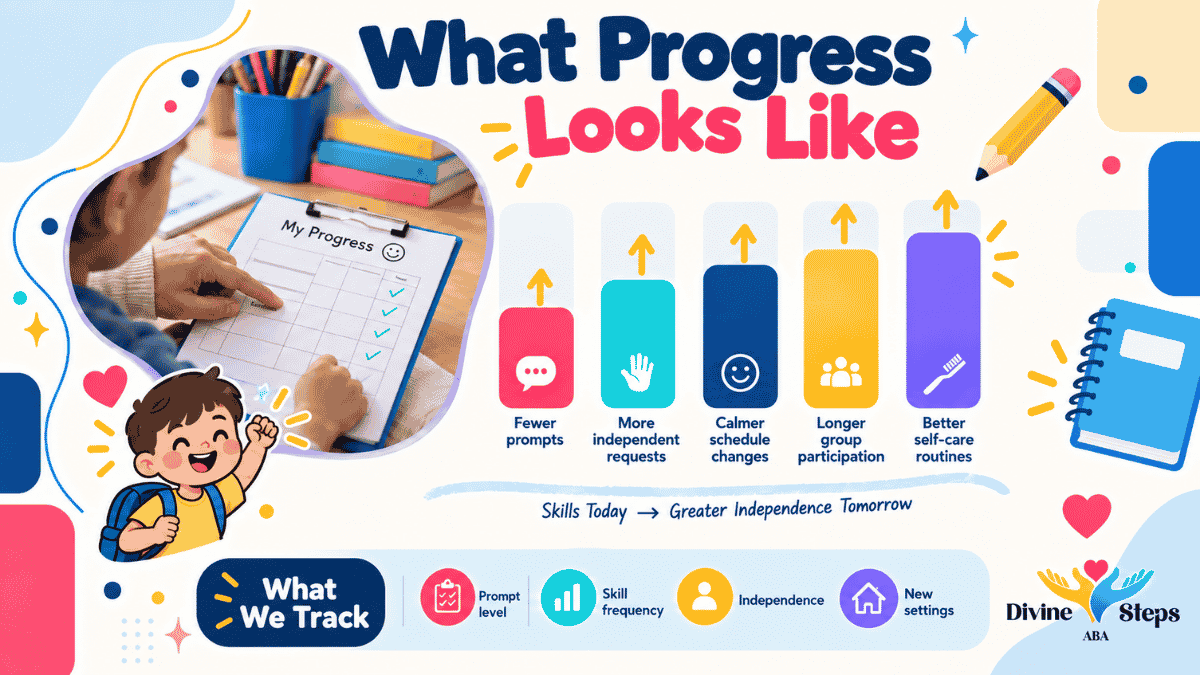
Clear progress looks like real, observable changes in daily habits. Families typically notice key markers over time:
- Fewer verbal or physical prompts needed during transitions
- More frequent independent requests for help or needed items
- Shorter periods of frustration during schedule changes
- Sustained participation in group learning routines
- Greater independence with personal hygiene and self-care
Comparing observations from home with updates from preschool teachers or MCPS staff gives a complete picture of growth.
A Maryland parent shared that her daughter became calmer, listened better, and consistently built new skills over time. Small, steady functional steps provide the most reliable evidence that a child is gaining confidence for the classroom.
How We Measure ABA Therapy School Readiness Before Kindergarten
We track ABA therapy school readiness by recording objective data during every session. Our team measures prompt levels, skill frequency, independence, and how successfully a child uses a skill in new environments.
While these measurement tools guide our clinical interventions, ABA data does not determine formal
school eligibility or placement. Educational decisions remain entirely with Montgomery County Public Schools and your child's IEP team, allowing our treatment plan to focus purely on building functional skills.
FAQs About ABA Therapy School Readiness
Does my child need to master every readiness skill before starting kindergarten?
No, school readiness is not an all-or-nothing checklist. Montgomery County Public Schools offers special education support and early childhood services for eligible children. Parents can also request developmental screenings through MCPS Child Find from age three until kindergarten.
Can ABA work alongside speech or occupational therapy?
Yes, different therapies address distinct developmental needs. In our experience, coordinating goals across speech, OT, and ABA services leads to strong outcomes. We regularly consult with outside specialists and school staff to keep everyone aligned on your child's progress.
What if my child is learning school-readiness skills more slowly than expected?
Every child develops on an individual timeline. We focus on steady growth rather than rigid benchmarks. One Maryland parent mentioned that her daughter took time to adjust, but eventually became calmer, listened better, and continued gaining independence step by step.
Build School-Readiness Skills With Our Team
ABA therapy builds practical skills like communication, smooth transitions, classroom routines, independence, and active participation when goals reflect your child's unique needs. Grounding these targets in daily routines helps children feel confident at home, daycare, and school.
At Divine Steps Therapy, we provide in-home and school-based ABA for families in Rockville, North Bethesda, Gaithersburg, Potomac, Derwood, and surrounding Montgomery County communities. When appropriate, our team collaborates directly with school personnel to support your child's growth.
Call 888-541-1868 or use our contact page to discuss the school-readiness skills you want your child to build. Our team can assess communication, transitions, independence, and participation skills and turn those needs into measurable ABA goals.

Families can confirm Aetna ABA therapy coverage in Maryland before care starts. Seven checks show what to verify.

What to do after an autism diagnosis includes reviewing the report, calling insurance, and starting ABA and school referrals. Contact Divine Steps.

Switching ABA therapy providers can preserve goals, data, and routines while reducing care gaps. Your child's transfer can start with Divine Steps.