


Website by CWS
What to Do While on an ABA Therapy Waitlist in Virginia
August 16, 2026
Key Points:
- An ABA therapy waitlist in Virginia has no fixed length across providers.
- An assessment opening and a recurring treatment opening are separate, so families should request an estimate for each.
- Early intervention and school evaluations offer additional routes to support while private ABA remains pending.
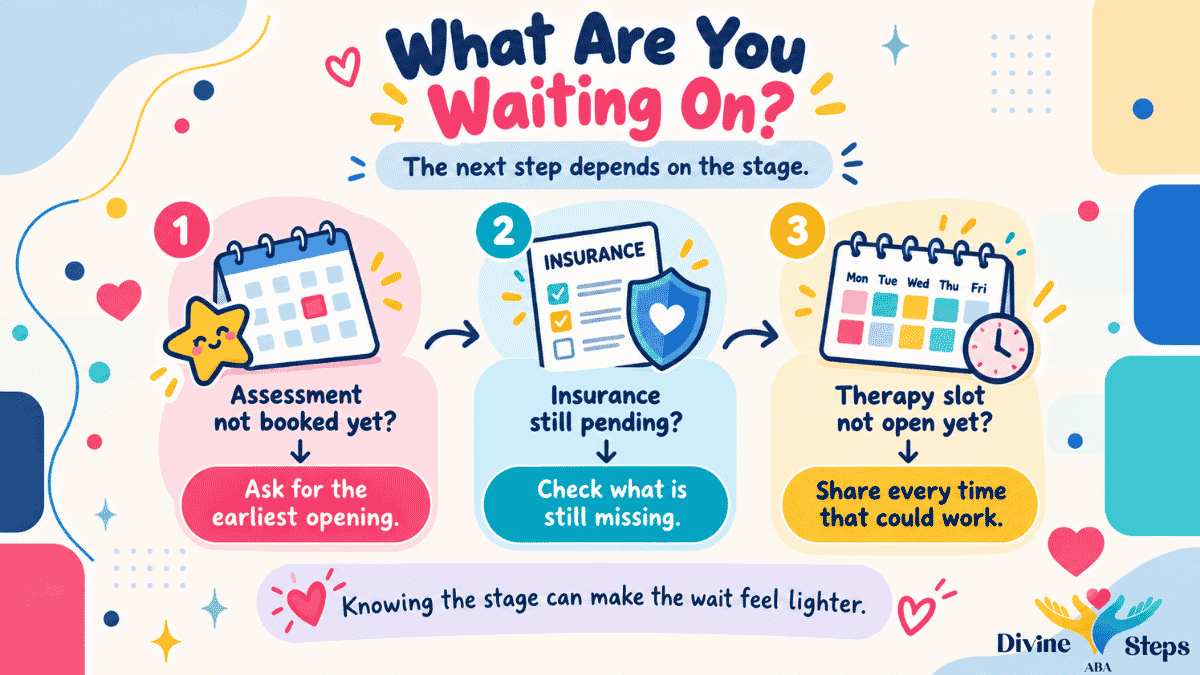
An ABA therapy waitlist in Virginia can involve delays at different stages: an assessment, insurance approval, or an available therapist. Knowing which stage your child is waiting for helps you decide what to do next.
Families can prepare records, compare providers, and explore developmental or school support while waiting. At Divine Steps Therapy, we offer ABA services in Virginia for children ages 1 to 11, including in-home and school-based support. Our team can help families understand the intake process.
How Long Is the ABA Therapy Waitlist in Virginia?
There is no single wait time that applies to every Virginia ABA provider. Your child’s location, age, insurance plan, support needs, and available schedule can affect when services begin.
Even within one agency, availability can differ. A provider may have a therapist available during school hours but no opening after school. Families seeking ABA therapy openings in Northern Virginia should request an estimate for their child’s ZIP code and schedule.
An estimate is useful for planning, but families should confirm what it covers: the first assessment or the start of regular treatment.
Why Does an Assessment Opening Differ From a Treatment Opening?
An ABA assessment helps a Board Certified Behavior Analyst (BCBA) learn about your child’s communication, strengths, daily routines, and support needs. The BCBA uses that information to develop treatment goals.
Regular therapy also requires a treatment team, a recurring schedule, and any required insurance approval. For example, a provider might offer an assessment next week while still seeking a therapist for afternoon sessions.
Our in-home ABA therapy includes a home assessment and a treatment plan based on the child’s needs. Families can ask about assessment scheduling and ongoing therapy availability separately.
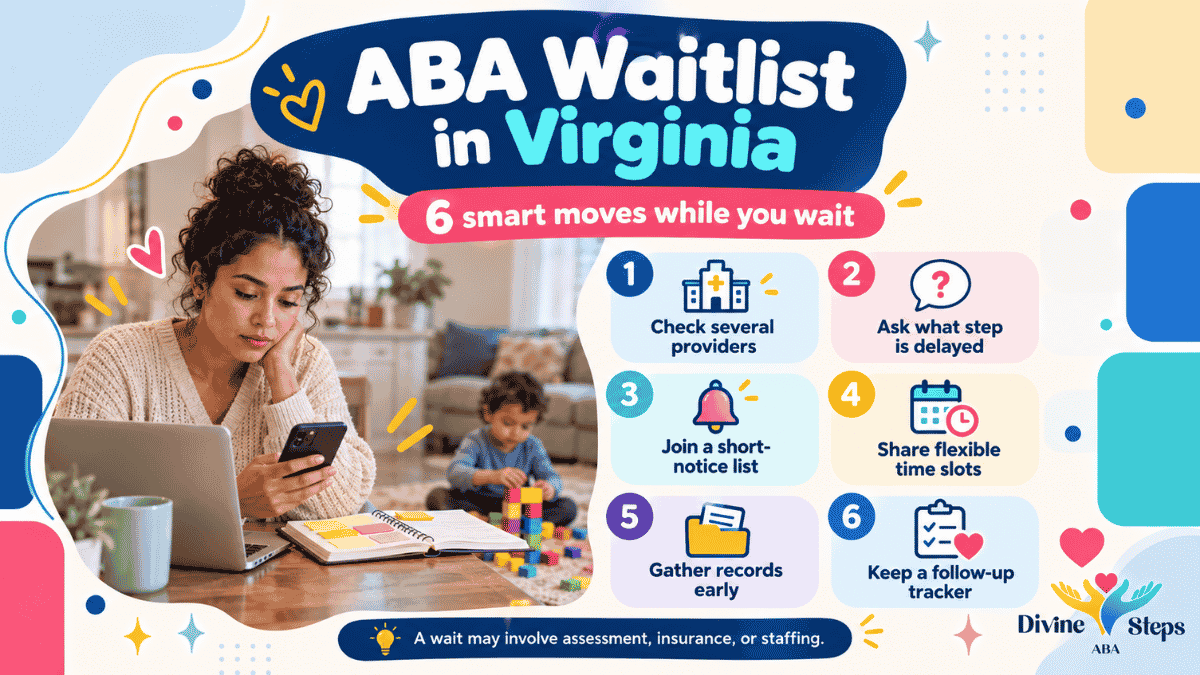
6 Ways to Check ABA Therapy Availability in Virginia
These steps can help families find options and prevent avoidable intake delays. None guarantees an earlier treatment start.
1. Contact More Than One ABA Provider
Different agencies serve different areas and accept different insurance plans. Your insurer can help identify providers in your child’s network.
An online search for “ABA therapy near me” provides a starting point. Each agency still needs to confirm whether it serves your ZIP code, accepts your specific plan, and treats children in your child’s age group.
2. Request Details About Each Intake Stage
A general statement such as “we accept new clients” may leave scheduling questions unanswered. Useful questions include:
- When could my child receive an assessment?
- Is a therapist available for regular sessions?
- Can we complete paperwork while waiting?
- What still needs to happen before treatment begins?
The answers help families understand whether the next step involves documents, insurance review, or staffing.
3. Ask About Short-Notice Appointments
Appointments sometimes become available after a cancellation or schedule change. Providers handle those openings differently, so families can ask whether the agency keeps a short-notice list.
A parent might say, "Our family can attend an assessment on short notice. Could you contact us if an earlier appointment becomes available?”
A canceled assessment does not necessarily create an opening for weekly therapy.
4. Review Possible Schedules and Settings
Families can share all hours they could realistically attend. A wider schedule gives the provider more options to check, although morning or school-day sessions do not automatically have shorter waits.
We offer school-based ABA support, where our team works with teachers and school staff on classroom needs. School access, treatment needs, insurance requirements, and staffing affect whether that setting is available.
Any proposed schedule should account for your child’s education, rest, and other services.
5. Prepare the Records Your Provider Requests
Ready documents can prevent some paperwork delays after an appointment becomes available. Common intake records include:
- Insurance card and member information
- Autism diagnostic report, when applicable
- Earlier evaluations or treatment records
- Referral or prescription, if the plan requires one
- Your child’s age and main support needs
- Available days and hours
A school plan, such as an Individualized Education Program (IEP), may provide helpful background. Each agency should explain which records it needs.
Our ABA insurance assistance helps families review coverage and insurance requirements. Preparing records may reduce ABA therapy wait time caused by missing paperwork, but it cannot create a staffing opening.
6. Track Responses and Follow Up
A simple tracker helps families compare assessment access with ongoing treatment availability.
| Provider | Insurance Accepted? | Assessment Availability | Treatment Availability | Next Follow-Up |
|---|---|---|---|---|
| Provider A | To confirm | To confirm | To confirm | Date |
| Provider B | To confirm | To confirm | To confirm | Date |
After each call, families can update the tracker and record any missing documents. The intake coordinator can suggest when another follow-up would be useful.
Can Starting With Fewer ABA Hours Reduce the Wait?
An available schedule may offer fewer hours than your child’s treatment plan recommends. That opening alone does not establish whether the schedule meets your child’s needs.
ABA hours should follow an individual assessment and treatment plan. Families can bring a proposed schedule to the treating BCBA and ask whether it supports the child’s goals and meets insurance requirements. A shorter schedule should not become a general shortcut to starting care. Virginia Medicaid’s ABA requirements also tie covered services to documented needs and an approved authorization.
What Insurance Steps Come Before ABA Starts?
Insurance coverage and therapist availability are separate issues. A provider may have staff ready while an insurance request remains pending.
Prior authorization means approval an insurer may require before it covers treatment. Families can ask:
- Is this provider in my child’s insurance network?
- Does the assessment or treatment require approval?
- Has the provider submitted the request?
- What information is still missing?
Virginia Medicaid families should check the requirements that apply through their child’s plan and provider. Cover Virginia’s contact resources offer help with Medicaid coverage and access concerns.
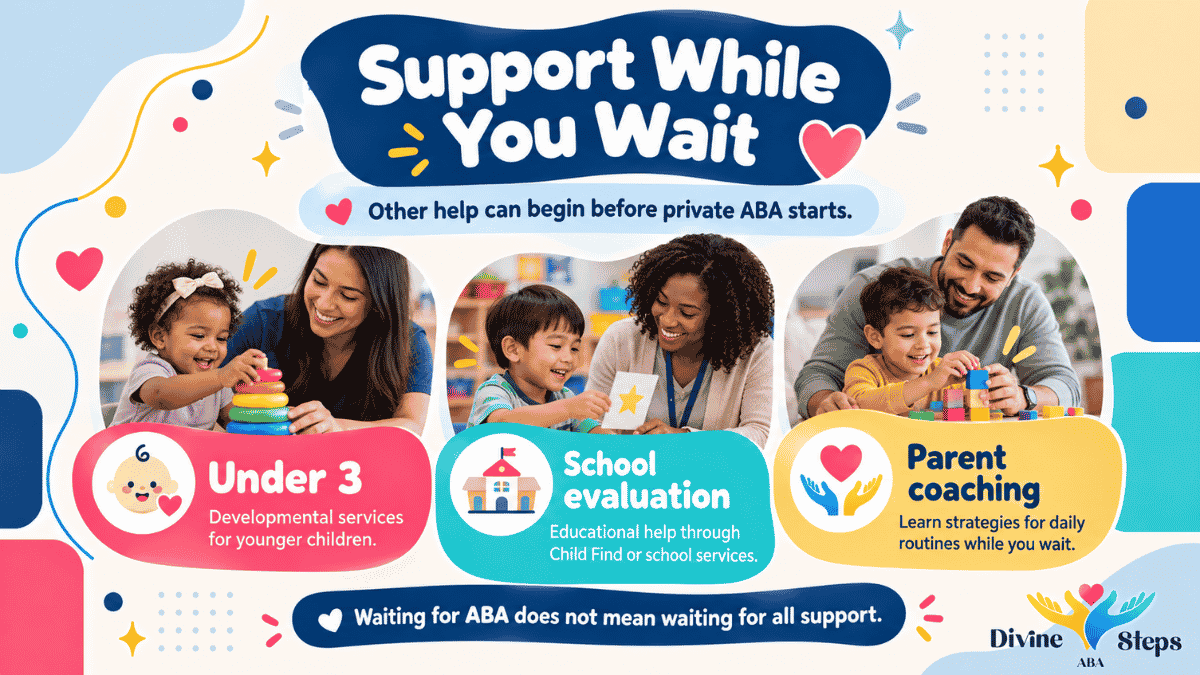
What Support Can Children Receive While Waiting?
Other services may address your child’s needs while private ABA remains pending. Each program has its own eligibility process.
Early Intervention for Children Under Age 3
The Infant & Toddler Connection of Virginia supports eligible children under age 3 with developmental delays or qualifying conditions. Services may include speech therapy, occupational therapy, physical therapy, and family support.
Families can contact the program about an evaluation without waiting for private ABA to begin.
School Evaluations and Educational Support
Families with developmental or learning concerns can contact their local school division about Child Find evaluations. Virginia school divisions must identify and evaluate children who may need special education and related services.
Children who qualify can receive educational support through a separate process from insurance-funded ABA.
Caregiver Coaching and Everyday Routines
Our ABA parent training includes one-on-one BCBA coaching and practice with your child. Families can inquire whether coaching is available before regular sessions begin; access depends on the treatment plan, staffing, and coverage.
Virginia parent Eli S. described learning strategies from our in-home therapist that helped during everyday activities. Their published testimonial reflects one family’s experience after services began.
While waiting, familiar routines and notes about your child’s communication or daily challenges can help future providers understand your family’s needs.
FAQs About an ABA Therapy Waitlist in Virginia
Can I join more than one ABA therapy waitlist?
Families can request placement on multiple waitlists. Each agency sets its own enrollment rules. Once your child begins care, notifying the other agencies helps them update their lists.
Will changing insurance affect my child’s waitlist status?
New coverage may change whether the provider can accept your plan or require another coverage review. The agency can explain whether your child’s existing waitlist entry remains active.
Can another provider use an ABA assessment my child already completed?
Acceptance depends on the new provider’s requirements and the insurance plan. Families can ask whether the existing report is usable and whether the agency needs an updated or separate assessment.
Explore ABA Therapy Options for Your Child
An ABA waitlist leaves several tasks within your family’s control: preparing intake records, checking available services, and seeking support for current needs. Those steps help your family prepare for care while a treatment opening remains pending.
At Divine Steps Therapy, we can review your Virginia location, child’s age, insurance information, and scheduling needs. Your message through our contact form can include those details and questions about assessment or recurring therapy availability. Our team will explain the next intake steps.

A preference assessment in ABA helps identify a child’s interests. Parent observations add context to the findings.

Private ABA in schools needs permission and coverage checks. See what Maryland families should confirm before sessions.

ABA potty training supports bathroom skills at your child's pace. Small goals and caregiver practice shape the routine.