


Website by CWS
In-Home vs. School-Based ABA Therapy and How to Choose
August 23, 2026
Key Points:
- In-home vs school-based ABA therapy should match the activities a child needs help with and the people involved.
- School permission and insurance approval are separate checks for privately arranged classroom sessions.
- A treatment plan should also explain how the child will practice skills beyond the original therapy setting.
A child learning to ask for help while getting dressed has different practice needs from a child learning to join classroom activities. Home sessions bring support into family routines. School sessions offer practice with teachers and classmates.
Applied Behavior Analysis (ABA) helps children learn skills through planned teaching and practice. The best ABA therapy setting for your child depends on their goals, comfort, and access to services. A Board Certified Behavior Analyst (BCBA), the professional who plans and oversees treatment, can review these needs with you.
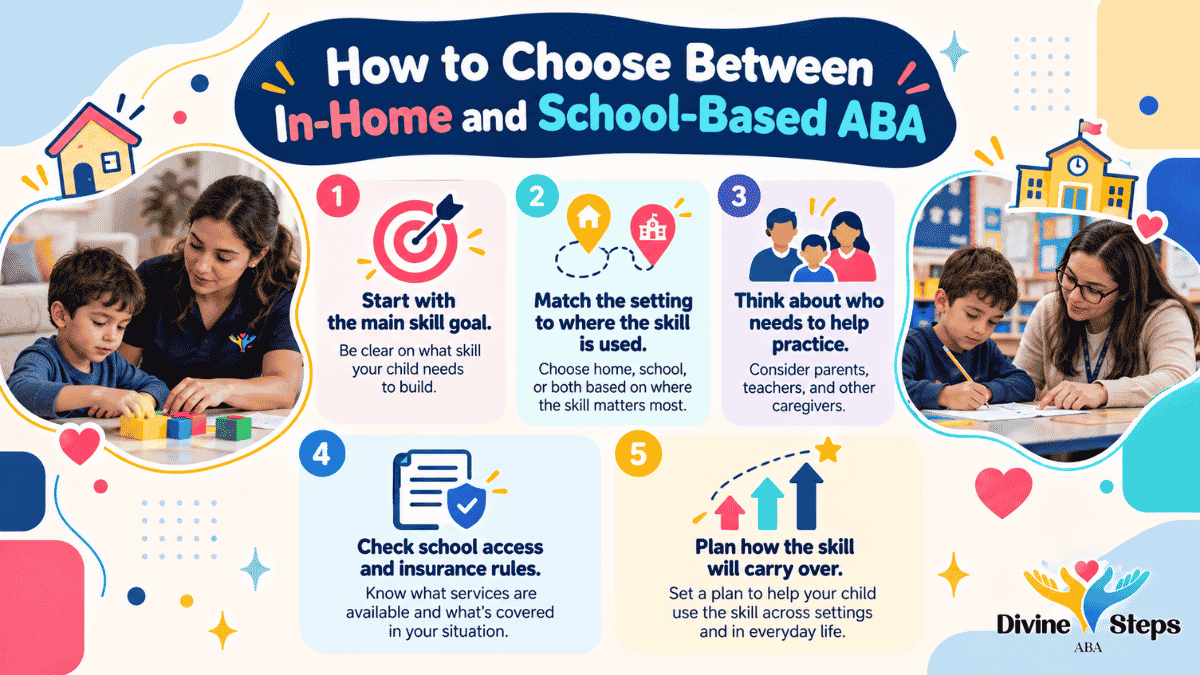
How Does In-Home vs. School-Based ABA Therapy Compare?
An ABA therapy setting comparison shows which people, activities, and routines each location offers.
| Factor | In-Home ABA Therapy | School-Based ABA Therapy |
|---|---|---|
| Environment | Familiar household routines and family members | Actual classroom, teachers, classmates, lunch, and recess |
| Parent participation | Parents can observe, practice strategies, and ask questions during or after sessions | Participation usually relies on updates, meetings, and coordination with school staff |
| School support | Home skills may prepare a child for school, but classroom demands are not directly present | Support happens while classroom demands and peer interactions occur |
| Scheduling | Sessions take place around home and family routines | Sessions take place during the school day and must match school access rules |
| Skill practice | Communication, self-care, meals, play, and sibling interaction | Following directions, group participation, transitions, participating in lessons, and social interaction |
| Common distractions | Toys, siblings, pets, television, visitors, or limited space | Noise, peers, bells, changing activities, crowded rooms, or unstructured periods |
| Goals that often match | Daily independence and family routines | Classroom access and participation |
Private ABA sessions at school require permission from the school and any approval the insurer requires when insurance pays for treatment. School-provided educational services follow a separate process.
How Do Your Child’s Goals Shape the ABA Therapy Setting?
How Can In-Home ABA Therapy Support Daily Routines?
Home sessions allow children to practice during activities they already do with their families. Goals may include:
- Requesting food, toys, help, or breaks.
- Getting dressed and completing cleanup routines.
- Playing or communicating with siblings.
- Practicing self-care skills.
For example, a child having trouble putting on shoes can practice asking for help during the morning routine. The therapist may teach words, gestures, or another communication method suited to the child.
At Divine Steps Therapy, our in-home ABA therapy connects treatment goals with household activities. Families considering in-home ABA therapy in Virginia can share which routines need support during the assessment process.
How Can School-Based ABA Therapy Support Classroom Participation?
School sessions offer opportunities to practice skills during lessons and activities with classmates. Goals may include:
- Asking a teacher for help or a break.
- Joining lessons and group activities.
- Moving between rooms or activities.
- Communicating during lunch and recess.
A child who finds sudden schedule changes difficult might practice checking a picture schedule or requesting support. The approach depends on their treatment plan.
Our school-based ABA support includes working with teachers and school staff. Families exploring school-based ABA therapy in Maryland should confirm school access before planning classroom sessions.
How Do Parents and School Staff Participate in ABA Therapy?
How Do Caregivers Participate in Home Sessions?
Caregivers can observe teaching, practice strategies, and share what happens between visits. That exchange helps the therapist understand how a skill works during ordinary family life.
Our ABA parent training includes one-on-one BCBA coaching and practice with your child. Caregivers can ask questions as they learn approaches for communication and daily tasks.
Eli S., a Virginia parent, described how our in-home therapist explained strategies the family could use outside sessions. Their published parent testimonial offers one family’s perspective on caregiver support; each child’s needs and progress differ.
How Do Families and Teachers Coordinate School Support?
Teachers can share observations about classroom routines, while parents explain concerns and changes at home. The clinical team can use these updates when reviewing treatment goals.
Some students have an Individualized Education Program (IEP), a written plan for special education goals, services, and supports. Under IDEA, schools must make services identified in the IEP available to an eligible child. Privately arranged ABA follows a separate clinical plan and does not automatically replace those services.
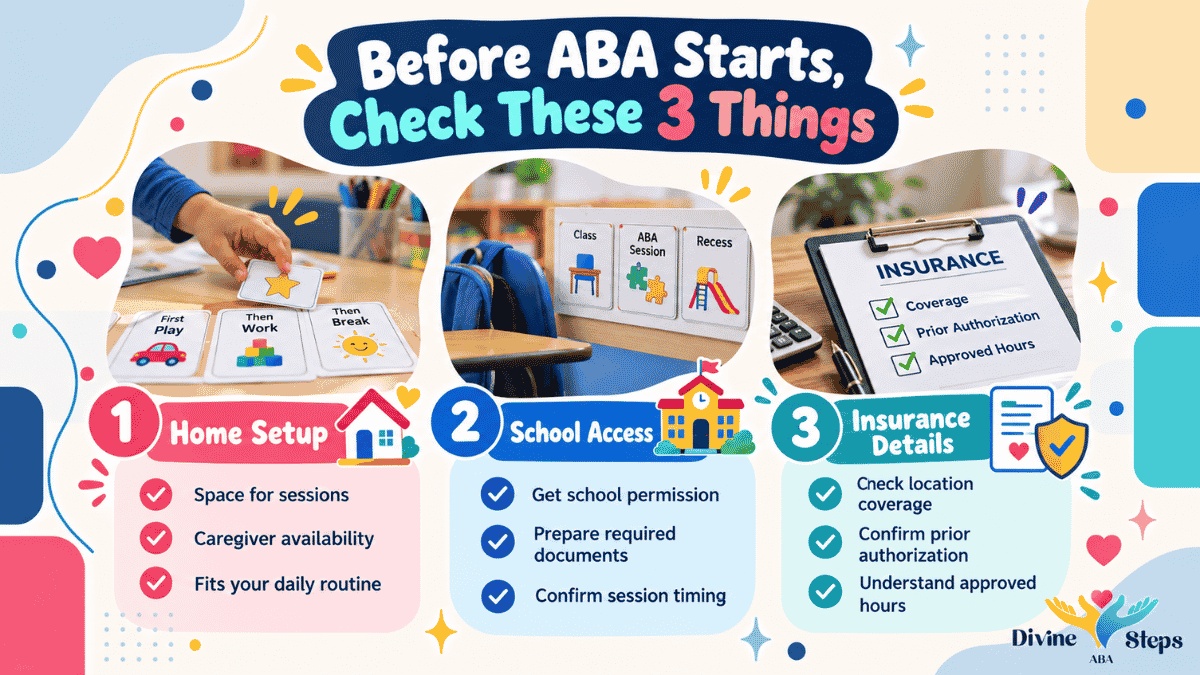
What Should Families Check Before Arranging ABA Sessions?
What Does the Home Need for ABA Therapy?
Home sessions need usable space for the planned activities. The home does not always need complete silence, especially when therapy involves family routines.
Practical checks include:
- A caregiver’s availability when coaching is planned.
- Space and household items needed for the activities.
- Pets, visitors, or noise that could interrupt practice.
- Provider availability during the relevant routines.
What Permission Does School-Based ABA Therapy Require?
An outside therapist cannot automatically enter a classroom because a family requests treatment. The school’s process may involve meetings, documents, and limits on access.
Questions for the school include:
- Does the school allow outside ABA providers?
- Which documents or approvals are required?
- Which activities can the therapist observe or support?
- How will sessions work around instruction?
- What happens during closures or schedule changes?
What Insurance Details Should Families Verify?
Insurance approval for ABA does not automatically cover every location. A plan may have rules about covered services, approved providers, and authorization, meaning approval before treatment starts.
The benefits review should address:
- Coverage for the proposed home or school location.
- Prior authorization and provider network requirements.
- Approved hours and any location restrictions.
- Possible out-of-pocket costs.
CMS explains that covered Medicaid services can take place in schools, subject to applicable requirements. That does not establish approval for every privately arranged ABA session.
At Divine Steps Therapy, we help with benefits verification and authorization paperwork. Our team reviews plan information without promising insurer approval.
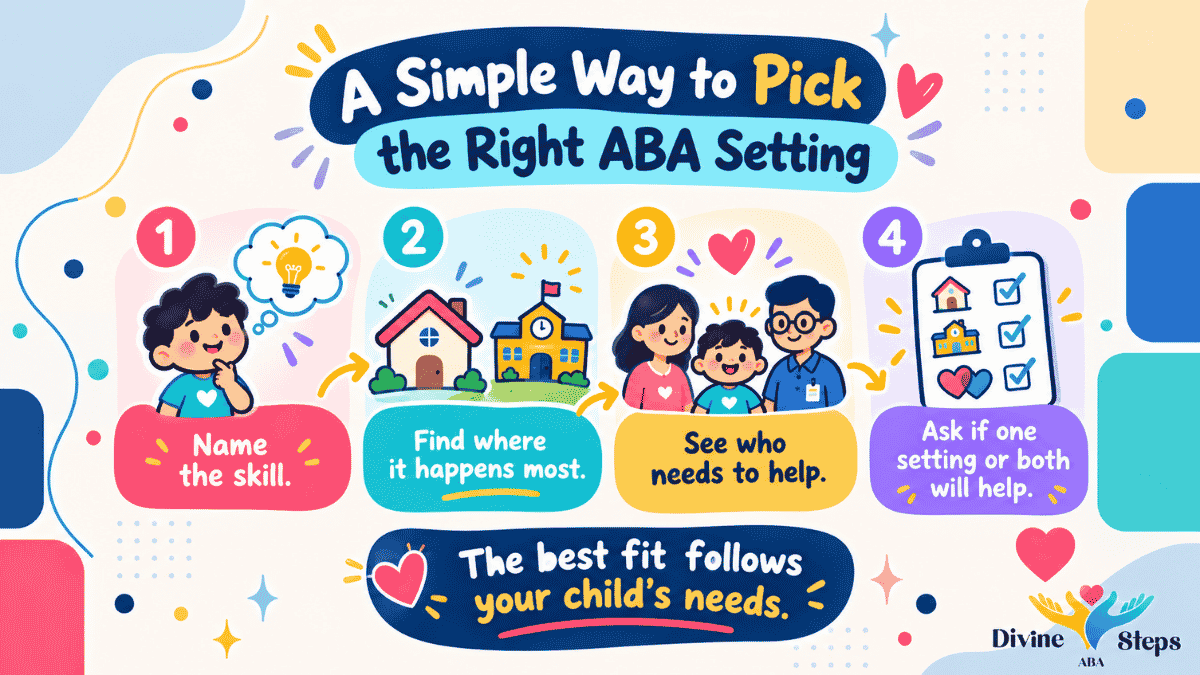
Which Five Questions Help With Choosing an ABA Therapy Location?
These questions can help you prepare for a conversation with your child’s BCBA:
- Where does my child need help most often? The answer identifies the routine or activity that needs attention.
- Who will help my child practice? Caregivers and classroom staff may need different kinds of support.
- Which people and materials need to be present? A goal involving classmates needs opportunities with peers.
- Can the recommended location support regular sessions? Schedules, staffing, school access, and coverage affect availability.
- How will my child use the skill elsewhere? A skill learned with one adult may need practice with other people.
A 2019 study involving three autistic children examined how social interaction skills taught at school carried over to interactions with siblings at home. Researchers planned for that transfer. The small study supports discussing practice across settings; it does not establish one location as better for every child.
Can Children Receive ABA Therapy at Home and School?
Some children have goals that involve both settings. A coordinated plan can give each location a specific purpose, such as classroom participation at school and self-care at home.
The BCBA should explain what each setting adds and how the teams will track progress. Combined services still depend on the recommended treatment plan and the access checks above. Therapy hours should reflect the child’s individual needs.
FAQs About In-Home vs. School-Based ABA Therapy
Can my child receive in-home ABA therapy after school?
After-school sessions may be possible when staffing, the treatment plan, and insurance authorization allow them. Your child’s schedule should also leave time for rest, play, and family activities. The provider can review suitable times before arranging visits.
Do families need to buy special toys for home ABA therapy?
A shopping list should come from the provider’s session plan. Families can ask which household items the therapist can use and which materials the provider brings. Purchases should wait until the team explains what is needed.
Who reviews whether my child should change ABA settings?
The supervising BCBA and family can review progress, attendance, comfort, and barriers to learning. A change may involve adjusting goals or moving sessions. Any proposed move also needs a review of scheduling, school access, and insurance requirements.
Choose an ABA Therapy Setting Around Your Child’s Needs
ABA therapy at home vs at school offers different opportunities for practice. The decision should connect your child’s goals with a location where they can receive suitable support.
At Divine Steps Therapy, we offer home services and school-based support for families in Maryland and Virginia. Our team can review your child’s needs, available services, and assessment steps through our contact form.
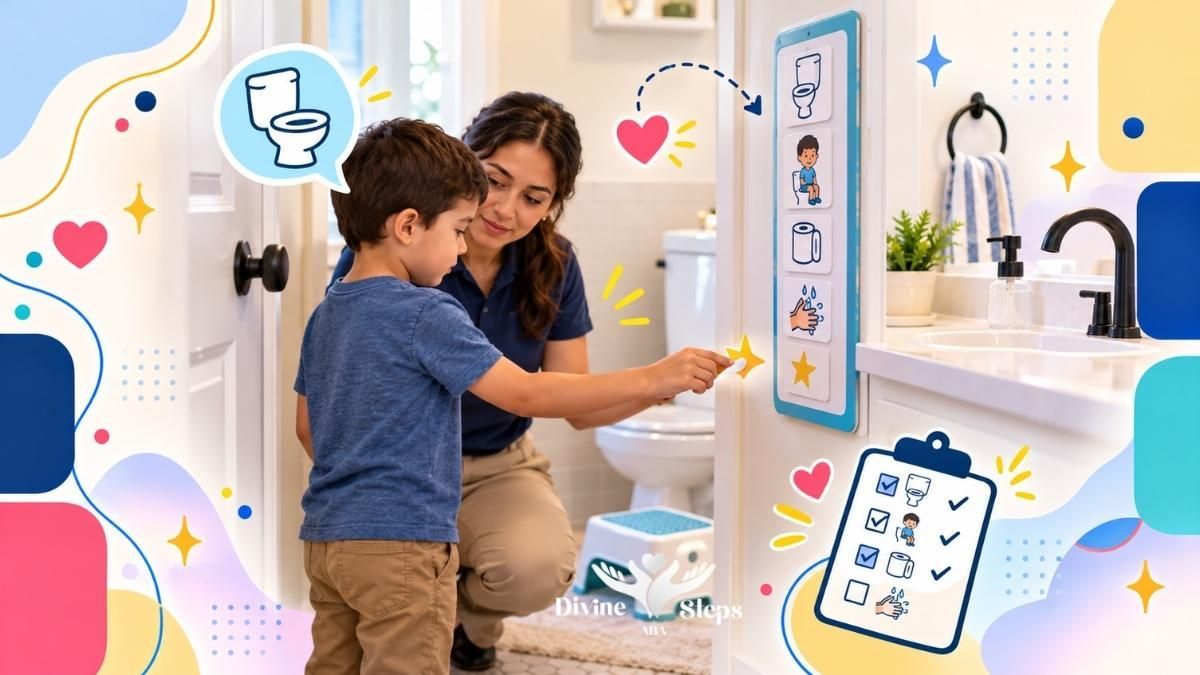
ABA potty training supports bathroom skills at your child's pace. Small goals and caregiver practice shape the routine.

What to do after an autism diagnosis starts with the report. See state programs, school rights, and ABA intake tips.

ABA therapy out-of-pocket cost depends on your care and plan. A worked example explains deductibles and coinsurance.