


Website by CWS
How to Switch ABA Therapy Providers Step by Step
August 30, 2026
Key Points:
- Switching ABA therapy providers requires coordination between the family, therapy teams, and insurer.
- A scheduled intake visit does not confirm that ongoing sessions can begin, so families should track staffing and approval separately.
- Previous treatment records and caregiver observations help the new BCBA decide which goals and supports need review.
Switching ABA therapy providers starts with finding a team that can meet your child’s needs. Records, insurance requirements, and staff availability all affect when the change can happen.
A new team also needs time to learn about your child. The steps below explain how to arrange the transfer, share useful information, and prepare your child for different therapists without promising a gap-free change.
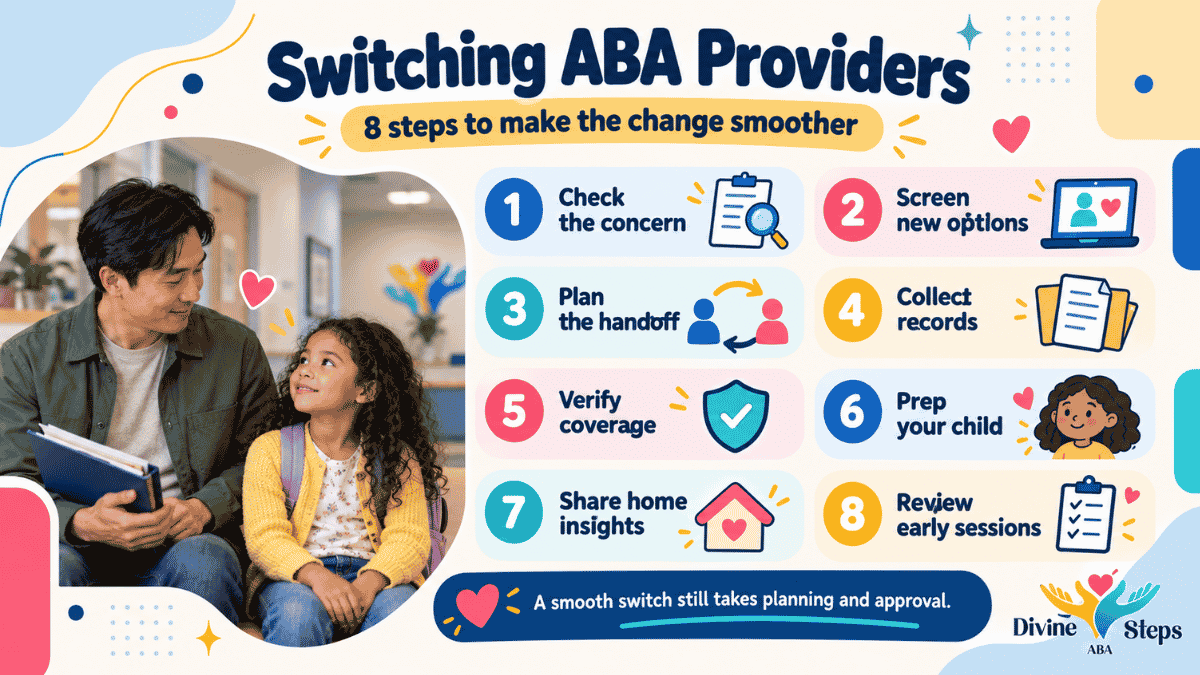
1. Decide Whether You Need a New Therapist or Provider
Some concerns may be resolved within your current ABA company. A different therapist or supervisor may address the problem without changing providers.
A Board Certified Behavior Analyst (BCBA) develops and oversees treatment. A Registered Behavior Technician (RBT) provides direct therapy under supervision.
Reasons to consider a change include:
- Frequent cancellations or staff changes.
- Unanswered questions about treatment or progress.
- Few opportunities for caregiver input.
- Goals that no longer reflect your child’s needs.
- Ongoing distress that the team has not addressed.
- Session times that no longer work for your family.
A parent who is unhappy with their current ABA provider might request a meeting about repeated cancellations. Continuing concerns may support a decision to leave. Your child’s safety takes priority over completing a planned transfer.
2. Check Whether a New Provider Can Accept Your Child
A company’s service area does not confirm that it has staff available for your child’s schedule. Before ending current services, families can ask:
- Does your team serve my child’s age group and ZIP code?
- Do you participate in my child’s specific insurance plan?
- Which therapy settings do you offer?
- When might a BCBA and direct therapist become available?
- Can you review existing records, and will another assessment be needed?
- How do caregivers participate in treatment decisions?
At Divine Steps Therapy, we offer in-home ABA therapy with BCBA oversight and direct RBT sessions. Our school-based support includes collaboration with teachers and school staff.
In her published family review, Chavi S. describes trying other providers before working with us. She valued our in-home team’s reliability and commitment to her child. Her review reflects one family’s experience.
3. Make a Transfer Timeline
A written timeline helps both teams organize the change. The BACB’s Continuity of Services Toolkit supports planning and communication when services change or end.
Your current service agreement may include notice requirements. A proposed intake appointment also differs from a confirmed therapy start date. Insurance approval and staffing may still be pending.
ABA Provider Transfer Checklist
| Transfer Task | What to Record |
|---|---|
| New provider intake | Contact person and proposed appointment |
| Insurance inquiry | Date, representative, and reference number |
| Records request | Date requested and documents received |
| Consent or release | Status of any requested form |
| Current provider notice | Required notice period and date given |
| Existing authorization | Current approval and expiration date |
| New authorization | Submission date and approval status |
| Final therapy session | Planned date with the current provider |
| New therapist introduction | Date, if available |
| First BCBA meeting | Scheduled date |
4. Request the Records the New Team Needs
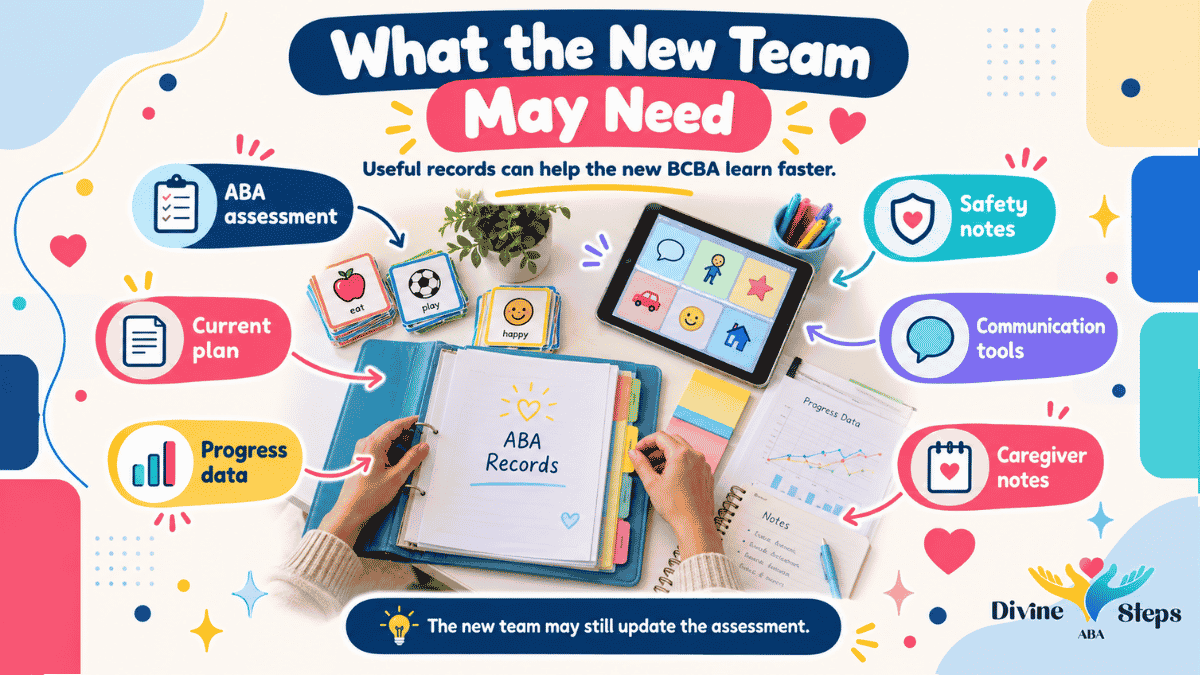
Recent records help the new BCBA understand previous treatment. Useful documents include:
- Latest ABA assessment: Skills, support needs, and recommendations.
- Current treatment plan: Goals and teaching methods.
- Progress reports and session data: How the team measured changes.
- Behavior or safety plans: Relevant precautions and support procedures.
- Communication information: Picture cards, speech devices, or other supports.
- Caregiver training notes: Strategies the family has practiced.
- Service or discharge summary: Recent schedule and treatment history.
The new BCBA may still need to observe your child or update the assessment.
How Are Records Shared Between Providers?
Parents generally have access to their minor child’s health records, with exceptions under privacy rules and applicable law. HHS explains these parental record-access rights.
HIPAA generally allows healthcare providers covered by the rule to share information for treatment without separate patient authorization. Additional protections or provider procedures may apply. Families can request the secure transfer method and complete any required release form.
5. Confirm Insurance Requirements
Your current approval does not establish whether a different provider can bill for therapy. Your insurer can explain whether the new company needs a separate request or an update.
Prior authorization means approval from the insurer before certain services. When transferring autism therapy services, useful questions include:
- Is the new company in my child’s provider network?
- Must the current authorization end or change?
- What must the new provider submit?
- Are updated assessments or treatment plans required?
- Which dates and services will the approval cover?
- Will our copay, deductible, or other costs change?
Written confirmation and a call reference number can help you track the answer.
Our ABA insurance support includes checking benefits and handling authorization paperwork. The insurer determines coverage and approval.
6. Prepare Your Child for the New Team
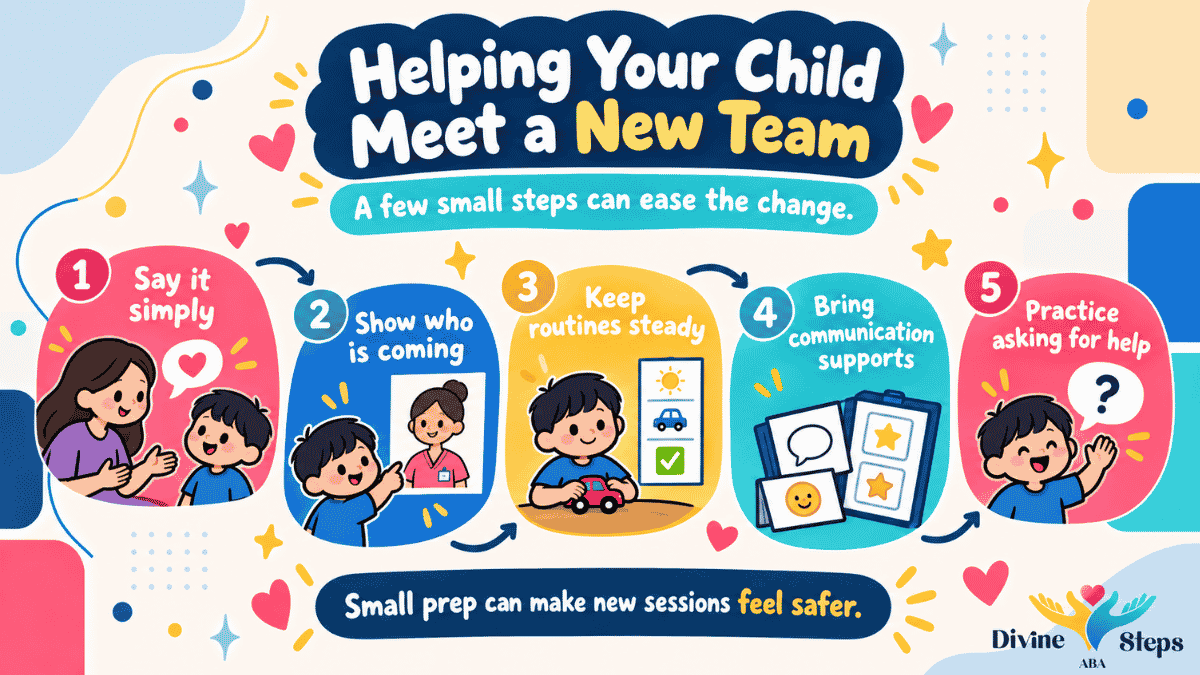
Preparation should suit your child’s communication needs. Some children welcome new people; others need a slower introduction.
Practical ABA therapy transition tips include:
- Simple explanations using words or pictures your child understands.
- Therapist photographs or an introductory meeting, when available.
- Familiar routines around session times.
- Continued access to communication tools.
- Opportunities to request help, refuse an activity, or take a break.
A picture calendar, for example, could show the last session with the current therapist and the first meeting with the new team.
Our parent training includes one-on-one BCBA coaching and guided practice with caregivers. Families can raise concerns about changing routines during those conversations.
7. Share What Records May Miss
Changing a BCBA mid-treatment involves helping a new clinician understand your child’s everyday life.
A short caregiver note can describe:
- Favorite activities and interests.
- Early signs of discomfort.
- Sensory preferences, such as quieter spaces.
- Family priorities for treatment.
- Previous approaches that helped or caused concern.
A progress report might count how often your child requested help. Your note could explain that your child uses a speech device at breakfast and gestures during play. Both details help the clinician understand the skill.
In our home-based services, we include caregiver input when developing each child’s treatment plan.
8. Review the First Sessions Together
Early check-ins help you and the new BCBA review the change. A check-in schedule can reflect your child’s needs without relying on a fixed deadline.
Useful questions include:
- Which previous goals will continue?
- Why do any goals or teaching methods need to change?
- How is my child responding to sessions?
- How will the team share updates?
- Who handles treatment concerns and scheduling questions?
Specific observations help the conversation. “My child stopped using the break card during sessions” gives the BCBA something concrete to review.
FAQs About Switching ABA Therapy Providers
Can my child keep the same RBT when switching providers?
Sometimes, but an RBT cannot automatically move to another company with your child. Employment arrangements, staffing, and supervision affect whether this is possible. Both providers would need to confirm the arrangement.
How can I check a new BCBA’s certification?
The BACB’s certification verification resources let families check certification status and reportable disciplinary actions. The provider can supply the clinician’s full name for the search.
What can families do during a break between providers?
Familiar routines and caregiver strategies already taught by the current team can support daily life. Before services end, families can request written instructions for those strategies and a contact for questions. Home practice does not replace professional therapy.
Plan Your Child’s Next ABA Chapter With Us
A provider change brings practical decisions about care and the people supporting your child. Your child’s comfort and your family’s priorities belong in those decisions.
At Divine Steps Therapy, we provide child-focused ABA services in Maryland and Virginia. Our team can review your location, preferred setting, and insurance information as you consider a transfer. Availability and start dates depend on staffing, intake requirements, and any necessary approvals.

ABA potty training supports bathroom skills at your child's pace. Small goals and caregiver practice shape the routine.

What to do after an autism diagnosis starts with the report. See state programs, school rights, and ABA intake tips.

ABA therapy out-of-pocket cost depends on your care and plan. A worked example explains deductibles and coinsurance.