


Website by CWS
What Is Functional Communication Training in ABA Therapy?
November 25, 2026
Key Points:
- Functional communication training connects a child’s request to the need identified through a behavior assessment.
- Speech, gestures, pictures, or a communication device can provide that request.
- Teaching includes an adult response that meets the identified need, followed by checks of communication, safety, and use during daily routines.
Functional communication training (FCT) teaches a child to communicate a need that a challenging behavior has been meeting. Within applied behavior analysis (ABA), FCT can support concerns such as hitting to obtain attention or throwing objects to leave an activity. Assessment guides which response the child learns.
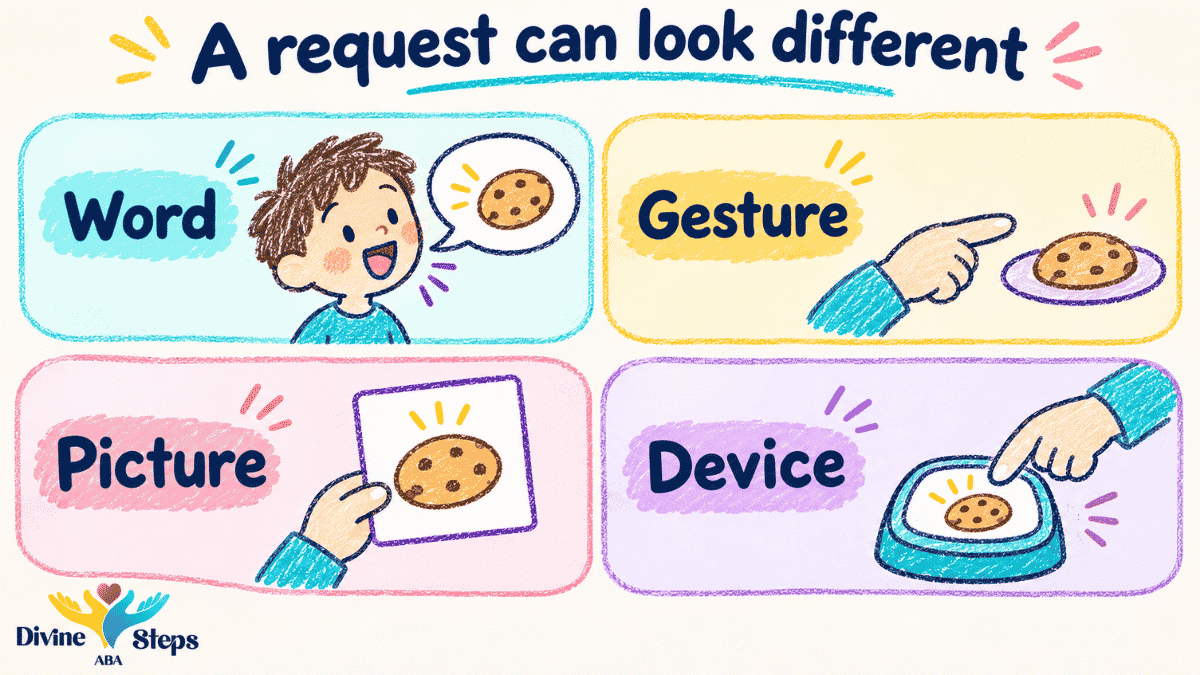
A child might learn to request a break with a word, gesture, picture, or device. The request needs to work for that child, and adults need to know how to respond. Those connections help explain what makes FCT different from simply teaching a new word.
How Does Functional Communication Training Work?
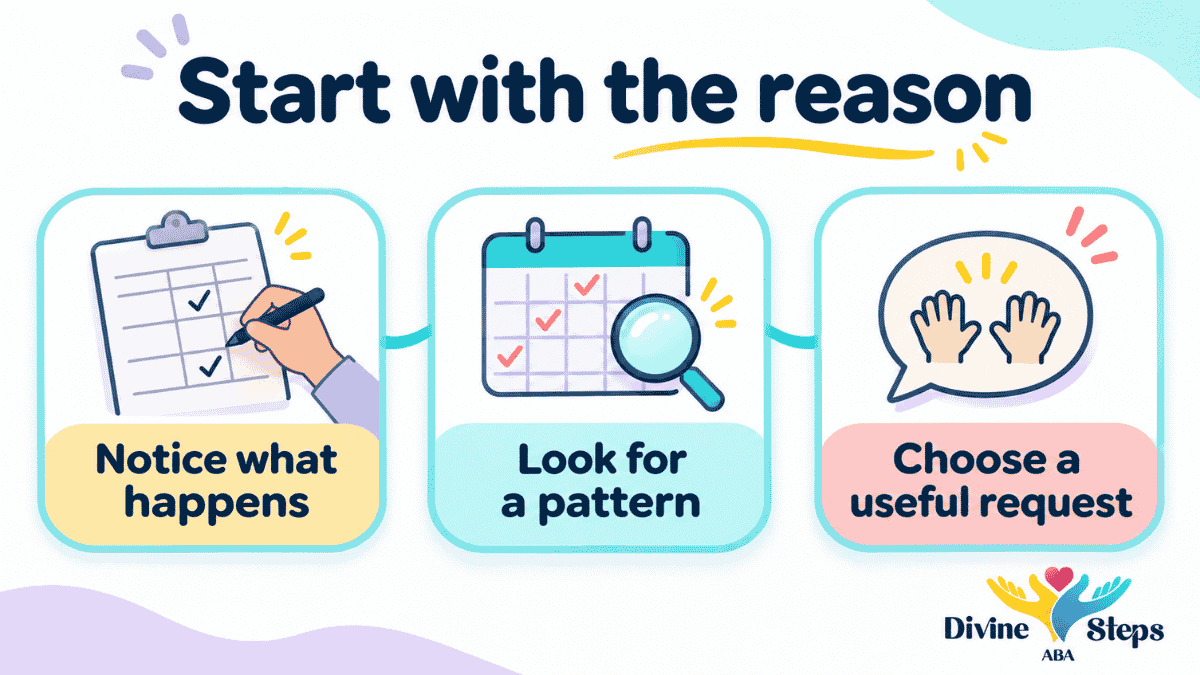
FCT connects communication with the outcome a behavior has been producing. Behavior analysts refer to that outcome as the behavior’s function, or purpose.
A child’s behavior might lead to:
- Attention: An adult joins or responds to the child.
- An item or activity: The child gains access to a toy or game.
- A break: An activity pauses or ends.
FCT teaches communication that serves the identified purpose. Reinforcement happens when the response produces an outcome that makes the child more likely to use it again.
For example, mere praise may not meet a request for a break. The child needs adults to recognize what the request means and follow the teaching plan.
FCT is one of several
ABA therapy techniques. Its defining feature is the connection between the assessed purpose and the communication being taught.
What Assessment Happens Before FCT?
A functional behavior assessment (FBA) helps the team identify what a behavior achieves before choosing an FCT goal. The team looks for patterns across situations.
Information may include:
- Caregiver observations: What happens during familiar routines.
- Direct observations: What occurs before and after the behavior.
- Records: How often the behavior occurs and the situations surrounding it.
One incident cannot establish the purpose. Two children may push an activity away for different reasons, so the same request will not necessarily address both children’s needs. The AFIRM FCT resources place assessment before treatment planning.
Our
in-home ABA therapy includes a home assessment with a Board Certified Behavior Analyst (BCBA). We develop an individual plan around the child’s needs and include caregiver input. A question families can bring to that conversation is, “What observations support the purpose identified in my child’s plan?”
How Does the Team Choose a Communication Response?
The team chooses a response the child can use and other people can recognize. Spoken sentences are not required.
The communication response might involve:
- A spoken word or short phrase.
- A sign or gesture.
- Touching or exchanging a picture.
- Selecting a message on a speech-generating device.
The choice also depends on effort, existing skills, preferences, and access. A response that works during a session may be difficult to use elsewhere if the needed picture or device is unavailable. Research on choosing functional communication responses examines these everyday concerns.
For example, a child who can easily say “help” may not need to produce a long sentence during a difficult moment. The goal is a request the child can manage.
Augmentative and alternative communication (AAC) includes methods that support or replace speech. A speech-language pathologist can assess communication needs, recommend AAC tools, and help people use them across settings. The
AAC options described by ASHA include gestures, pictures, apps, and speech-generating devices.
Functional Communication Training Examples
Functional communication training examples should show three connected parts: the assessed purpose, the child’s communication, and the adult’s response.
Here are some examples. Each row of the table below illustrates a possible plan.
| Purpose Identified Through Assessment | Possible Communication Response | Adult Response During Teaching |
|---|---|---|
| A break from an activity | The child touches a “break” card. | The adult provides the planned break. |
| Adult attention | The child uses an agreed gesture or says “play.” | The adult provides attention or interaction. |
| Access to a toy | The child selects the toy’s picture or device button. | The adult provides access to that toy. |
Research has examined spoken requests, signs, and picture-based responses within FCT. The communication method can vary while still serving the identified purpose.
A break card alone does not explain the whole intervention. The team also needs to establish why that request is appropriate, how the child will learn it, and what adults will do when the child uses it.
Teaching, Daily Practice, and Progress Checks
FCT in ABA therapy involves planned teaching and checks on how the plan works. Early practice may include prompts, meaning help with the response. The team reduces that help as the child learns.
Practice also needs to include relevant people and routines. Success with one therapist does not mean a child can use the request with another caregiver or in another setting. Research reviews highlight the need to examine how FCT works beyond initial teaching.
What Families Can Review With the Team
Caregiver conversations can cover:
- The request: What response is the child learning.
- The adult response: What should follow the request.
- Independent communication: Whether the child requests support without a prompt.
- Behavior changes: Whether the concern receiving support changes.
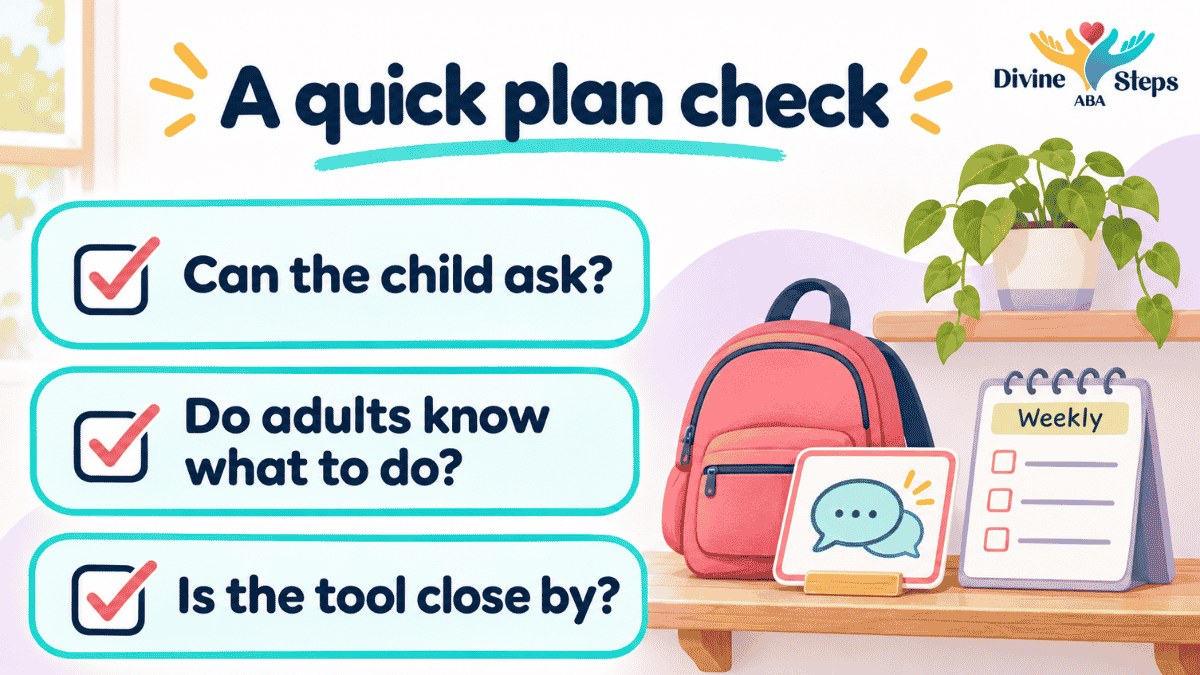
- Daily access: Whether communication tools are available when needed.
- Follow-up concerns: Changes that require the BCBA’s attention.
Our parent training helps caregivers learn strategies to use between sessions. Through our ABA therapy services, we support caregiver involvement alongside the child’s individual goals. The parent’s role in home ABA sessions includes sharing observations and learning how to support practice.
An individual treatment plan also needs to address responses to unsafe behavior. FCT can involve changes to how adults provide outcomes, and those changes require professional planning. A general explanation does not give families instructions to ignore distress or introduce waiting on their own.
How Is FCT Different From Everyday Request Teaching?
Everyday request teaching helps a child express wants and needs. FCT adds a specific connection to the assessed purpose of a behavior receiving support.
A
mand is the ABA term for a request. A mand can form part of FCT, but teaching a request does not automatically make it FCT.
| Point of Comparison | Everyday Request Teaching | FCT |
|---|---|---|
| Main purpose | Build requests for wants and needs. | Teach communication that serves an assessed behavior function. |
| Example | A child learns to request bubbles during play. | A child learns a request that produces the outcome identified through assessment. |
| Connection to behavior | The goal may address a general communication need. | The goal addresses a specific behavior and its identified purpose. |
The distinction helps families understand why the team selected a particular communication goal.
FAQs About Functional Communication Training
Is functional communication training a type of differential reinforcement?
FCT is a form of differential reinforcement of an alternative response. The term means strengthening another response through reinforcement. FCT specifically strengthens communication that serves the assessed purpose of the behavior receiving support.
Does FCT replace speech therapy?
FCT and speech-language therapy address different needs. FCT targets a communication response linked to an assessed behavior function. Speech-language therapy can address broader speech, language, and communication needs. Coordination can help when both professionals support the same child, including a child who uses AAC.
How long does functional communication training take?
FCT has no single timeline for every child. Learning an initial request and using it independently across daily life are separate achievements. The team needs to monitor both, so early success cannot establish a fixed treatment length or lasting results.
Talk With Our Team About Communication Goals
Functional communication training brings assessment, an accessible request, and a planned adult response together. A child’s ability to express needs remains central as the team reviews progress.
Our team supports families in Maryland and Virginia through individualized ABA services and parent training. You can tell our intake team about the daily routine or communication concern you need help with.

Pairing in ABA therapy connects play with relationship building. Parent observations can guide questions for the team.

A preference assessment in ABA helps identify a child’s interests. Parent observations add context to the findings.
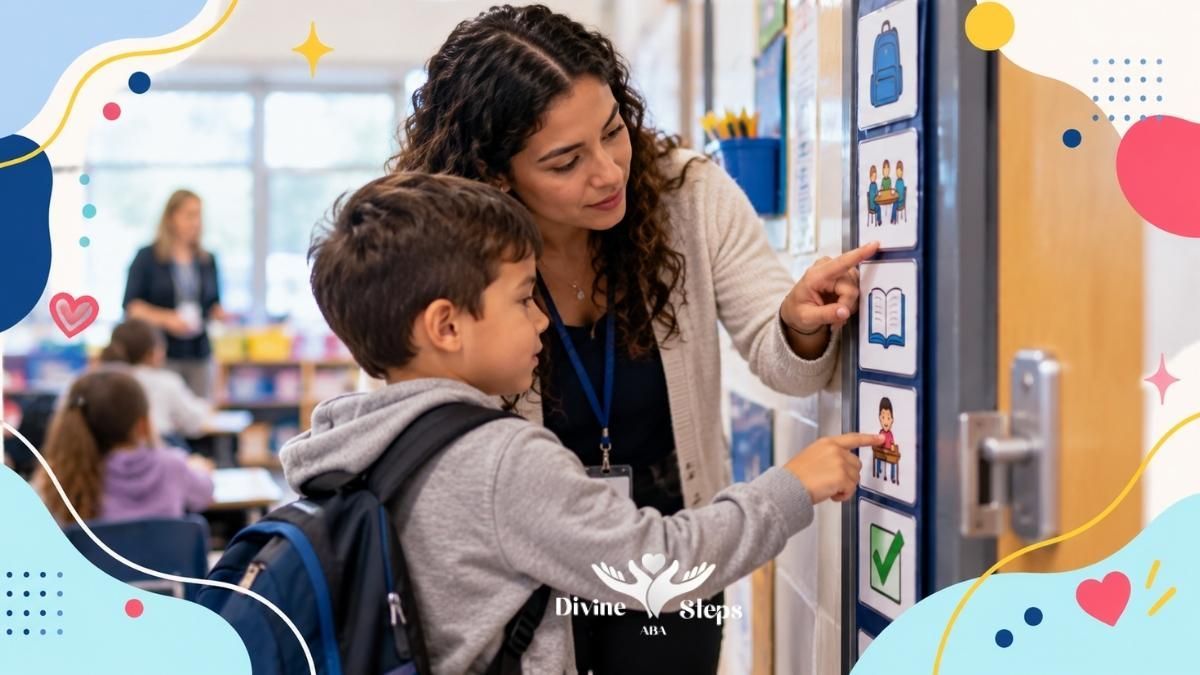
Private ABA in schools needs permission and coverage checks. See what Maryland families should confirm before sessions.